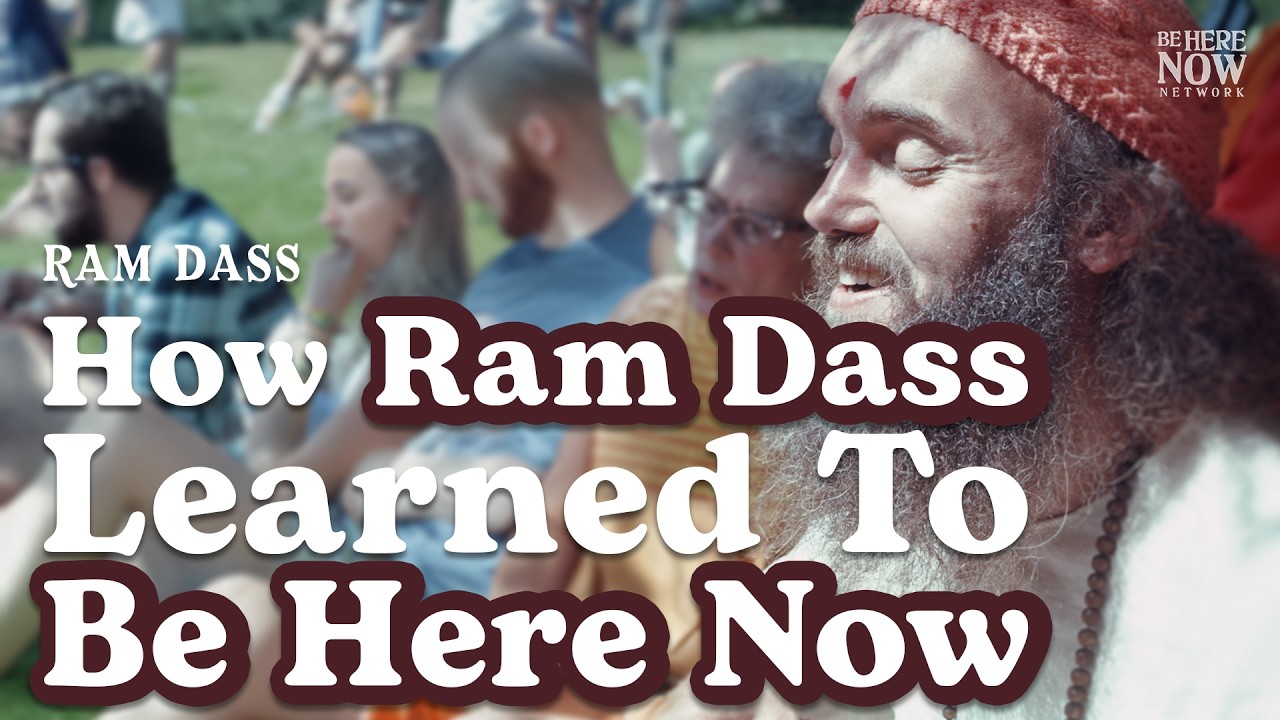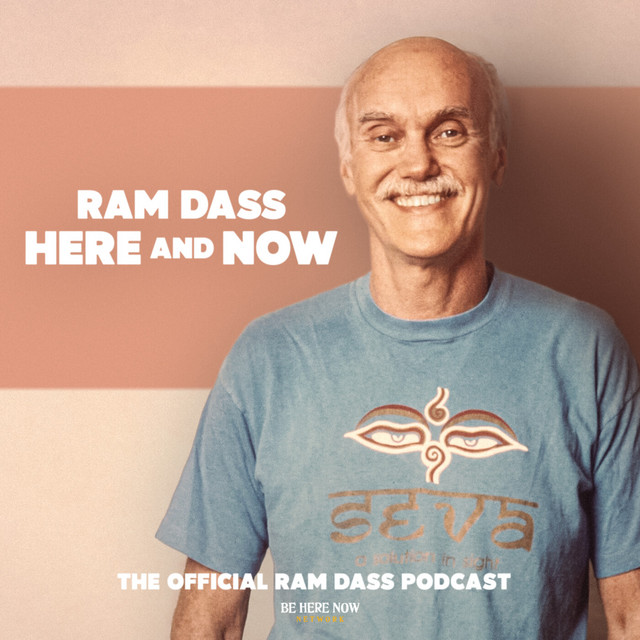
Ram Dass describes the lived experience of being in the presence of his guru, Neem Karoli Baba (Maharaj-ji), drawing on the example of Dr. Larry Brilliant to illustrate how proximity to an enlightened teacher can awaken dormant spiritual capacities and redirect a person's entire life toward service and wisdom. The talk explores the transmission that occurs through darshan—sacred presence—and how a guru's consciousness can activate liberation potential in students without words or formal instruction.
Who Was Neem Karoli Baba and Why Does His Presence Matter?
Neem Karoli Baba, revered as Maharaj-ji by his students, was an Indian saint and guru whose spiritual influence extended far beyond traditional ashram boundaries. He became known in Western consciousness largely through his connection to Ram Dass and other Western seekers who traveled to India in the 1960s and 1970s. What distinguished Maharaj-ji was not a systematic teaching method or a large organized following, but rather the quality of his presence and his apparent ability to know the deepest truths about those who encountered him.
Ram Dass's reflection focuses not on doctrine or philosophy but on the direct phenomenological experience of being near an awakened being. This emphasis on presence over teaching is central to many non-dual traditions, where the transmission of consciousness itself—rather than ideas or techniques—constitutes the core work of the guru-student relationship.
What Does It Mean to Experience a Guru's Presence?
The concept of darshan—the blessing of a saint's or guru's presence—appears across Hindu and Buddhist traditions. In this context, being in someone's presence is not incidental; it is understood as a direct transfer of spiritual capacity. Ram Dass's recounting emphasizes that Maharaj-ji's power lay not in charisma or personality but in his capacity to see and activate what was already latent in those around him.
When Ram Dass speaks about "what it felt like," he invokes the somatic and emotional dimensions of spiritual transmission. Being near an awakened teacher is described as an encounter with a particular quality of consciousness—one that operates outside ordinary thought patterns and social conditioning. Students often report feeling a dissolution of their usual defenses, a quieting of the mind, or an opening to capacities they did not know they possessed.
The Story of Dr. Larry Brilliant: From Professional Achievement to Sacred Service
Ram Dass anchors his reflection through the example of Dr. Larry Brilliant, whose life trajectory illustrates the catalyzing power of Maharaj-ji's presence. Brilliant was already accomplished in his field—a medical doctor and public health professional—when he was introduced to Neem Karoli Baba. The introduction alone, or the encounter with the guru's presence, became a turning point that redirected his entire life toward what Maharaj-ji seemed to recognize as Brilliant's actual calling.
Dr. Brilliant went on to do extraordinary work in global health and service, including pioneering efforts in smallpox eradication and later founding the Seva Foundation, an organization dedicated to alleviating suffering caused by poverty-related and treatable blindness and chronic diseases. The narrative embedded in Ram Dass's account is not that Maharaj-ji taught Brilliant a new skill or gave him instructions, but that the guru's presence awakened in Brilliant a recognition of his own dharma—his sacred duty and highest purpose.
This pattern—where an encounter with an enlightened being fundamentally reorients a person's life without explicit teaching—appears repeatedly in accounts of guru-student relationships. It suggests that the transmission operates at a level deeper than conceptual understanding, perhaps activating dormant aspects of a person's soul or spiritual DNA.
How Does Presence Awaken Potential?
The mechanism by which proximity to an awakened consciousness activates potential in others remains mysterious from a conventional scientific perspective, yet it is consistently reported in spiritual traditions. One framework suggests that an enlightened being operates from a quality of consciousness—sometimes called unity consciousness or non-dual awareness—that is fundamentally different from ordinary consciousness. When someone is in that field, their own consciousness may begin to resonate with or attune to that frequency.
Another understanding draws on the concept of satsang, or "truth company"—the idea that being in the presence of truth directly influences one's own capacity to recognize and align with truth. This is not a matter of belief but of frequency or resonance. A person in the presence of someone operating from wholeness, non-judgment, and unconditional love may find those qualities becoming more accessible within themselves.
In Dr. Brilliant's case, Maharaj-ji seemed to see not just who Brilliant was as a person but who he was meant to become—his potential aligned with his soul's purpose. That recognition, held without demand or coercion, may have been enough to redirect Brilliant's sense of what was possible and valuable in his life.
The Role of Recognition in Spiritual Transmission
A key element in Ram Dass's account is the idea that the guru recognizes something true about the student. This recognition is not psychological in the sense of understanding someone's personality; it is ontological recognition—seeing someone's true nature or essential purpose. For many spiritual traditions, being truly seen—especially by someone operating from enlightened awareness—is itself liberating. It confirms the student's deepest sense of self beyond the ego's constructed identity.
Maharaj-ji became famous for this kind of recognition. Stories abound of him meeting someone for the first time and speaking directly to their deepest pain, their hidden questions, or their soul's trajectory. He would often make seemingly impossible statements or predictions that later proved accurate, suggesting his perception operated beyond ordinary time and causality.
When Ram Dass shares the story of Dr. Brilliant through this lens, he is illustrating how such recognition can liberate a person from smaller identities into larger purposes. Brilliant's professional identity as a respected doctor was not negated; rather, it was enrolled into a bigger field of service aligned with his deepest values.
Can the West Benefit from Understanding Guru Presence?
Ram Dass's own journey as a Western student of an Eastern guru opened a significant conversation: what does it mean for modern Western seekers to relate to the concept of a guru and to the transmission of presence? Western culture tends to valorize individual achievement, critical analysis, and skepticism—all of which can create resistance to the kind of surrender or openness that awakens to a guru's transmission.
Yet the fascination with Maharaj-ji among Western students suggests something in the modern psyche recognizes the need for this kind of meeting. The presence of an awakened being may offer something that years of therapy, self-help, or intellectual study cannot directly provide: the lived encounter with a consciousness operating from freedom, love, and wisdom. Such an encounter can shatter fixed assumptions about what is possible.
Ram Dass's retelling makes this accessible by grounding it in concrete example rather than abstraction. He does not ask listeners to believe in guru transmission as a doctrine but simply to consider what happened to a real person—Dr. Brilliant—when his life intersected with Maharaj-ji's.
What Is the Lasting Impact of Such an Encounter?
One of the profound implications of Ram Dass's reflection is that the impact of being in a guru's presence extends far beyond the individuals directly present. Dr. Brilliant's redirection toward global health service affected millions of lives. His work reducing preventable blindness, improving public health infrastructure, and building bridges between spiritual wisdom and practical medicine rippled outward across decades and continents.
This suggests that when Maharaj-ji awakened or recognized something in Brilliant, the guru was not merely benefiting one individual but aligning one person's talents and conscience with vast currents of need and healing in the world. The recognition extended beyond personal enlightenment into what might be called dharmic alignment—the alignment of individual action with universal purpose.
For Ram Dass himself, the encounter with Maharaj-ji catalyzed a complete reorientation of his life and consciousness. He moved from a successful academic career in psychology into spiritual practice and service, becoming one of the most influential Western teachers of Hindu and Buddhist wisdom. In both cases, presence proved more powerful than any persuasion.
Where to Go From Here
Ram Dass's account invites several directions for reflection and practice. First, it suggests the value of seeking out and spending time near teachers, elders, or beings whose presence seems to emanate genuine wisdom and love. This need not be only gurus in the traditional sense; it might include contemplative teachers, healers, artists, or elders whose consciousness seems more awakened or more aligned with truth.
Second, it raises a question for each person: What might become possible if I allowed myself to be truly seen—not judged or analyzed, but recognized for my deepest potential and purpose? What blocks that openness in myself?
Third, it invites consideration of whether we might become, for others, the kind of conscious presence that awakens potential. If Maharaj-ji's presence could redirect entire lives toward greater service, what responsibilities do we carry in developing and offering our own presence?
Finally, for those interested in deeper engagement with these ideas, the full episode—Ram Dass' Here and Now Podcast, Episode 262: "Between Chaos and Cosmos"—offers extended reflection on how consciousness operates between the chaos of the personal self and the larger cosmic order that a guru embodies and transmits.