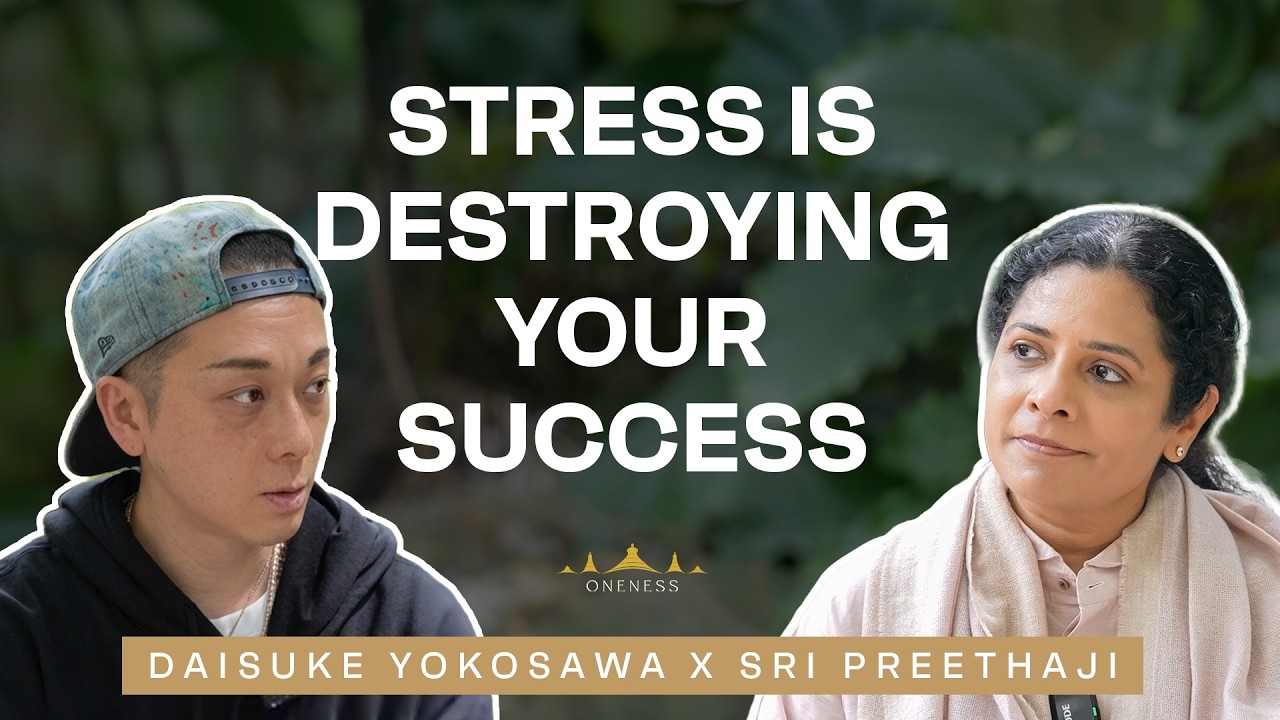
The Oneness Movement describes a network of achievers across India working toward shared awakening and collective consciousness. This system emphasizes that individual transformation and societal progress are interconnected—that personal enlightenment naturally ripples outward through intentional community structures. The model operates through dedicated practitioners who understand oneness not as abstract philosophy but as lived practice embedded in daily life and relational networks.
The Oneness Movement articulates a vision of synchronized human development through networked consciousness. Rather than treating enlightenment as an individual pursuit, this approach recognizes that awakening functions as a shared field—where one person's shift in awareness influences the collective whole. The Network of Oneness Achievers represents a practical infrastructure for this philosophy: people across India consciously aligned toward similar inner work, creating measurable shifts in their own lives while contributing to a larger transformation.
This network operates not as a hierarchical organization but as an interconnected web of practitioners. Each achiever brings their own life context—professional, familial, creative—and applies oneness principles within it. The underlying premise is that consciousness operates nonlocally; when enough individuals within a geographic or relational space undergo genuine shifts in awareness, the entire system responds.
The Oneness Movement teaches that personal enlightenment and social transformation are not separate paths. When an individual awakens to their interconnectedness with all life, their choices naturally begin to reflect that awareness. They make decisions with consideration for ripple effects, treat relationships with greater integrity, and contribute to environments with heightened consciousness. This is not moralism imposed from outside; it emerges organically from expanded awareness.
The Network of Oneness Achievers in India demonstrates this principle at scale. As individual members undergo shifts—in how they perceive others, handle conflict, make ethical decisions—these shifts propagate through their families, workplaces, and communities. A person who experiences genuine oneness consciousness naturally becomes a vector for that consciousness in their relational sphere. Over time, these individual transformations accumulate into recognizable cultural and social shifts.
An oneness achiever is not someone who has reached a permanent state of enlightenment or transcended the human condition. Rather, it is someone actively engaged in recognizing and living from their interconnectedness with all existence. This involves specific practices and orientations:
- Direct experience of unity: Beyond intellectual understanding of oneness, the achiever has tasted moments of genuine non-separation—moments where the boundaries between self and other, observer and observed, temporarily dissolve or become transparent.
- Consistent application: The achiever brings this awareness into ordinary contexts—relationships, work, decisions, challenges—rather than compartmentalizing spirituality into meditation retreats or special times.
- Service to the whole: Recognizing their part in a larger system, the achiever makes choices that consider not only personal benefit but contribution to collective flourishing.
- Vulnerability and growth: The path involves honest acknowledgment of conditioning, reactivity, and places where oneness consciousness has not yet integrated. This humility keeps the practice alive rather than becoming ideology.
The emphasis on India specifically reflects an understanding that consciousness operates through place. India carries historical, spiritual, and cultural significance as a geography where oneness teachings have been explored for millennia. The Oneness Movement recognizes this context and works within it, not to claim exclusivity but because every culture requires indigenous expressions of universal truth.
Additionally, the concentration of achievers within a geographic region—India in this case—creates measurable effects. When a sufficient density of consciousness-aligned individuals occupies shared space, the morphic field of that space shifts. People living in high-density oneness communities often report spontaneous changes in their experience of others, unexpected synchronicities, and spontaneous shifts toward compassion and clarity in people around them, even those not actively practicing.
While the video does not provide exhaustive detail on specific techniques, the Oneness Movement traditionally emphasizes several approaches to cultivate and maintain this networked consciousness:
- Direct transmission: Deeksha or blessing ceremonies—direct transmission of consciousness from awakened facilitators to participants—activate inner recognitions that conceptual teaching cannot. This creates a shared inner experience across the network.
- Collective meditation and intention: When networked practitioners meditate together or hold shared intention, they strengthen the field of coherence. This is not mystical thinking but reflects discoveries in consciousness research about coherence effects in groups.
- Regular renewal and reconnection: The network maintains itself through regular gatherings, teachings, and reconnection ceremonies that keep individual practitioners aligned with the collective vision and their own inner realization.
- Application to real challenges: The network is tested and strengthened through its members' engagement with actual problems—relational conflict, professional ethics, social inequality—applied through the lens of oneness consciousness.
The ultimate aim is not personal enlightenment isolated from society, but the emergence of a consciousness that naturally generates more just, compassionate, and sustainable human systems. When enough people genuinely recognize their oneness with all beings, the following shifts become possible:
- Economic decisions reflect concern for all stakeholders, not just profit extraction
- Conflict resolution moves from win-lose paradigms to solutions that honor all parties
- Environmental choices reflect recognition that harming nature is harming oneself
- Communities naturally support their vulnerable members rather than marginalizing them
- Cultural and religious differences are viewed as expressions of a shared human consciousness rather than sources of division
These are not naive ideals but practical outcomes that emerge when sufficient numbers of people shift from separation consciousness to oneness consciousness. History shows that when a critical mass of a population undergoes genuine value shifts, social structures reorganize accordingly.
The Network of Oneness Achievers in India represents an embodied, socially-engaged approach to consciousness work. It does not ask people to retreat from the world or ignore suffering in pursuit of personal peace. Instead, it locates genuine awakening precisely in the capacity to engage more fully and responsibly with the world, relationships, and systems. A person who experiences oneness consciousness while ignoring injustice has not genuinely integrated that consciousness—it remains intellectual or partial.
The network model also differs from spirituality that treats enlightenment as an individual achievement or status. It recognizes that consciousness is fundamentally relational and collective. Your awakening is incomplete if it does not include awareness of how you are woven into larger systems and how your actions either propagate or obstruct collective flourishing.
For those drawn to this vision, several pathways forward exist. First, engage directly with teachings from Sri Preethaji and Sri Krishnaji, who articulate oneness principles through contemporary language and address modern challenges. Second, seek community—whether through formal networks, meditation groups, or simply relationships consciously oriented toward mutual awakening. Third, begin applying oneness awareness to your own context: How would your work shift if you recognized genuine oneness with colleagues? How would your family dynamics change? How would your consumption, speech, and choices transform? Finally, recognize that this is not a path to become special or superior, but to become more fully human—more capable of genuine love, clear seeing, and contribution to the larger whole.