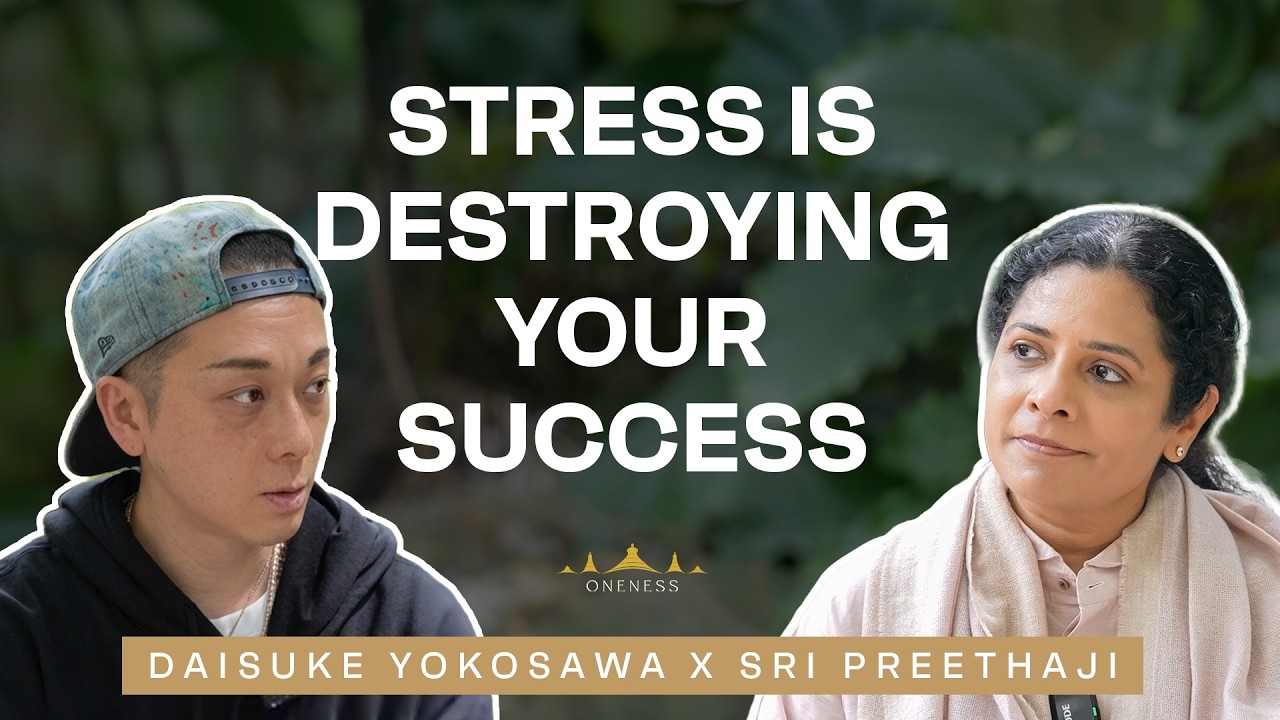
True success flows from understanding and practicing the giving-and-receiving equation. This principle—rooted in consciousness and energy dynamics—suggests that sustainable achievement comes not from grasping or hoarding, but from maintaining a healthy flow where what you give out returns to you multiplied. Sri Preethaji and Sri Krishnaji from the Oneness Movement teach that this isn't about transactional charity, but about aligning with a fundamental law of existence.
What Is the Giving and Receiving Equation?
At the heart of many spiritual traditions lies a deceptively simple observation: life operates on a principle of flow rather than accumulation. The giving-and-receiving equation describes a fundamental law of energy exchange. When you give—whether time, attention, resources, or compassion—you initiate a current that doesn't end with the recipient. Instead, it creates a cycle that returns to the giver, often in forms and through channels the giver could not predict.
This is not wishful thinking or magical thinking. It reflects how systems actually work. In nature, organisms that only consume without contributing to their environment collapse. In relationships, people who only take eventually find themselves isolated. In organizations, leaders who invest in their teams tend to see greater loyalty and innovation. The equation simply names a pattern that's observable across scales: closed systems that block outflow stagnate, while systems with healthy circulation thrive.
Why Does Giving Create Receiving?
The mechanism operates on several levels. First, there is a practical level: when you contribute value to others, you become known as reliable, generous, and capable. This shifts how others relate to you, creating opportunities. Second, there is a psychological level: the act of giving shifts your internal state from scarcity to abundance. You cannot simultaneously feel like you lack and be freely generous; the generous act itself rewires your nervous system toward trust and expansion.
Third, and most directly addressed in consciousness-focused teachings, there is an energetic level. From the perspective of non-dual philosophy and systems thinking, consciousness itself is not separate from matter. What you emit—in terms of intention, attention, and energy—shapes what returns to you. This isn't because the universe is "listening" in a personal way, but because you are not separate from the field you inhabit. Your giving shapes the field, which then shapes what flows back to you.
The Oneness teachings suggest that blocks in receiving often come from blocks in giving. If you struggle to receive help, compliments, or opportunities, it may indicate that you are unconsciously blocking your own outflow. You may be defended against feeling vulnerable enough to need others. Conversely, if you give compulsively without allowing yourself to receive, you exhaust yourself and create resentment, which then closes the circuit entirely.
How Does This Relate to Success?
Success—understood not merely as money or status, but as the ability to create what matters to you in a sustainable way—requires this equilibrium. Many people work toward goals through force: willpower, hustle, competition, control. They try to extract success from a resistant world. This approach can produce short-term results but typically burns out the practitioner and attracts shallow, unstable gains.
By contrast, when you align with the giving-and-receiving equation, success becomes a byproduct of alignment rather than the product of friction. You move toward your goals not by forcing but by contributing. You solve problems not by hoarding solutions but by sharing them. You build influence not through manipulation but through genuine value creation. This shifts you from a defensive, scarce orientation to an open, generative one.
The practical effect: when you operate from generosity and contribution, you attract collaborators, resources, and opportunities that accelerate your path far more efficiently than competitive struggle alone can. A founder who genuinely serves customers attracts loyalty that marketing cannot buy. A leader who invests in team growth attracts talent that competitors cannot poach. A person who gives attention freely finds their own needs attended to by a widening circle of capable people.
What Blocks the Equation from Working?
The most common block is the belief that the equation is not real. When someone doubts that giving creates receiving, they hold back—not fully giving because they fear loss, not fully receiving because they feel unworthy. This self-protective posture actually prevents the equation from demonstrating itself. The equation requires trust to activate.
Another block is hidden resentment. Giving while secretly expecting a specific return in a specific timeframe is not true giving; it's a transaction that pretends to be generous. Real giving releases attachment to the outcome. This doesn't mean you ignore practical cause-and-effect; it means you don't strangle the process with the demand that gratitude return in exactly the form you imagined.
A third block is shame or unworthiness around receiving. Many people—particularly those conditioned to "be strong" or "not burden others"—struggle to receive. They can give endlessly but feel guilty accepting help, compliments, or support. This creates asymmetry in the equation. To receive fully, you must allow yourself to be nourished, to have needs, to depend on others at times. This requires a shift from self-reliance alone to interdependence.
How Do You Practice This Principle?
Start by examining where you are blocked. Notice: Do you give freely or do you hold back? Do you receive easily or do you deflect, minimize, or feel obligated to immediately return? Are there relationships or areas of life where the equation feels stuck?
Then, consciously choose to shift. Begin giving in small ways if that's where you are stuck. Give attention, appreciation, time, ideas, resources without counting. Notice what happens inside you—what fears arise, what relaxation occurs. Simultaneously, if receiving is hard, practice saying yes to small offers of help. Let someone buy you coffee. Accept a compliment without countering it. Receive a gift without immediately returning one. These small acts reprogram your system.
The deeper practice is to align your intention with contribution rather than extraction. Before acting, ask: What value do I add here? How do I serve? What do I give? This reframes success away from "What can I get?" and toward "What can I create?" From this stance, receiving becomes not desperate neediness but natural circulation—the other side of a healthy flow you've initiated.
Where to go from here
Explore the specific areas of your life where the giving-and-receiving equation feels blocked or flowing. Notice one relationship, project, or goal where you suspect the principle is at work. Commit to one small practice—either increasing your generosity in a controlled way or practicing receiving in a vulnerable area. Observe over weeks what shifts. The equation is not a belief to adopt; it's a principle to test through direct experience.