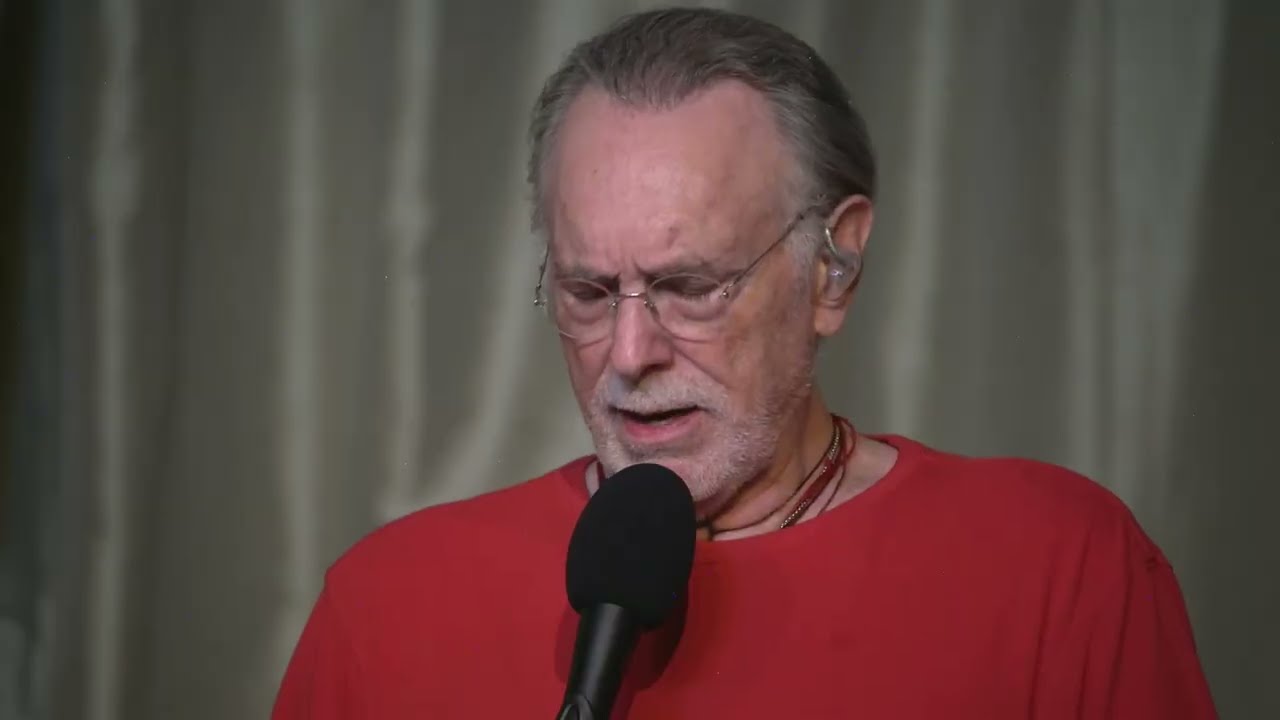
"Sita Ram" is one of the most ancient and widely practiced Sanskrit chants in the Hindu devotional tradition. The pairing of Sita and Ram represents the union of the divine feminine and masculine — the soul and its source — and has been sung by saints, sages, and ordinary practitioners for centuries as a direct path to the heart. This recording, captured live on Krishna Das's 2002 album Live On Earth (For A Limited Time), presents the chant in the stripped-down, call-and-response style of traditional North Indian kirtan, inviting listeners into a participatory act of devotion rather than passive listening.
What Does "Sita Ram" Mean?
At its most literal, "Sita Ram" is the calling of two names: Sita, the divine consort and embodiment of purity and devotion, and Ram (or Rama), the seventh avatar of Vishnu and the hero of the Ramayana. Together, the two names are inseparable in the bhakti tradition — Sita is never mentioned without Ram, and Ram is rarely honored without Sita at his side.
In Sanskrit, Rama derives from the root ram, meaning "to delight" or "to rejoice." The name itself is said to carry the essence of all mantras: the sacred syllables of Om Namah Shivaya (Na-Ma-Shi-Va-Ya) and Om Namo Narayanaya (Na-Ra-Ya-Na) share their consonants with the single syllable "Ra-Ma," which is why the Rama-nama has been called the taraka mantra — the mantra that carries one across the ocean of existence.
Sita, whose name means "furrow" — a reference to her miraculous birth from the earth — represents the soul in its most purified state: utterly surrendered to the divine, yet possessed of great inner strength. In devotional theology, the relationship between Sita and Ram is often read as the relationship between the individual soul (jiva) and the supreme (Brahman): longing, union, separation, and return.
What Is the Tradition Behind Chanting Ram's Name?
The practice of repeating or chanting the name of Ram — known as Ram Naam or Rama Nama japa — is one of the oldest and most widespread forms of devotional practice in India. The sage Valmiki, credited with composing the original Sanskrit Ramayana, is said to have been transformed from a highway robber into a saint through the continuous repetition of the name "Mara" (Ram spelled in reverse), which over time resolved into the sacred syllables of Ram's own name.
Tulsidas, the 16th-century poet-saint who composed the Ramcharitmanas (the Awadhi retelling of the Ramayana), placed the chanting of Ram's name at the very center of his theology. He wrote that in the current age, Kali Yuga, the repetition of the Name is the supreme spiritual practice — more accessible than sacrifice, temple ritual, or elaborate meditation. Mahatma Gandhi famously chanted "Hare Ram" in his final moments, and the mantra "Ram Ram" remains the common greeting among many communities across North India.
How Does Krishna Das Approach the Sita Ram Chant?
Krishna Das — born Jeffrey Kagel and a direct student of the Indian saint Neem Karoli Baba (Maharaj-ji) — has spent more than four decades bringing the practice of kirtan to Western audiences. His approach is rooted not in performance but in sadhana: the chant is a practice, a discipline, a form of remembrance rather than entertainment.
The recording of "Sita Ram" from Live On Earth (For A Limited Time) exemplifies his signature style: a slow, repetitive melodic structure built around the call-and-response format of classical kirtan, where the lead vocalist sings a phrase and the congregation echoes it back. This structure is not accidental — it is designed to gradually dissolve the distinction between the one who calls and the one who responds, eventually drawing both into a single current of sound and attention.
Krishna Das has spoken extensively about the teaching of Neem Karoli Baba, who emphasized that chanting the names of God — particularly Ram — was among the most direct routes to opening the heart. Maharaj-ji himself was said to repeat "Ram, Ram, Ram" ceaselessly, and taught that the Name itself is God: not a symbol pointing toward the divine, but the divine in sonic form.
What Is Kirtan and How Is It Different from Meditation?
Kirtan is one of the nine forms of bhakti (devotional practice) enumerated in classical texts like the Bhagavata Purana. Specifically, it falls under shravanam (hearing the divine names) and kirtanam (singing them aloud). Unlike silent meditation, which asks the practitioner to turn attention inward and away from sensory experience, kirtan works through sound — it uses the voice, the breath, rhythm, and melody as vehicles of concentration and surrender.
The repetitive nature of a chant like "Sita Ram" is purposeful. As the mind follows the melody and the lips form the names, the ordinary stream of discursive thought — planning, judging, remembering, worrying — gradually loses its grip. Practitioners describe the effect not as the absence of thought but as a shift in identification: one becomes less the thinker and more the one who hears. The names, repeated hundreds or thousands of times, begin to resonate below the level of conscious intention, which is the classical definition of the mantra taking root in the heart.
Why Is "Sita Ram" Such a Central Chant in Bhakti Practice?
Among the many divine names available in the Hindu tradition, "Sita Ram" holds a particular position because it encodes an entire theological and emotional world in just two words. Ram represents the ideal of righteousness (dharma), heroic action, and divine grace. Sita represents fidelity, sacrifice, inner purity, and the capacity of the soul to endure suffering without being diminished by it. Together they model the kind of loving, devoted relationship — between human and divine, between practice and realization — that lies at the heart of the bhakti path.
There is also an aesthetic dimension. The pairing of "Si-ta Ram" — three syllables, with a natural rhythmic lilt — lends itself to melodic elaboration across virtually every classical and folk musical tradition of India. From the austere Hindustani classical ragas to the exuberant folk melodies of Rajasthan to the meditative simplicity of a Krishna Das recording, the names adapt to every context while retaining their devotional essence.
What Role Does a Live Recording Play in Kirtan?
The fact that this recording was made live — captured on stage with an audience actively participating — is integral to the experience. Kirtan has always been a communal practice. The energy of a room full of people singing together, the slight imperfections of live performance, the organic rise and fall of intensity over the course of a long chant: all of this is part of what makes a live kirtan recording different from a studio production. It preserves the relational dimension of the practice — the sense that something is happening between people, not just within a single individual.
Krishna Das has noted that the audience in a kirtan is not an audience in the conventional sense — they are co-practitioners. When a room full of people chants "Sita Ram" together, the sound that arises is a shared act of remembrance, a collective turning toward something larger than any individual present.
Where to Go From Here
If this recording has sparked an interest in kirtan or the practice of repeating sacred names, here are some meaningful next steps:
- Listen deeply and repeatedly. Kirtan is not a genre to sample; it is a practice to return to. The same recording heard ten or twenty times begins to work differently than it does on first hearing.
- Explore the Ramayana. Reading a translation of the Valmiki Ramayana or Tulsidas's Ramcharitmanas gives depth and context to the names of Sita and Ram, making the chant far richer.
- Investigate the life of Neem Karoli Baba. Ram Dass's memoir Miracle of Love collects hundreds of stories about Maharaj-ji and his teaching about Ram Naam, offering a vivid picture of the devotional world from which Krishna Das's practice grew.
- Attend a live kirtan. Nothing replaces the experience of chanting in a room with others. Krishna Das tours internationally and holds workshops that welcome practitioners of all backgrounds and no background at all.
- Begin a simple japa practice. Repeating "Sita Ram" quietly — even ten minutes a day, with a mala or without — introduces the practice at its most fundamental level, exactly as countless generations of practitioners before have done.