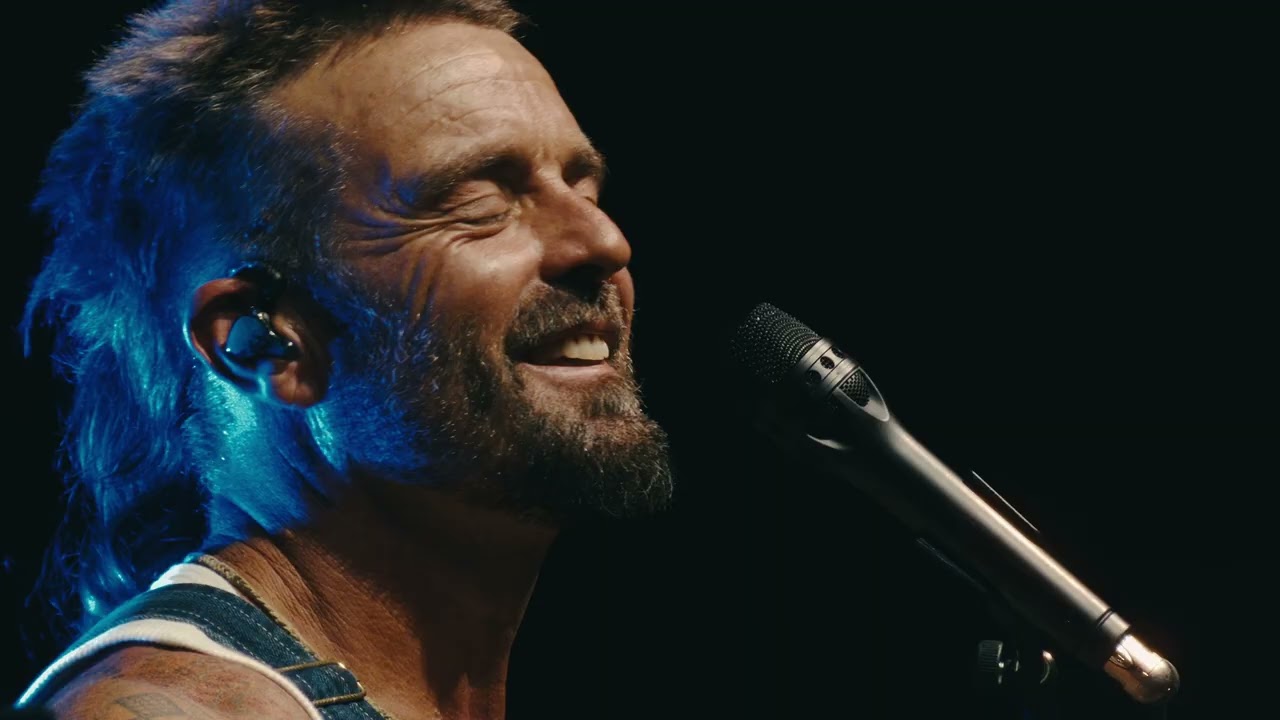
"Time to Smile" represents Xavier Rudd's collaborative fusion project with South African musicians—bassist Tio Moloantoa and drummer Andile Nqubezelo, both former members of Lucky Dube's band. The track blends slide guitar, African grooves, and reggae-inflected rhythms into a warm, upbeat sound that celebrates cross-cultural musical exchange and the kind of understated joy suggested by its title. Released in 2010 as part of the Koonyum Sun album, the song marks Rudd's shift away from the heavier tone of his previous work toward the hip-swaying, folk-influenced grooves that defined his earlier recordings.
How did Xavier Rudd and Izintaba form?
Xavier Rudd and Izintaba came together at Austria's Nuke Festival in the summer of 2008, where the Australian singer-songwriter first connected with South African bassist Tio Moloantoa and drummer Andile Nqubezelo. Both musicians had played with Lucky Dube, the late reggae icon whose influence on African music and global consciousness was profound. Rather than a traditional band formation born from years of local gigging, their bond emerged quickly—rooted in mutual musical respect and a shared vision for cultural exchange. The partnership went beyond technical skill; it reflected a deeper commitment to unifying different musical traditions, geographical origins, and worldviews through sound.
What makes this collaboration unusual is that it brought together an Australian folk-influenced fingerstyle guitarist with heavyweight African musicians who had worked at the highest level of continental reggae. Rudd had already built a substantial career on his own, while Moloantoa and Nqubezelo were established players within the African music world. Yet the three found immediate common ground, suggesting their connection was more about artistic philosophy than proximity or convenience.
What defines the sound of "Time to Smile"?
The track features what the album's documentation describes as "smooth folky African grooves"—a specific hybrid that reflects each musician's contribution. Rudd's slide guitar provides the melodic and harmonic foundation, delivering the fingerpicked warmth listeners expect from his earlier folk-inflected work. Tio Moloantoa's bass drives the groove with a heavy, grounded presence that echoes reggae's rhythmic foundation while maintaining an African sensibility. Drummer Andile Nqubezelo's work adds punctuation and propulsion, creating the rhythmic scaffold that makes the track hip-swaying and kinetic rather than static.
Directed by Jeremy Fisher, the video captures this sonic fusion visually—showing how these three musicians occupy shared sonic space. The production represents a deliberate move away from the "heavier edged sound" that characterized Rudd's 2008 album Dark Shades of Blue. Instead, "Time to Smile" returns to what the liner notes identify as his "main stay on previous recordings"—the upbeat, accessible, groove-oriented approach that made albums like Nomad and Grey Shale resonate with audiences. By bringing Moloantoa and Nqubezelo into this sound world, Rudd expanded its palette without losing its fundamental warmth.
What influences shaped this cross-cultural collaboration?
Rudd's own artistic lineage reveals why a partnership with African musicians felt natural. His influences span continents and genres: Angelique Kidjo (the Beninese singer-songwriter known for blending African tradition with global pop sensibilities), Lucky Dube himself (making the connection to his new bandmates' heritage explicit), Paul Simon (whose Graceland set a template for respectful African-Western fusion), Peter Gabriel, Dave Matthews Band, and Ben Harper. Among contemporary figures, he drew inspiration from Jack Johnson's accessible, laid-back approach; John Butler Trio's instrumental virtuosity; and even surfers like Dave Rastovich and Kelly Slater, whose lifestyle philosophy aligns with themes of environmental awareness and spiritual centeredness.
This constellation of influences suggests Rudd approached "Time to Smile" and the broader Koonyum Sun project not as an outsider adopting African sounds, but as an artist whose entire trajectory had been shaped by ideas of cultural permeability. The collaborators shared an ethos: that music could serve as a vehicle for understanding across difference, that joy and groove were universal languages, and that the best art often emerges when artists from different traditions meet as equals.
Why does "Time to Smile" matter within Rudd's broader practice?
For Rudd, music has never been divorced from activism and environmental consciousness. He is a longtime supporter of the Sea Shepherd Conservation Society (which works on ocean protection and marine conservation) and Surfers Against Sewage (an organization addressing water pollution). These commitments appear in his work not always as explicit lyrical content, but as part of a worldview: that art, nature, and human connection are inseparable. "Time to Smile" embodies this philosophy—it's a song about positive presence, about the warmth that arises when people from different places decide to create together.
The title itself deserves attention. In a world of urgent causes and heavy subjects, "Time to Smile" is a small, quiet assertion: that happiness, lightness, and joy are also valid responses to existence. This doesn't negate serious engagement with the world; rather, it suggests that resilience, celebration, and cross-cultural fellowship are part of activism too. The song refuses cynicism while also refusing to be naive about the world's complexity.
How does the Koonyum Sun album position Rudd's career?
Released in April 2010, Koonyum Sun marks a specific moment in Rudd's evolution. By this time, he had already performed at major international festivals including Bonnaroo, Ottawa Bluesfest, The Great Escape, Bumbershoot, and Austin City Limits. He had built a reputation as a serious musician who refused to be confined to a single genre—equally comfortable in folk, reggae, world music, and singer-songwriter contexts. The Koonyum Sun project, featuring the Izintaba collaboration, represented not a reinvention but a maturation: the confidence to bring together disparate influences and musicians on equal terms, to celebrate joy and cultural connection without apology, and to continue evolving while staying rooted in the values that had always animated his work.
The partnership with Moloantoa and Nqubezelo also signals something important about Rudd's artistic autonomy and vision. Rather than being "featured" on their project or vice versa, the three formed a genuine ensemble called Xavier Rudd and Izintaba. This naming convention—artist name plus band name—suggests a collaborative rather than hierarchical structure. Each musician's contribution is essential to the whole; none is secondary.
What does "smooth folky African grooves" actually sound like?
The description "smooth folky African grooves" is worth unpacking because it captures something specific about the fusion. It's not African music played with Western instruments, nor is it Western folk music with African percussion layered on top. Instead, it suggests a genuine meeting point where the fingerstyle tradition (folk), the rhythmic sophistication and groove orientation (African and reggae), and the tonal sensibilities of slide guitar create something integrated.
The "smooth" quality—versus aggressive or hard-edged—indicates that despite the heavyweight musicianship, the track prioritizes accessibility and warmth. This is dance music, yes, and music with serious technical skill, but it's also music that invites the listener in rather than demanding they prove their knowledge or sophistication. The hip-swaying motion mentioned in the liner notes captures this: the body recognizes the groove immediately, without the mind needing to analyze it first.
Where to go from here
"Time to Smile" invites several directions for deeper exploration. First, listen to the full Koonyum Sun album to understand how this track functions within Rudd's broader artistic statement. Second, investigate the influences mentioned—particularly Lucky Dube's reggae work, Paul Simon's Graceland, and Angelique Kidjo's cross-cultural approach—to understand the genealogy of respectful musical fusion. Third, explore Rudd's other collaborations and earlier albums to see how his approach to blending genres and cultural perspectives evolved over time. Finally, consider how artists continue to navigate questions of cultural exchange and collaboration in ways that honor all parties rather than centering one tradition over another—a question "Time to Smile" addresses through action rather than manifesto.