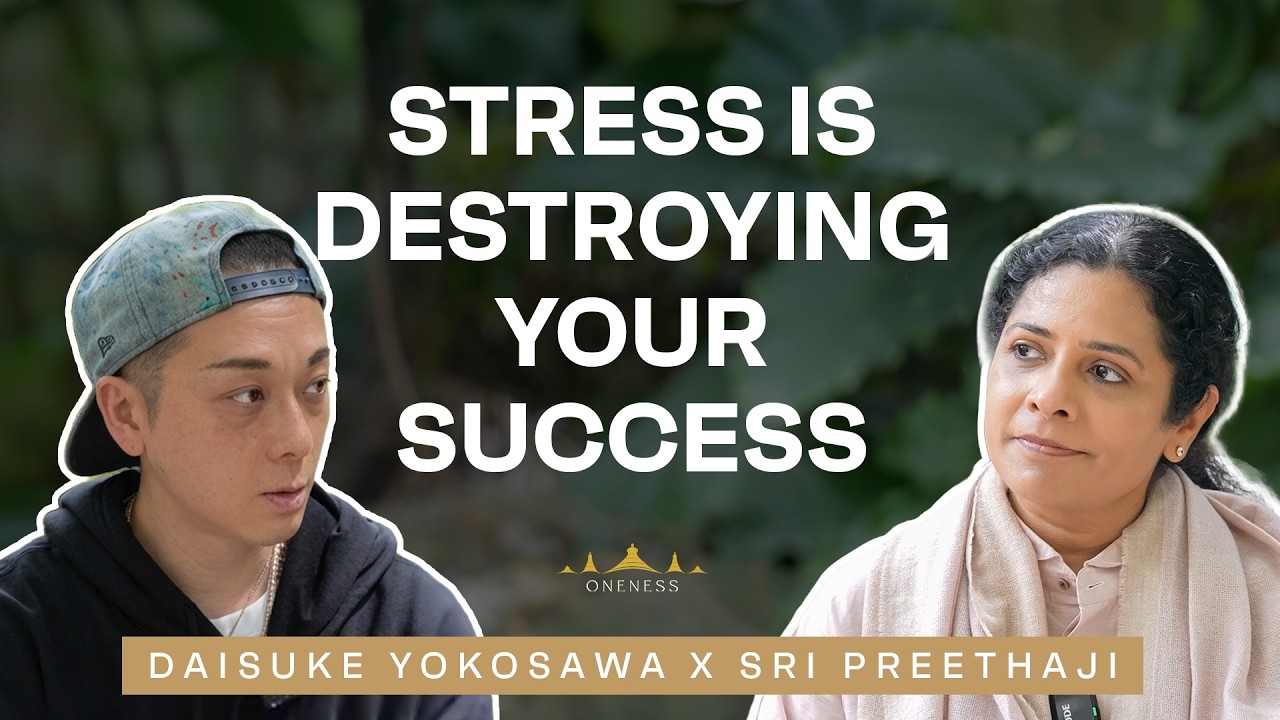
FOA (Fingers of Awakening) Beyond Mind is a contemplative practice designed to help individuals move past the constant mental chatter, self-judgment, and stress that keep consciousness fragmented. By shifting awareness away from mind-identified patterns and into direct presence, practitioners learn to access the power of the present moment—a state where clarity, peace, and authentic aliveness become available. The approach addresses the root cause of psychological suffering: identification with thought patterns rather than with one's deeper nature.
What Is the FOA Beyond Mind Practice?
FOA Beyond Mind is part of a larger contemplative methodology developed by the Oneness Movement, specifically designed to address the contemporary epidemic of mental stress and incessant thinking. The practice recognizes that most human suffering stems not from external circumstances alone, but from a fragmented relationship with the mind—one in which awareness becomes trapped in loops of analysis, worry, rumination, and self-critical judgment.
The core insight is simple but profound: the mind is a tool for practical problem-solving, but when it operates unchecked, it becomes a source of suffering. The relentless chatter, the automatic judgments about oneself and others, the recycling of past regrets and future anxieties—these create a psychological prison that obscures access to the present moment, where actual life unfolds.
How Does Incessant Mental Chatter Create Stress?
The Oneness Movement teachings recognize that mental chatter is not simply a neutral background noise of consciousness. Rather, it is an active, self-perpetuating system that generates stress through several mechanisms:
- Identification with thought: Most people unconsciously equate their identity with their thoughts. "I am my thoughts" becomes the default assumption, meaning every anxious thought feels personally true, every self-judgment feels deserved.
- Compulsive analysis: The mind becomes addicted to processing, analyzing, and re-analyzing situations. This creates an illusion of control while actually deepening anxiety and preventing resolution.
- Self-judgment loops: A cascade of critical thoughts about oneself becomes habitual. These judgments are often internalized messages from past conditioning, yet they feel like personal truth.
- Fragmentation of awareness: When consciousness is identified with mental processes, it becomes divided between what is actually happening now and what the mind is saying about what is happening. This split creates exhaustion and disconnection from direct experience.
The FOA Beyond Mind approach teaches that the solution is not to think better thoughts or to try harder to control the mind. Instead, it invites a shift in the locus of identity—from the mind to the witness of the mind, from thought to presence.
What Does It Mean to Awaken to the Power of the Present?
The practice emphasizes that the present moment is not merely a philosophical concept—it is the only place where actual life, power, and peace exist. Unlike the past (which cannot be changed) and the future (which has not yet occurred), the present is the only domain where choice, response, and transformation are available.
When awareness becomes habitually trapped in mental narrative—replaying yesterday's conversations, rehearsing tomorrow's scenarios—it is literally disconnected from present reality. This disconnection manifests as a sense of living on autopilot, of being a spectator in one's own life rather than an active participant.
Awakening to the power of the present means:
- Experiencing direct sensory awareness—seeing without the filter of mental interpretation, hearing without automatically categorizing or judging.
- Accessing clarity about what is actually needed in this moment, rather than acting from conditioned patterns or mental predictions.
- Discovering genuine aliveness—a quality of presence and engagement that mental distraction can never provide.
- Releasing the exhaustion of maintaining a conceptual self through constant mental commentary.
How Does FOA Beyond Mind Differ from Other Stress-Relief Practices?
Many stress-management techniques aim to make the mind quieter or more positive—through meditation, affirmations, or cognitive restructuring. These approaches have value for some, but FOA Beyond Mind operates on a different principle: it does not attempt to change the mind, but rather to shift one's relationship with the mind.
Rather than fighting with mental chatter or trying to suppress thoughts, the practice teaches a gentle disidentification. It invites practitioners to notice that thoughts arise and pass away, that they are observable events in consciousness rather than absolute truths. This shift from "I am my thoughts" to "I observe my thoughts" fundamentally changes the stress response.
When you observe self-judgment rather than believing it, the judgment loses its binding power. When you notice anxious thoughts rather than fusing with them, the anxiety no longer drives behavior. This is not suppression—it is a genuine change in perspective that naturally reduces psychological suffering.
What Role Does Self-Judgment Play in Mental Stress?
Self-judgment is identified in the FOA framework as one of the primary mechanisms through which the mind perpetuates suffering. Unlike practical assessment ("I made a mistake in that email and should correct it"), self-judgment is a form of condemnation—a verdict passed on one's character, capability, or worth based on a single action or thought.
Self-judgment typically operates as a hidden reflex: a thought arises, and almost instantaneously, a judging voice follows ("That was stupid," "I shouldn't feel this way," "I'm not good enough"). Because this process is so fast and so familiar, most people never recognize it as a learned pattern. It feels like objective truth about who they are.
The Oneness Movement approach teaches that this self-judgment is actually internalized conditioning—messages absorbed from parents, teachers, culture, and past experiences. Awakening involves recognizing it as such: inherited patterns rather than personal truth. When this recognition occurs, the grip of self-judgment naturally loosens.
What Practical Shifts Occur When the Mind Is Transcended?
As practitioners engage with FOA Beyond Mind, several observable changes typically emerge:
- Mental quiet: Rather than trying to achieve silence, silence naturally increases when awareness is no longer identified with thought. The mind continues to function, but it is no longer the center of consciousness.
- Emotional clarity: Emotions become distinguishable from thoughts about emotions. Anger can be felt directly without the overlay of self-judgment ("I shouldn't be angry") or mental analysis ("Why am I angry?").
- Improved decision-making: Decisions made from present awareness tend to be more aligned with actual circumstances and personal values, rather than reactive or fear-based.
- Reduced reactivity: The automatic fight-or-flight response to stress naturally diminishes when the nervous system is not constantly activated by mental threat narratives.
- Greater resilience: Life challenges remain, but the suffering layer added by mental resistance and self-judgment falls away, leaving just the practical situation to address.
How Can Someone Begin to Practice This Shift?
While the full FOA Beyond Mind program likely involves guided practices and deeper teachings, the fundamental shift can begin immediately through simple awareness practices:
- Notice without belief: Pause during the day and observe your thoughts. Can you see them as thoughts, rather than absolute truths? What happens when you hold a anxious thought lightly, as a passing mental event rather than a fact?
- Separate thought from emotion: When stress arises, ask: "Am I actually in danger right now, or am I believing a thought that says I should be anxious?" This simple distinction can interrupt the identification mechanism.
- Return to sensation: When mental chatter is thick, deliberately shift attention to direct sensory experience—the feeling of your feet on the ground, the sounds around you, the breath moving through your body. This literally pulls awareness out of mind and into presence.
- Observe self-judgment as it arises: Rather than fighting it, simply notice: "A self-judgment is happening." Can you see where it came from? Who taught you to speak to yourself this way? This inquiry often reveals the conditioned nature of the pattern.
Where to Go From Here
FOA Beyond Mind offers a specific methodology within the larger Oneness Movement teachings. For those interested in exploring further, seeking out the full training program, guided practices, and community support through the Oneness Movement would deepen and accelerate the learning. The principle, however—that liberation from mental suffering comes through disidentification rather than mental control—is one that can be explored independently through any contemplative practice that emphasizes awareness and presence. The invitation is to test this for yourself: notice where you suffer from your own mental chatter, and experiment with the simple shift from "I am this thought" to "I am aware of this thought." That shift alone can begin to open the door to genuine peace and presence.