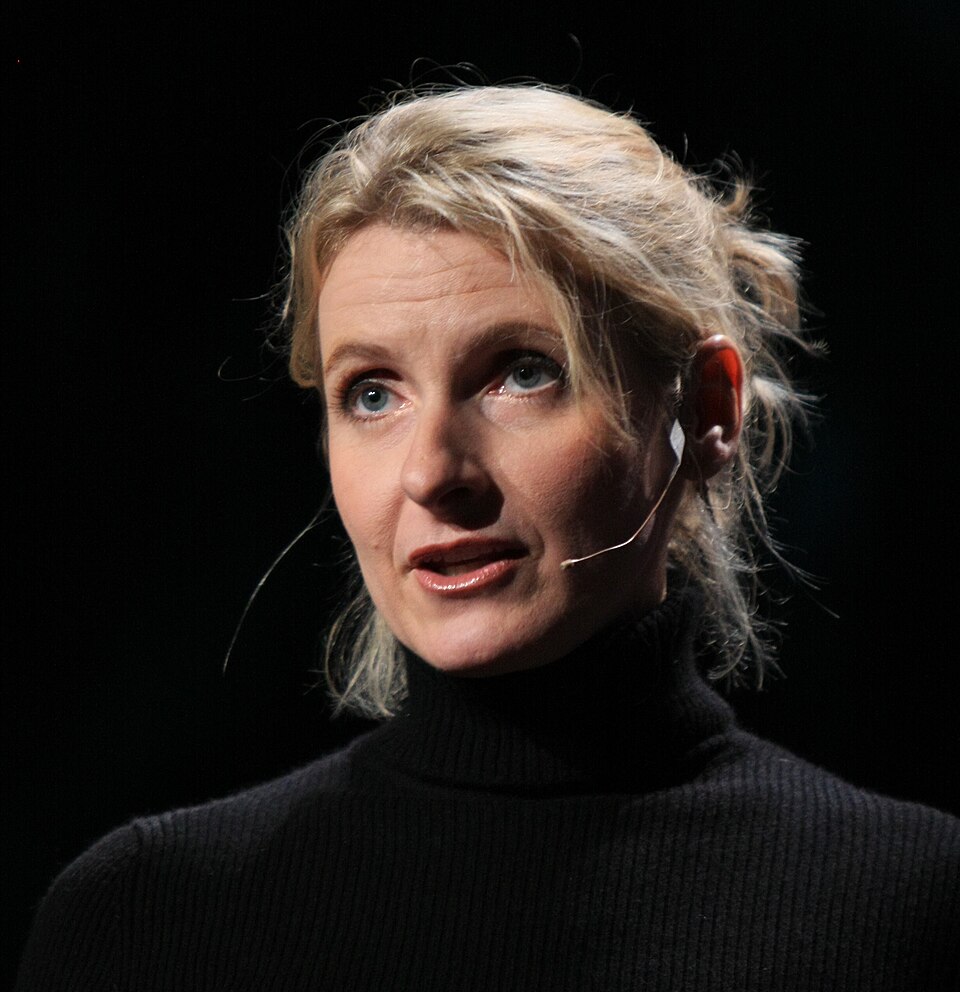
The most authentic spiritual experiences often arrive unannounced, without fanfare, and leave you unable to remember the name of the person who changed you. This might be the central insight from Elizabeth Gilbert's encounter in Lombok, West Nusa Tenggara, Indonesia: meeting an unnamed Muslim woman whose act of care became, for the author of Eat Pray Love, a direct encounter with what she calls "the true face of Islam." The story is deceptively simple—and in its simplicity lies its power. Gilbert was in Lombok. She met a woman. The woman didn't ask her name in return. Instead, she cared for her through some form of recovery until Gilbert was well. No introduction. No announcement. No documentation. Just service, rendered quietly and without expectation of return. It's a story that cuts against almost everything contemporary spiritual seeking has become.
Seeking Across Borders
Elizabeth Gilbert's spiritual journey is well-documented. Eat Pray Love, her 2006 memoir, follows her through Italy, India, and Indonesia in search of balance between pleasure (Rome), devotion (India), and love (Bali). The book became a global phenomenon, spawning a 2010 film and establishing Gilbert as a voice for a particular kind of Western spiritual seeking—one characterized by travel, curiosity, and the belief that transformation lives somewhere else, in another country, another practice, another person's faith. The book is honest about this hunger. Gilbert wanted to find herself, and she believed the self she was seeking could only be discovered abroad.
That memoir ends in Indonesia, specifically Bali, with Gilbert finding equilibrium. But she has continued to return to the archipelago, drawn back repeatedly to a place and people that clearly shaped her. And in Lombok—a less touristed island in the same region—she encountered something that Eat Pray Love had only sketched in outline: the lived reality of Islamic faith not as doctrine or spectacle, not as a system to be analyzed or adopted, but as ordinary human practice. The encounter happened not in a mosque or formal setting, but in the context of need. Gilbert required care. A woman provided it. This simplicity is the entire story, and it is profound.
When service becomes the message
Across cultures and religions, there is a tradition of service performed without expectation of recognition or reward. When Gilbert speaks of finding "the true face of Islam" in an unnamed woman, she is describing not an exoticized moment but a collision with genuine religious practice. The woman did not explain Islam to Gilbert. She did not convert anyone. She did not seek credit or gratitude or a mention in a memoir. She simply cared. To a spiritual seeker educated by the West to expect faith to be articulated, analyzed, debated, and reflected upon—to be, in other words, accessible and legible—this quiet, unnamed enactment of care is itself revolutionary.
There is a humility in this approach. The woman doesn't ask: "Do you understand what I'm doing? Do you see how my faith drives this?" She simply does the work. If Gilbert comes to see in that work a revelation of Islam, a window into what faith actually looks like when it's lived rather than performed, that is Gilbert's insight, not the woman's claim. The practice stands alone, complete in itself, requiring no external validation or interpretation.
Why anonymity matters more than gratitude
The fact that Gilbert does not know the woman's name has become central to how she tells this story. In an age of spiritual tourism, where pilgrimage is transformed into content for social media, where enlightenment is chased across continents and then posted with filters and location tags, this nameless encounter stands apart. The woman resists the narrative that modern spiritual seeking craves: the story of my transformation, told by me, about me, with me as the hero.
Instead, Gilbert had the rarer experience: being the recipient of care without needing to process it, document it, or integrate it into a personal brand. The woman gave her care and disappeared—not into mystery, but into the ordinary life she was living. She did not need Gilbert to remember her name, write about her, or become a better person because of her kindness. She needed nothing from the encounter beyond the chance to serve.
This challenges the deepest assumptions of Western spiritual seeking: the possibility that the most authentic encounters are not with exotic others but with people who have no interest in being exotic, no interest in teaching you anything grand, and no interest in your growth narrative. They are simply alive, practicing their faith, and if you need help, they help you. Everything else—your transformation, your understanding, your story, your gratitude—is secondary to the simple fact of care rendered.
The gift of witnessing without possession
What Gilbert witnessed in Lombok is not a new spiritual technology to be exported or a teaching to be extracted. It is something far more basic: a human being organized around service. Not service as performance or display, not service that builds a spiritual resume. Service as the baseline way of being. The woman didn't say, "I am showing you Islam." She simply lived in a way consistent with her faith, and in that living, she revealed something true—not about Islam as theological doctrine, but about Islam as lived practice, as ethics expressed through action rather than words.
This kind of encounter is available to anyone who travels with open attention, though few recognize it when it arrives. It requires no conversion, no adoption of new practice, no joining of any tradition. It requires only the willingness to notice that spiritual authenticity often looks like ordinariness—like someone caring for a stranger without expectation of being remembered, asking nothing in return, expecting no credit.
Beyond belonging and appropriation
Gilbert's story challenges a false binary in Western spiritual discussion: that to learn from another tradition, you must either remain forever foreign to it or eventually join it. There's enormous pressure toward either appropriation (taking what appeals and discarding the rest) or conversion (making it fully yours by changing your identity). Her encounter suggests a third, rarer possibility: respect through witnessing.
To see someone's faith lived, to receive its fruit—care, healing, presence—and to respect it for what it is. Not as material for your own growth. Not as a system to be understood or improved. But as complete in itself, sufficient unto itself, deserving of honor precisely because it doesn't need your validation, your understanding, or your adoption to be real and true.
For a writer known for her hunger to understand spiritual traditions and find the common ground beneath all faiths, this unnamed encounter in Lombok may have been her most instructive one. It taught not through words but through action. It offered not a system but a presence. The discovery that not everything needs to be understood, explained, or written into a redemptive narrative to be true. Some truths arrive as gifts. Some teachers never speak. Some of the deepest knowing happens when you stop trying to know and simply allow yourself to be cared for by someone whose name you'll never remember.
Where to go from here
If this encounter speaks to you, consider how you practice witnessing in a world organized around performance and documentation. When you travel, do you seek out moments that can be captured and shared, or moments that can only be lived? Where in your own practice—spiritual or otherwise—are you serving without expecting recognition, without documenting the service, without needing the other person to acknowledge or change because of what you've done? And when you encounter someone else's faith or way of life, do you approach it as material for your own story, or as a complete world deserving of respect precisely because it doesn't need your approval?
The unnamed woman in Lombok will likely never know that her quiet care rippled outward, that it changed how a famous author understood Islam, that it became a story shared beyond her island. She was simply doing what her faith called her to do. That completeness—that sufficiency of the moment, that need for nothing beyond the act itself—might be the deepest teaching of all.