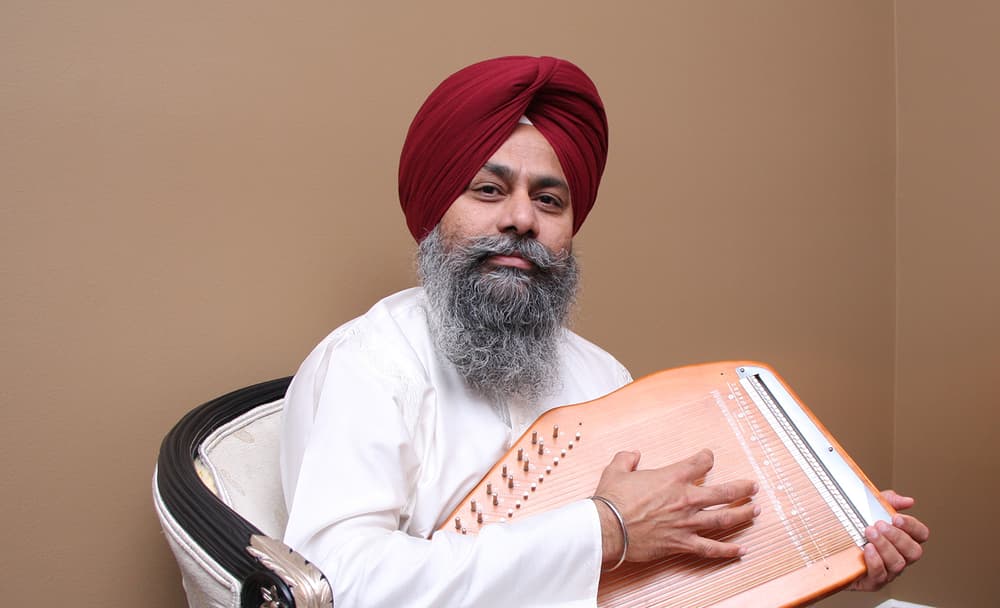
Ghazal is a classical poetic and musical form originating in Persian and Urdu traditions that has become a cornerstone of Indian classical music culture. Structured as a series of independent couplets (called shers), each capable of standing alone with complete meaning, ghazals combine intricate melodic frameworks with deeply emotive lyrical content addressing themes of love, loss, longing, and the human condition. Performed by skilled vocalists with instrumental accompaniment, ghazals require both technical precision and emotional authenticity, making them a sophisticated vehicle for both artistic expression and contemplative spiritual practice.
A ghazal is a poetic form that originated in the Arabian Peninsula and was extensively developed in Persian and Urdu literary traditions before becoming integral to Indian classical music. The word "ghazal" itself refers to the act of speaking to a beloved, capturing the essence of intimate address woven through the form.
The structural foundation of a ghazal distinguishes it from other poetic traditions. A ghazal comprises a series of rhyming couplets called shers, typically ranging from five to fifteen couplets in a single composition. What makes the ghazal unique is that each couplet is metrically and thematically independent—it can be read, understood, and appreciated on its own without reliance on preceding or following couplets. This autonomous structure means that the emotional or philosophical point of each couplet is complete in itself, yet when strung together, the couplets create a unified emotional and artistic experience.
The first couplet, known as the matla, introduces the rhyme scheme and refrain (called the qafia and radif). The qafia is the rhyming word or phrase, while the radif is a repeated word that anchors the rhyme pattern. This rhyme scheme appears in both lines of the matla, and then only in the second line of each subsequent couplet. This creates a musical and linguistic pattern that listeners recognize and anticipate, enhancing the listening experience.
Ghazals are renowned for their exploration of profound emotional and philosophical territories. Traditional ghazals frequently address love and longing—but not primarily romantic love in the conventional Western sense. Rather, the beloved (the addressee in the ghazal) often represents an idealized, sometimes unreachable object of desire that becomes a vehicle for exploring deeper questions about human attachment, separation, suffering, and spiritual yearning.
The pain of separation (called firaq in Urdu) is a central preoccupation. Ghazals articulate the ache of distance from what is desired, whether that distance is physical, emotional, or spiritual. This makes ghazals particularly resonant in contexts of spiritual seeking, where the beloved may represent the divine or ultimate reality.
Beyond love and loss, ghazals contemplate the nature of existence itself—mortality, the passage of time, the paradoxes of human experience, and the search for meaning. The form allows poets to express cynicism, wit, philosophical insight, and raw emotion within the same composition. A single ghazal might move from playful irony to devastating vulnerability across its couplets.
While ghazals originate as poetry, they are primarily experienced as music. A ghazal is sung by a vocalist, typically with instrumental accompaniment provided by instruments such as the sarangi, harmonium, tabla, and other classical Indian instruments. The vocalist interprets the poetic text through melody, rhythm, and emotional expression.
The musical rendering of a ghazal requires considerable skill and artistry. The vocalist must honor the metrical and linguistic structure of the poetry while simultaneously creating melodic variations, ornamentations, and emotional nuances. Each performance of a ghazal is unique because the artist is not merely reciting the text but interpreting it anew—exploring different melodic possibilities, emphasizing different emotional dimensions, and allowing the lyrics to breathe through extended musical passages.
The instrumental accompaniment serves multiple functions: it provides rhythmic structure, responds dialogically to the vocalist's phrases, and creates textural depth. The relationship between vocalist and instrumentalists is conversational rather than purely accompanimentary, with musicians engaging in call-and-response patterns that enrich the overall artistic expression.
Ghazals emerged in the Arab tradition around the 7th century and flourished extensively in Persian culture, becoming a dominant literary form during the Islamic Golden Age. Persian poets like Hafiz and Omar Khayyam created some of the most celebrated ghazals in the tradition. When Islamic and Persian cultures spread into South Asia, the form was adopted and adapted by Urdu-speaking poets and musicians, becoming deeply embedded in Indian and Pakistani cultural identity.
In the Indian subcontinent, ghazals became one of the primary vehicles for expressing spiritual and devotional sentiments, particularly in Sufi Islamic tradition. Sufi poets used the ghazal form to explore the soul's yearning for union with the divine. This spiritual dimension added a layer of meaning and cultural reverence to the form that persists today.
The ghazal tradition is intimately connected to the development of Hindustani classical music. While Hindustani music encompasses many forms—khayal, thumri, dadra—ghazals represent a distinct genre that bridges the poetic and musical worlds. Master ghazal singers became celebrated cultural figures, and their interpretations of classic and contemporary ghazals shaped how audiences experienced and understood the form.
In the 20th century, ghazals experienced a renaissance in popular culture, becoming widely distributed through film, radio, and recorded music. Artists like Jagjit Singh and Abida Parveen brought ghazals to mass audiences while maintaining artistic integrity and classical rigor. Today, ghazals remain central to South Asian cultural identity and are performed in concert halls and intimate gatherings across India, Pakistan, and diaspora communities worldwide.
Interpreting a ghazal is an act of deep engagement with both the text and the emotional landscape it describes. A skilled ghazal singer approaches the form with sensitivity to the nuances of the Urdu or Persian language, understanding the layered meanings, wordplay, and cultural references embedded in the poetic text.
The performer must balance fidelity to the established melodic framework (called the raga or musical mode in Indian classical contexts) with personal interpretation and improvisation. Traditional ghazal performances often include substantial instrumental interludes and vocal improvisations where the artist explores the emotional and technical possibilities of the chosen melodic framework. These passages, called aalap or vistar, allow the performer to deepen the listener's immersion in the emotional world of the ghazal.
Phrasing and articulation are critical. The way a vocalist emphasizes certain words, lengthens vowels, or uses silence can completely transform the emotional resonance of a couplet. A master performer knows which words to linger on, which to quicken, and how to use the space between phrases to create meaning and intensity.
Authenticity of emotion is paramount. While technical skill is necessary, the listener can discern whether a performer is genuinely engaged with the emotional and philosophical content of the text or merely executing the form. The most moving ghazal performances are those in which the artist's own sensitivity and contemplative capacity are fully present.
Beyond its status as an art form, ghazal functions as a spiritual and contemplative practice in many South Asian traditions. The use of the beloved as a metaphor for the divine transforms the ghazal into a vehicle for expressing mystical yearning and devotional longing. Listening to a ghazal can become a meditation, a moment of opening to the emotional and spiritual dimensions of human experience.
For performers, the practice of studying, rehearsing, and performing ghazals can be a disciplined spiritual path. The deep engagement with poetic meaning, the cultivation of emotional sensitivity, and the commitment to excellence in expression all constitute forms of spiritual discipline. Many ghazal traditions are taught within guru-shishya (teacher-student) lineages that emphasize not just technical mastery but the cultivation of character and consciousness.
The ghazal's emphasis on universal human emotions—longing, loss, attachment, and the search for meaning—creates spaces where listeners from diverse backgrounds can recognize their own inner life reflected and validated. In this sense, the ghazal serves a profound psychological and spiritual function, offering both beauty and catharsis.
To deepen engagement with ghazal, consider listening to recordings by master performers and attending live performances when possible. The experience of hearing a ghazal performed live, with all the improvisational nuance and emotional presence that such performances contain, is distinct from recorded versions. Reading translations of classic ghazals by poets like Ghalib, Mir, and Hafiz can illuminate the poetic dimensions that underlie the musical form. Many cultural centers and universities offer ghazal appreciation classes and workshops that provide context for understanding the tradition's history and aesthetic principles. Learning even basic Urdu or Persian can significantly deepen appreciation of the wordplay and cultural references in ghazals. Finally, approaching ghazals with openness to both their technical complexity and their capacity to evoke genuine emotional response allows the form to fulfill its function as both art and spiritual practice.


