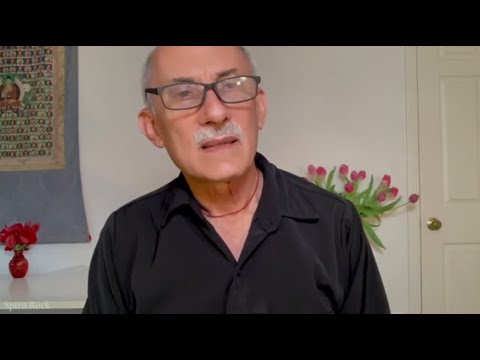
In this teaching, Jack Kornfield addresses how Buddhist monks observe and celebrate Christmas, exploring the intersection of Buddhist practice and seasonal celebration. Rather than viewing Christmas as an exclusively Christian holiday, Kornfield frames the season as an opportunity to embody universal principles of generosity, loving-kindness, and connection—values that sit at the heart of both Buddhist practice and the Christmas spirit. The teaching illustrates how monks approach gift-giving, community, and the deeper meaning of celebration within a contemplative context.
Buddhist monks, despite the holiday's Christian origins, often engage meaningfully with the Christmas season. Rather than rejecting it as foreign to their tradition, many monastic communities recognize the opportunity to deepen their core practices during this time of heightened collective intention around generosity and family connection. Christmas, in this view, becomes a vehicle for practicing the Buddhist path rather than a contradiction to it.
Kornfield's teaching suggests that monks use this season to reflect on and strengthen their commitment to metta (loving-kindness) and dana (generosity)—two central Buddhist practices. The holiday becomes not a religious observance but a reminder of shared human values that transcend doctrinal boundaries.
The heart of Kornfield's teaching centers on a radical reframing of generosity. Rather than participating in commercial gift-giving or personal accumulation, Buddhist monks embody what Kornfield calls becoming "an island of generosity." This phrase captures a fundamental shift in how we relate to the season: instead of seeking to receive or protect what we have, we become a source of outflowing care.
In monastic settings, this might manifest as monks extending their usual almsgiving awareness, their community service, or their heart practices with renewed intention. Some monasteries organize acts of service in their surrounding communities—feeding the homeless, visiting the sick, or simply offering their presence and blessing to those who visit.
Kornfield emphasizes that this generosity is not sentimental or performative. It is rooted in the Buddhist understanding that separation between "us" and "them" is illusory. When we cease making others into outsiders or opponents, we naturally become "seed planters of the world"—those whose actions ripple outward to create connection and care.
A central theme in Kornfield's teaching is the idea of connection as the antidote to isolation and suffering. Christmas, with its emphasis on gathering and togetherness, aligns with this Buddhist value even if the religious framework differs. Monks recognize that the season amplifies people's hunger for belonging, and this can be met through genuine presence and compassion.
The teaching suggests that Buddhist communities use the holiday period to strengthen sangha (spiritual community) and to extend that warmth beyond monastery walls. In this way, monks become "a force of connection and love"—not by adopting Christian theology but by recognizing and amplifying the universal longing that the season represents.
For Buddhist monks, gift-giving during Christmas is recontextualized entirely. Rather than exchanging material goods, the emphasis shifts to offerings of time, attention, blessing, and service. A monk's gift might be a meal served with care, a listening presence, a meditation shared with others, or simply the lived example of someone who has freed themselves from greed and fear.
Kornfield's teaching implies that this approach reveals what gift-giving is fundamentally about: the communication of care and the breaking down of barriers. When monks give in this way, they demonstrate that true generosity is not measured by price tags but by the degree to which it flows from an open heart and serves the well-being of others.
Kornfield's exploration of how Buddhist monks celebrate Christmas is not merely descriptive—it serves as an invitation. The teaching asks: What if we approached the season less as a consumer or as someone seeking personal gain, and more as monks do, as an opportunity to cultivate generosity, presence, and connection?
The monastic model suggests several practical shifts:
- Generosity over acquisition: Frame the season around what you can offer rather than what you can obtain.
- Presence over presents: Invest in meaningful time and attention with others rather than material exchanges.
- Service over celebration: Look for ways to ease the suffering of others during a season when loneliness and hardship are often acute.
- Community over isolation: Strengthen connections with those around you, including those outside your immediate circle.
This reframing does not diminish the joy of celebration; it deepens it by rooting joy in authentic connection rather than temporary pleasure.
The extended episode title mentions "Rediscovering Your Secret Beauty and Sharing Your Special Gift." This phrase points to another layer of Kornfield's teaching: each person has unique capacities for love, wisdom, and service that remain largely hidden in ordinary life. The holiday season, with its focus on giving, creates space to recognize and share these capacities.
In monastic contexts, this might involve monks sharing their particular gifts—one might offer skilled teaching, another musical skill, another the gift of deep listening. For lay practitioners, the season invites us to ask: What are my unique offerings? How can I share what is best in me during this time when others are most receptive to genuine care?
Kornfield's teaching suggests that when we recognize our own inherent beauty and capacity for generosity, we naturally want to share it. The season provides both permission and context to do so.
If Kornfield's teaching on Buddhist monks and Christmas resonates with you, consider exploring further by investigating monastic approaches to mindfulness and loving-kindness practice. Sharon Salzberg's work on metta (loving-kindness meditation) offers a practical entry point into cultivating generosity as a mental discipline. Ram Dass's teaching on "loving awakening" similarly bridges spiritual practice and heartfelt connection with others.
On a personal level, you might experiment with reshaping your own approach to the season: identify one area where you can shift from acquisition to generosity, presence to service, isolation to connection. Notice how this shift affects both your experience of the holidays and your sense of purpose. The monastic example suggests that such shifts are not sacrifices but invitations to deeper satisfaction and meaning—the kind that comes from becoming a source of light rather than seeking light from outside ourselves.