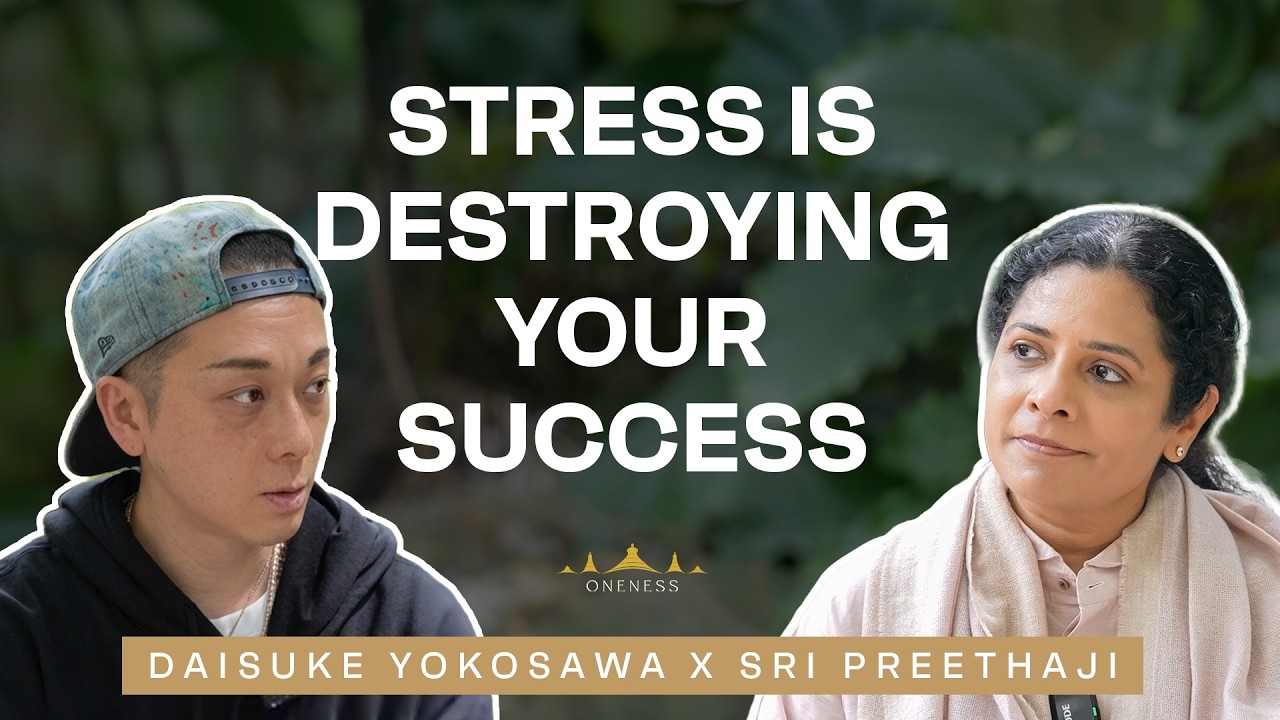
The Oneness Movement teaches that young visionaries—people with ideas for building a better world—thrive not through pressure and hustle, but through cultivating inner peace. Your greatest creations emerge from a calm mind, not from the stress and urgency that often drives ambitious work. This principle reframes how young leaders should approach their visions and creative projects.
Why Young Visionaries Need Peace, Not Pressure
The conventional narrative around ambition and youth leadership often glorifies stress, hustle, and the pressure to prove oneself. Young people with big ideas are told to "push harder," "stay hungry," and "outwork the competition." Yet the Oneness Movement teaches a contrarian principle: your greatest creations—the work that genuinely moves the world forward—come from a place of peace, not pressure.
This distinction is crucial. When a young visionary operates from stress, anxiety, or the fear of failure, their mind is in survival mode. In this state, thinking becomes reactive, defensive, and constrained by limiting beliefs. The nervous system remains tight, and decisions are driven by ego or desperation rather than clarity. Over time, this creates a ceiling on the quality and originality of the work itself.
By contrast, when a visionary works from a stress-free foundation—from inner calm—the mind opens. Creativity flows more naturally. Problem-solving becomes more intuitive. Solutions that would never occur to the pressured mind suddenly become visible. This is not about lowering ambition or avoiding effort; it is about fundamentally changing the internal state from which the effort arises.
The Relationship Between Calm and True Impact
True impact, according to this teaching, is not measured by how hard you worked or how much you suffered for your vision. It is measured by what you actually created and how it serves. A young visionary operating from peace tends to create more sustainable, more aligned, and more effective solutions because their work is not contaminated by the noise of their own unmet psychological needs.
When you are stressed, much of your energy goes toward managing that stress—self-doubt, anxiety, the need for external validation. This diverts resources away from the actual work. A calm mind has all its resources available for creation, for listening to others, for seeing problems clearly. This availability is where real vision emerges.
The teaching also implies a shift in how young people define success. If you measure success by how "on edge" you feel, how many hours you work, or how much you sacrifice, you are measuring the wrong things. The actual measure is impact: Did you solve the problem? Did you create something of value? Did you help build a better world? All of these are more likely to happen when your baseline is peace rather than panic.
How to Build a Stress-Free Foundation as a Young Visionary
Embracing calm as a young visionary does not mean abandoning discipline, focus, or commitment. It means recognizing that your mind and nervous system are tools, and stressed tools do not produce excellent work. This reframing opens the door to practical changes:
- Protect your inner environment: Be intentional about what you consume—media, people, environments—because these shape your baseline stress level. A cluttered or toxic environment keeps you in low-level activation even when you are not actively working.
- Develop a grounding practice: Whether meditation, breathwork, time in nature, or creative play, practice returning to a calm state regularly. This trains your nervous system and makes peace the default rather than a rare achievement.
- Reframe productivity: Productivity is not hours worked; it is quality output per unit of effort. A calm person working focused hours will produce more than a stressed person working long hours with fragmented attention.
- Build support systems: Young visionaries often carry their vision alone, which generates stress. Share the load with mentors, peers, and collaborators who believe in the work.
- Question your assumptions about urgency: Much of what feels urgent is actually conditioned. Ask yourself: Is this truly time-critical, or have I absorbed a cultural narrative that everything must be done immediately?
The Paradox of Relaxed Ambition
One of the deepest insights in this teaching is that relaxed ambition—calm paired with clear intention—is more powerful than anxious striving. This is a paradox that defies conventional wisdom. We are taught that caring deeply about something means suffering for it, that wanting something badly means being in a state of lack and fear. But that equation produces mediocre results.
A young visionary who can hold a clear vision while remaining internally calm has solved one of the fundamental problems that sabotages most ambitious people: the internal war between desire and doubt. There is no internal conflict. The vision is held lightly but firmly. The work is pursued with full commitment, but without the constant low-level desperation that erodes creativity and resilience.
This is what the Oneness Movement means by "youthful visions thrive in peace." It is not poetic language—it is a practical statement about how the mind and nervous system actually work. Visions that come from peace are clearer. The energy that pursues them is more sustainable. The solutions they generate are more elegant because they are not bent by the distortion of the creator's anxiety.
Applying This to Your Own Vision
If you are a young visionary—someone with ideas for how to build a better world, whether in business, art, social change, technology, or any domain—the immediate application is to examine your current state. Are you working from peace, or from pressure? Can you honestly assess how much of your effort is driven by genuine inspiration versus fear of failure or need for validation?
Notice that this is not a judgment. The culture has trained you to believe that stress and pressure are necessary. But testing it for yourself is simple: Identify a time when you did your best work. What was your state? Were you panicked or calm? Rushing or focused? Doubting yourself or trusting your competence? Most people find that their best work came during moments of relative calm and clarity, not during their most stressful periods.
Once you recognize this pattern, the path is to gradually shift your baseline. This is not an overnight change, but a steady redirection of how you approach your vision. It means saying no to some of the busyness and urgency that surrounds you. It means protecting your peace as fiercely as you protect your time.
Where to Go From Here
If this teaching resonates, begin with a single practice: each day, deliberately create 10 minutes of genuine calm. This might be meditation, a walk, sitting with tea, or anything that quiets your mind. Notice how you think differently in those moments. Notice what insights emerge. Over weeks and months, this practice will begin to shift your baseline state, and you will notice that your ideas are clearer, your decisions are better, and your vision becomes more vivid. The work will remain demanding, but the internal friction will diminish. This is how a young visionary not only sustains their vision but creates something that actually lasts.