
EveryGetaway

Browse All Retreats

Find your transformative retreat

retreats

Yoga Retreats
Meditation Retreats
Wellness Retreats
Spiritual Retreats
Adventure Retreats
Creative Retreats
Couples Retreats
Detox & Cleanse
Fitness Retreats
Corporate Retreats
Popular Destinations
BaliSedonaLos AngelesCosta RicaNew YorkSan FranciscoAustinMiamiJoshua TreeTulum
View All CategoriesView All Destinations

Explore All Features

Powerful tools to grow your events

Platform Features

Smart Dynamic Pricing
Ticket Categories
Assigned Seating
Abandoned Cart Recovery
Visitor Recovery
Donations & Sliding Scale
Affiliate Engine
Ticket Scanner
Coupon Codes
Custom Questions
Ticket Sharing
Upsells & Add-ons
Analytics & Reporting
Email Sequences
Waitlist / Notify / Remind
People & Places
Retreat LeadersRetreat OrganizersRetreat CentersKnowledge BaseInspiration
View All FeaturesAbout Us
PricingBlog
Language
Saved events
Browse All Events

retreats

Yoga RetreatsMeditation RetreatsWellness RetreatsSpiritual RetreatsAdventure RetreatsCreative RetreatsCouples RetreatsDetox & Cleanse

Popular Destinations

BaliSedonaLos AngelesCosta RicaNew YorkSan Francisco

People & Places

Retreat LeadersRetreat OrganizersRetreat CentersKnowledge BaseInspiration

Platform Features

Smart Dynamic PricingTicket CategoriesAssigned SeatingAbandoned Cart RecoveryVisitor RecoveryDonations & Sliding ScaleAffiliate EngineTicket ScannerCoupon CodesCustom QuestionsTicket SharingUpsells & Add-onsAnalytics & ReportingEmail SequencesWaitlist / Notify / Remind
View All FeaturesAbout Us
PricingBlog
Log inSeekersRetreat leaders
  • Browse All Retreats
  • For Seekers
  • Yoga Retreats
  • Meditation Retreats
  • Wellness Retreats
  • Spiritual Retreats
  • Adventure Retreats
  • Creative Retreats
  • Couples Retreats
  • Detox & Cleanse
  • Fitness Retreats
  • Corporate Retreats
  • Retreats
  • Workshops
  • All Categories →
  • Bali, Indonesia
  • Costa Rica
  • Tulum, Mexico
  • Sedona, Arizona
  • Thailand
  • Portugal
  • India
  • Hawaii
  • Greece
  • Spain
  • California
  • Colorado
  • Sri Lanka
  • Morocco
  • All Cities →
  • For Retreat leaders
  • For Organizations
  • Pricing
  • 500K+ Buyer Network
  • Abandoned Cart Recovery
  • Smart Dynamic Pricing
  • Ticket Categories
  • Recurring Events
  • Assigned Seating
  • Affiliate Engine
  • Waitlist / Notify
  • Ticket Scanner
  • Embed Widget
  • Event Syndication
  • Message Center
  • Integrations
  • Reports
  • All Features →
  • About
  • The Ecosystem
  • Blog
  • Glossary
  • Inspiration
  • Help Center
  • Contact
  • API Docs
  • Brand Assets
  • Careers
  • Press
  • Terms of Service
  • Privacy Policy

Retreats

  • Browse All Retreats
  • For Seekers
  • Yoga Retreats
  • Meditation Retreats
  • Wellness Retreats
  • Spiritual Retreats
  • Adventure Retreats
  • Creative Retreats
  • Couples Retreats
  • Detox & Cleanse
  • Fitness Retreats
  • Corporate Retreats
  • Retreats
  • Workshops
  • All Categories →

Destinations

  • Bali, Indonesia
  • Costa Rica
  • Tulum, Mexico
  • Sedona, Arizona
  • Thailand
  • Portugal
  • India
  • Hawaii
  • Greece
  • Spain
  • California
  • Colorado
  • Sri Lanka
  • Morocco
  • All Cities →

For Retreat leaders

  • For Retreat leaders
  • For Organizations
  • Pricing

Features

  • 500K+ Buyer Network
  • Abandoned Cart Recovery
  • Smart Dynamic Pricing
  • Ticket Categories
  • Recurring Events
  • Assigned Seating
  • Affiliate Engine
  • Waitlist / Notify
  • Ticket Scanner
  • Embed Widget
  • Event Syndication
  • Message Center
  • Integrations
  • Reports
  • All Features →

Company

  • About
  • The Ecosystem
  • Blog
  • Glossary
  • Inspiration
  • Help Center
  • Contact
  • API Docs
  • Brand Assets
  • Careers
  • Press
  • Terms of Service
  • Privacy Policy
EveryGetaway
© 2026 EveryGetaway. All rights reserved.
Inspiration

I Am Infinite Love: Kirtan and Handpan Music for Awakening

Paloma Devi
Paloma Devi
Oct 14, 2023
7 min read
Watch · 6

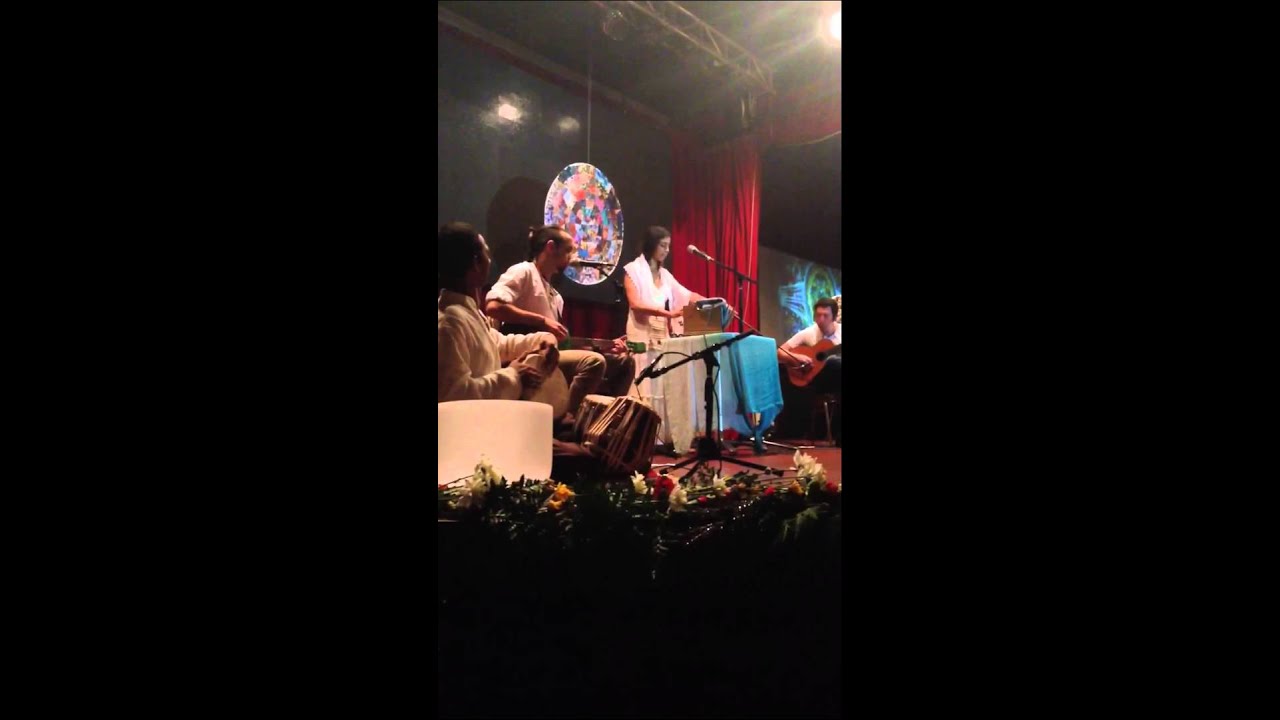
Paloma Devi and Joel Karabo Elliott perform "I Am Infinite Love," a devotional kirtan composition by The Jahidi Experience that fuses handpan (hand drum) with layered choral vocals to explore themes of awakening, divine service, healing, and collective love. The performance centers on the statement "I am infinite love" as both affirmation and invitation, paired with invocations of truth, liberation, and spiritual transformation. Rather than a passive listening experience, the piece functions as a participatory meditation and call to action — asking listeners to recognize themselves not as separate beings but as channels for divine love and healing in the world.

Read · 7 sections

What Does "I Am Infinite Love" Mean as a Spiritual Practice?

The central affirmation that anchors this composition — "I am infinite love" — operates on multiple levels. First, it is a statement of identity: not a description of conditional or limited love, but an assertion that one's core nature is infinite, boundless, and intrinsically loving. In kirtan tradition (call-and-response devotional singing), such affirmations are repeated and sung not to convince the intellect but to awaken recognition in the body and heart. The performers lay this out clearly: the phrase is sung in unison and call-and-response patterns, inviting the listener to internalize it not as belief but as remembrance.

Paloma and Joel structure the piece so that "I am infinite love" alternates with supporting affirmations: "we are love," "awakening one who has been sleeping," and "the love of Jesus." This creates a movement from individual recognition (I am) to collective identity (we are), suggesting that infinite love is not a personal possession or achievement but a shared, fundamental nature that becomes visible when awakening occurs. The repetition is deliberate and hypnotic — not meant to bore but to bypass the thinking mind and access a deeper, non-rational knowing.

How Does Handpan Music Support Meditative and Devotional States?

The Jahidi Experience contributes a handpan — a mallet-struck, dome-shaped idiophone with a warm, resonant tone — as the instrumental foundation. The handpan's unique timbre, which sits between percussion and pitched melody, creates a sonic container that is both grounding and transcendent. Unlike drums, which mark time, the handpan in this context becomes almost a second vocalist, weaving in and out of the choral lines without asserting dominance.

The handpan's role here parallels its use in contemporary sound meditation and healing contexts. Its slow, even tonal quality slows the listener's breathing and heart rate, creating a physiological shift toward parasympathetic activation — the body's "rest and digest" state. This makes it an ideal instrument for kirtan, which aims not to excite energy but to gather and focus it. The combination of repetitive vocal affirmation + stable harmonic foundation + warm instrumental tone creates redundancy across sensory channels: the ear hears the message, the body feels the resonance, and the nervous system begins to attune to a frequency associated with peace and wholeness.

What Is the Spiritual Role of Service and Vanity in This Teaching?

Embedded in the lyrics is a critical ethical invocation: "May I be service to humanity, not for my own vanity, for love and healing and truth." This line draws a distinction between two modes of spiritual work — service rooted in authentic compassion versus performance rooted in ego. The specificity matters. Rather than vague appeals to "helping," Paloma and Joel name a real spiritual hazard: the performer or teacher who uses devotional practice as a vehicle for personal acclaim or self-aggrandizement.

This echoes a long lineage of Hindu and Sufi teaching warnings about the ego's capacity to co-opt spiritual language. Even the affirmation "I am infinite love" can become a subtle aggrandizement if sung to elevate oneself above others. The composers guard against this by immediately pivoting to service orientation — the recognition that infinite love is not a personal credential but a capacity that belongs to all beings and should be channeled outward. The lyric "keep keeping and child living and woman loving and man forgiving" extends this further, grounding service in concrete relational acts across gender and age, not abstract spirituality.

How Does the Cornerstone and Rejection Theme Function Spiritually?

A striking section invokes the image of the rejected stone becoming the cornerstone: "The cornerstone, the one who has been rejected, surely you shall be built upon, to free the people, liberate their hearts." This is a direct reference to the Psalmic image of Christ as the rejected stone (Psalm 118:22), but the performance removes it from purely Christian theology and repositions it in a universal context of liberation and healing.

The teaching embedded here is that rejection, marginalization, and even spiritual humiliation can become the foundation of one's power to serve and liberate others. Those who have suffered exclusion or spiritual dismissal are, paradoxically, positioned as the very ones whose lived understanding can free others. This inversion — the rejected as the savior, the broken as the builder — appears across mystical traditions. It suggests that the path to authentic service does not require being perfect, validated, or celebrated but rather requires willingness to transform personal pain into collective healing.

What Does "Awakening One Who Has Been Sleeping" Mean?

The refrain "Awakening one who has been sleeping" appears multiple times, sometimes inverted as "Seeking awakening, no one who has been sleeping." In kirtan and Vedantic contexts, "sleep" refers to ignorance (avidya) — the mistaking of the temporary, egoic self for one's true nature. "Awakening" is not a future achievement but a continuous recognition, a remembering of what is already true.

The phrasing is deliberate: not "awaken yourself" but "I am awakening one who has been sleeping" — a statement that casts the singer (and listener) as both the awakener and the one awakening. This dissolves the binary between healer and healed, teacher and student, subject and object. It is a collaborative statement of mutual transformation. In the context of a live performance or group kirtan, this becomes a shared intention: we gather not to extract spiritual knowledge from an external source but to awaken that knowledge within each other through resonance, attention, and vocal participation.

What Is the Relationship Between Love and Liberation in This Piece?

The composition culminates in a repeated invocation: "We are love, love, love, love... Infinite love." This is paired with language of liberation — "free the people, liberate their hearts." In this framing, love and liberation are inseparable. Love is not sentiment or romantic attachment but a force that dissolves the boundaries and false separations that keep people trapped in fear, shame, and isolation.

To "liberate the heart" is to remove the barriers — guilt, unworthiness, perfectionism, trauma — that prevent one from recognizing and expressing one's infinite nature. The repeated chanting of "we are love" functions as both affirmation and practice: by singing it, the group practices the dissolution of the boundary between self and other, between my love and your love, into a unified field of loving presence. This is not metaphorical for the performers but practical — the sustained vocal tone and harmonic alignment create a literal sympathetic resonance, where nervous systems entrain to each other and individual boundaries relax.

Where to Go From Here

For those drawn to this work, deepening engagement can take several forms. First, listen to the full composition repeatedly — kirtan's power increases with repetition, as the affirmations penetrate the body and psyche at subtle levels. Second, if possible, attend live kirtan sessions or group chanting events where you can experience the entrainment and collective resonance directly. Third, investigate the theological and philosophical sources Paloma and Joel are drawing from: the Christ-centered language of liberation (Psalm 118), the Hindu concept of awakening (bodh), and the Sufi understanding of love as the fundamental reality. Finally, consider the ethical invitation embedded in the piece: if you adopt the affirmation "I am infinite love," ask yourself honestly whether you are channeling that toward service to others or toward self-aggrandizement. The spiritual work is not in the singing alone but in the integration of the teaching into relational life.

Comments

Loading the conversation…

Transcript

[0:01] I

[0:03] [Music]

[0:05] am

[0:07] [Music]

[0:07] [Applause]

[0:10] infin yeah take it away

[0:13] pal I

[0:15] am

[0:19] s Awakening one who has been

[0:26] s i

[0:29] Am

[0:33] infin

[0:39] [Music]

[0:48] [Music]

[0:59] love

[1:02] [Music]

[1:11] we are

[1:16] love love love love

[1:20] [Music]

[1:29] love

[1:33] [Music]

[1:59] la

[2:01] brother

[2:04] Joel there

[2:08] [Music]

[2:16] beautiful I love

[2:24] that the grace of God pour freely

[2:28] through me

[2:33] may I be service to

[2:41] humanity not for my own

[2:46] vanity for love and healing and Truth

[2:51] keep keeping and child living and woman

[2:55] loving and man

[2:58] forgiving INF

[3:01] [Music]

[3:11] Lord oh I don't want it up and

[3:15] [Music]

[3:16] seeking

[3:18] Awakening no one who has been

[3:21] [Music]

[3:24] sleeping I am the love the love of J you

[3:30] thanks for the love the Cornerstone the

[3:33] one who has been

[3:35] rejected surely you shall be built upon

[3:39] to free the people liberate their

[3:44] [Music]

[3:48] hearts be the

[3:52] follower a leader you have been called

[3:55] to be the

[3:58] father m

[4:03] I am the

[4:05] one you are the

[4:10] one can we all

[4:14] sing we

[4:16] [Music]

[4:26] are we are love love love

[4:31] love

[4:36] [Music]

[4:44] Infinite

[4:50] infin we are love love love love love

[4:56] love

[4:58] Infinite love

[5:01] sing it out

[5:03] loud we are

[5:07] love love love

[5:11] ising

[5:16] love we

[5:19] [Music]

[5:21] are we

[5:27] are

[5:28] in

[5:33] to

[5:34] [Music]

[5:54] [Music]

[5:58] Lord

[6:03] love

[6:05] [Music]

[6:28] love

[6:30] [Music]

[6:40] [Music]

[6:45] better

Paloma Devi
ArtistPaloma Devi

Kirtan artist dedicated to sharing the transformative power of devotional chanting through performances and teachings rooted in the Bhakti lineage.

View profileWebsite
Explore Topics
KirtanHandpan-musicDevotional-singingSpiritual-awakeningLiberation

Got Questions?

Frequently Asked Questions

Kirtan is a call-and-response devotional singing practice, often from Hindu and yogic traditions, that uses repetitive affirmations and choral participation to awaken recognition of one's true nature. Rather than intellectual understanding, kirtan aims to shift the nervous system and embody truth through sustained vocal resonance, harmonic alignment, and collective rhythm.
Affirmations in kirtan context bypass the rational mind and work through somatic and emotional channels. Repeated singing of 'I am infinite love' trains the body and heart to recognize this as their fundamental nature, rather than something to achieve or become. The repetition and group context deepen the embodied recognition.
The handpan's warm, resonant tones naturally slow breathing and heart rate, activating the parasympathetic nervous system. Its non-percussive yet rhythmic quality creates a stable sonic container that makes it ideal for devotional music, allowing listeners to focus inward without the driving urgency of other drums.
This reference suggests that those who have experienced rejection, marginalization, or spiritual dismissal are paradoxically positioned to liberate and heal others. The teaching inverts worldly hierarchies: brokenness and exclusion become the foundation for authentic service and transformation.
The movement from 'I am infinite love' to 'we are love' reflects a shift from individual recognition to collective identity. It suggests that infinite love is not a personal possession but a shared fundamental nature that becomes visible through awakening and is expressed through our relationships with others.
The lyric 'may I be service to humanity, not for my own vanity' names a real spiritual hazard: the ego's capacity to co-opt spiritual language and practice for self-aggrandizement. True service requires constant vigilance to ensure that spiritual work is rooted in authentic compassion, not personal acclaim.

Continue Reading

More from Paloma

View All
Dance of Transformation: Om Namah Shivaya Through Movement
Inspire

Dance of Transformation: Om Namah Shivaya Through Movement

A meditative kirtan and movement experience exploring the sacred mantra Om Namah Shivaya through devotional chanting and embodied practice w…

1 min read
Music as Medicine: Kirtan, Rhythm, and Healing
Inspire

Music as Medicine: Kirtan, Rhythm, and Healing

Paloma Devi explores how sacred music and rhythm function as medicine for the body and spirit, combining traditional kirtan with contemporar…

1 min read
Bhaja Mana Radha Govinda Kirtan: Meaning and Practice
Inspire

Bhaja Mana Radha Govinda Kirtan: Meaning and Practice

A seven-minute London kirtan of the maha-mantra Bhaja Mana Radha Govinda, unpacked: its meaning, its call-and-response form, and the New Yor…

1 min read
Minimal Vocalization as Spiritual Practice: Power in Simplicity
Inspire

Minimal Vocalization as Spiritual Practice: Power in Simplicity

A brief live vocal interlude demonstrates how devotional sound—stripped to its essence—can invoke presence and transformation through pure r…

1 min read

Keep exploring

Continue your journey

More wisdom and gatherings from across the BrightStar directory.

More Articles

Browse the full library of teachings, interviews, and guides.

Back to all articles →

Teachers & Artists

Explore the lineages, musicians, and guides of the conscious world.

Explore artists →

Find an Event

Kirtan, retreats, sound baths, breathwork, festivals — happening soon.

Browse events →