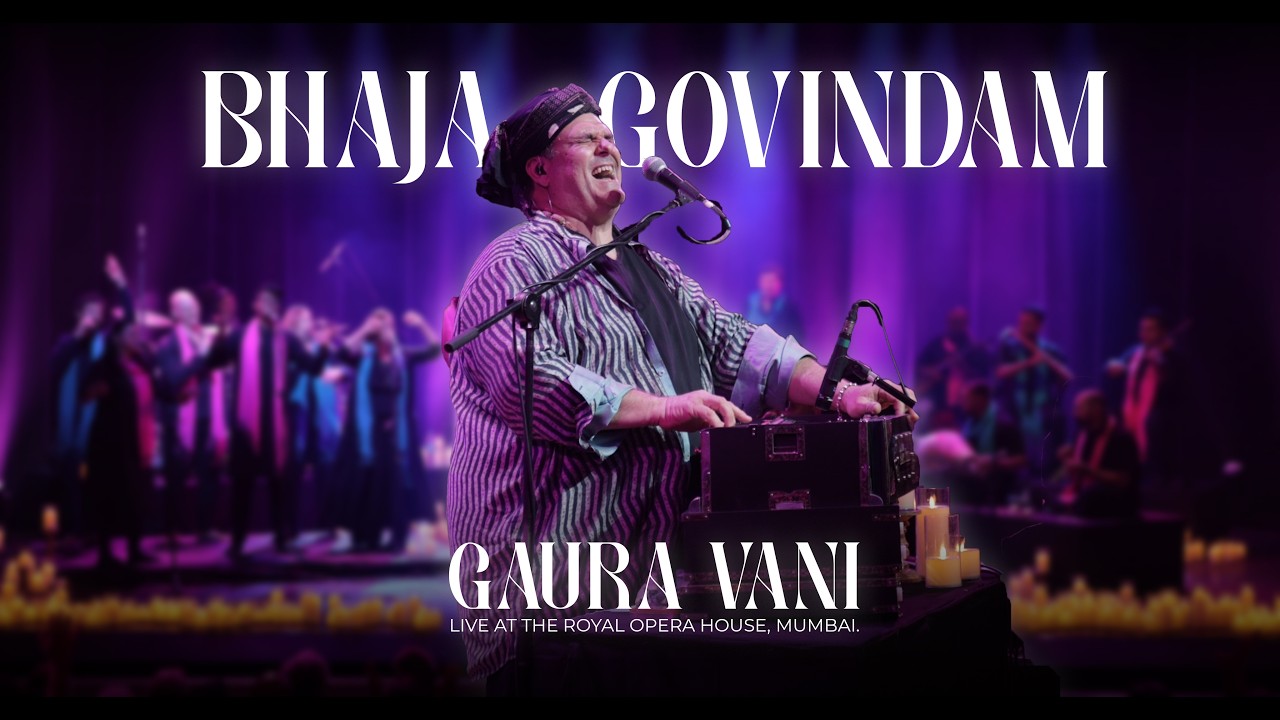
In June 2020, Gaura Vani and their family performed a live kirtan session at ISKCON Metpally, a Krishna temple in India's Telangana state. The 43-minute performance, captured on video and shared through Gaura Vani's official channel, draws from one of the world's oldest continuous traditions of devotional chanting—a practice woven through Hindu, Vaishnava, and contemporary global spiritual communities for centuries.
Kirtan is a form of call-and-response devotional chanting, rooted in the bhakti (devotion) traditions of India. In its simplest form, a lead singer or group chants a mantra or name of a deity, and the audience responds. The practice is participatory by design—not a performance for passive listeners but an invitation for everyone present to join in the invocation. Instruments typically include harmoniums (hand-pumped keyboards with a resonant, drone-like quality), hand drums called mridangams or tablas, and often cymbals or karatalas (hand cymbals), which keep the rhythmic pulse steady.
The chanting builds in energy and intensity over time, creating a meditative state through repetition and communal participation. Devotees believe that repeating the names of Krishna—Gaura (the golden incarnation of Krishna), Hari, Rama, and others—carries spiritual significance beyond mere sound; the names themselves are thought to embody divine presence. This isn't music as entertainment in the Western sense, though music is certainly present. It's understood as a direct spiritual practice, a way to approach the sacred through sound and breath.
Kirtan performed by family members carries particular resonance in Vaishnava communities. In many Hindu devotional traditions, the family unit is understood not just as a social structure but as a spiritual one—a space where children absorb the practice of devotion through participation rather than instruction. When Gaura Vani and family perform together, they model this continuity: the transmission of spiritual practice across generations, singing the same mantras their ancestors sang.
ISKCON Metpally, the venue for this performance, is a temple within the International Society for Krishna Consciousness—a global movement that emerged in the 1960s but draws its spiritual authority from classical Vaishnava scriptures and the living lineage of guru-to-disciple transmission. Temples serve as gathering places where the community assembles specifically for kirtan and related devotional practices. A 43-minute session is a substantial commitment, suggesting both a dedicated local community and performers invested in creating a deep, immersive experience.
The video was uploaded in June 2020—the first full month of lockdown in much of the world. Religious gatherings had moved online or ceased entirely. That Gaura Vani and family were performing live, in person, at a temple in India speaks to both the resilience of in-person spiritual practice and the urgency many felt to maintain connection during isolation. The performance has accumulated nearly 24,000 views, suggesting a hunger for this form of practice, whether from devotees in the local community, diaspora members seeking connection to their tradition, or people new to kirtan drawn by the form's accessibility and beauty.
Kirtan has gained wider visibility in recent decades beyond traditional Hindu and Vaishnava circles. Yoga studios, meditation centers, and secular spiritual communities have adopted the practice, often stripping it of its explicitly devotional framework and repackaging it as a wellness modality. Whether experienced as devotional practice or as sound meditation, kirtan's core mechanism remains: collective voicing of sacred sound, and the internal shift that repetition and community singing can produce.
Leading a kirtan—especially one lasting 43 minutes—requires particular skill. The leader must have a strong voice and an intuitive sense of timing: when to repeat a line, when to introduce variation, when to build intensity, when to bring it back down. They must read the room, sensing the energy and participation level of the assembly. On harmonium, they establish a drone and melodic framework that singers can follow. The interaction between lead voice and ensemble, between discipline and spontaneity, between individual expression and collective surrender, defines the experience.
Gaura Vani, performing with family, is part of a lineage of kirtan artists who have dedicated themselves to this form. The practice of recording and sharing these sessions—making them available to people who cannot attend in person—is a modern adaptation of an ancient tradition, extending the reach of communal devotion beyond the temple walls.
If you're drawn to kirtan, the most direct path is to attend a live session at a local Krishna temple, yoga studio, or spiritual center. The form is participatory—you'll learn the mantras by listening and joining in. If you're curious about the broader Vaishnava devotional tradition, texts like the Bhagavad Gita and the Bhagavata Purana provide philosophical grounding. For contemporary explorations of kirtan as spiritual practice, seek out recordings and performances by established artists in the tradition. And if you encounter Gaura Vani's work, approach it as both sound and spiritual invitation—the chanting is there to be sung with, not merely heard.