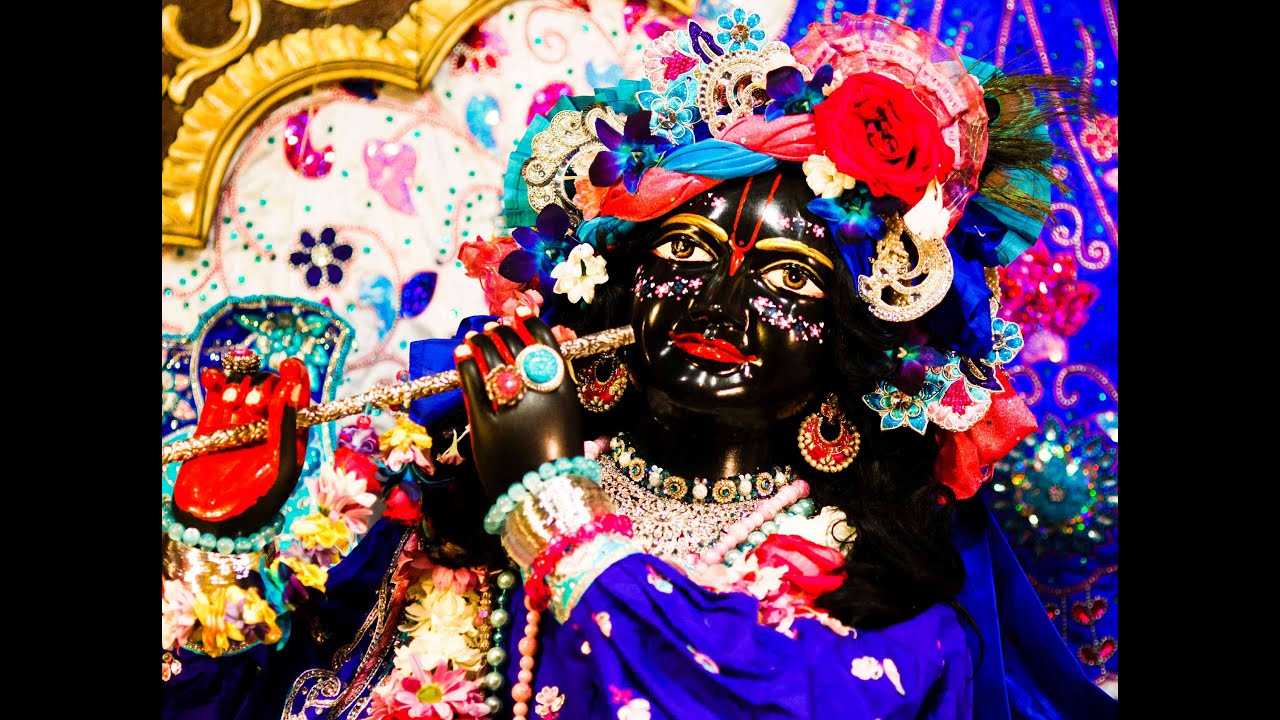
The setting is Montreal, home, a singer preparing to dedicate a performance to something sacred. Bader Soma is about to lead the Madhuram Medley—a "sweet selection" of Krishna kirtan, melodies composed from centuries of spiritual tradition. Outside, it's Gaura Purnima, the appearance day of Lord Chaitanya Mahaprabhu, the 15th-century saint who transformed India's spiritual landscape and gave the world, as ancient texts describe, "the gift of love of God." What Bader Soma is singing that day isn't just music. It's a practice rooted in a revolution.
Kirtan—congregational chanting, sacred singing in call-and-response—sits at the heart of Krishna bhakti, the devotional path to the divine through emotional connection. It's simultaneously a form of meditation, an emotional release, and a communal act. According to the classical Sanskrit text Sri Siksastakam, which is quoted in the Madhuram Medley performance dedication, Krishna chanting "cleanses the heart of all the dust accumulated for years and extinguishes the fire of conditional life, of repeated birth and death." The verse speaks to an ancient understanding: that certain sounds, when sung with attention and devotion, possess the power to transform consciousness itself.
Bader Soma describes the purpose simply: "singing to the Divine within our heart, and connecting with that space of infinite love, joy, and bliss."
In this practice, kirtan becomes a vehicle for moving beyond anxiety, fear, and worry—a way of accessing something transcendent through the voice itself. The promise isn't metaphorical. According to the tradition, the practice works on multiple levels at once: the sonic vibrational impact on the body, the emotional resonance in the heart, the focused attention on sacred meanings, and the power of collective participation.
The word "madhuram" carries a specific meaning in Sanskrit: sweetness. The Madhuram Medley is, literally, a sweet selection—a carefully curated journey through favorite compositions and traditional melodies. This isn't random poetry. In the bhakti tradition, sweetness is a spiritual category, not sentimentality. It refers to the direct, nectar-like quality of experiencing the divine—what the Sri Siksastakam calls "the nectar for which we are always anxious."
This concept pushes back against a common misconception: that spiritual practice must be austere, difficult, or joyless. The classical bhakti tradition, and particularly the lineage flowing from Chaitanya Mahaprabhu, insists otherwise. Sweetness, beauty, music, and emotional resonance are not obstacles to transcendence—they are the very means. When Bader Soma describes creating "a place in our heart where all anxiety, fear, and worry melts away," he's invoking this specific understanding: that the spiritual path can feel like coming home, not like punishment.
Bader Soma's decision to dedicate this performance to Gaura Purnima—to Chaitanya Mahaprabhu—isn't incidental devotion. It's an act of lineage, of consciously carrying forward something revolutionary that began five centuries ago in Bengal. Chaitanya was born in 1486 and became one of history's most significant spiritual reformers. He's known as the founder of the congregational chanting of Hare Krishna—the very practice embodied in kirtan—but his impact extends far beyond the spiritual realm.
According to the performance dedication, Chaitanya "transformed the face of India in four respects: philosophically, by encountering, defeating and converting the greatest philosophers and thinkers of His day; religiously, by organizing the largest, most widespread theistic movement in India's history; socially, by His strong challenges to the religious inequities of the caste system; politically, by His organization of a massive civil disobedience movement in Bengal, more than four centuries before Gandhi."
This is crucial. The first point—philosophical dominance—meant Chaitanya wasn't merely starting a devotional sect. He was reshaping India's intellectual discourse itself, demonstrating to the greatest minds of his era that devotion was not inferior to non-dual philosophy but superior to it. He was converting philosophers, which meant converting the intellectual apparatus of his time.
The religious transformation created an unprecedented scale of organized devotional practice. But the social and political dimensions reveal why dedications like Bader Soma's matter so much. Chaitanya didn't confine his teaching to the spiritual realm. He directly challenged the caste system—the very structure that had, for millennia, reserved access to sacred knowledge and spiritual practices for the Brahmin class alone. By declaring that everyone—regardless of caste, gender, or birth status—could access the divine directly through chanting, he was undermining not just religious authority but the entire social hierarchy.
And he did it politically. The civil disobedience movement in Bengal wasn't mystics retreating from the world. It was spiritual practitioners actively challenging secular authority in the name of religious freedom, demonstrating that devotional practice and social action were inseparable.
Understanding Chaitanya's role is crucial to understanding what kirtan actually is in its full context. It's not simply a meditation technique or a feel-good musical practice. It's a deliberately democratized path to the divine—one that intentionally breaks down barriers and creates access. By teaching congregational chanting as an available practice for anyone, Chaitanya was dismantling hierarchies embedded in religious life. You didn't need to be a Brahmin. You didn't need formal education. You didn't need to be male. You could sing. You could chant. You could access divinity directly.
The call-and-response structure of kirtan means there's no audience—everyone participates. There are no prerequisites, no spiritual credentials required. You show up, you listen, you join in. This remains quietly radical today. When Bader Soma leads the Madhuram Medley from home in Montreal, he's participating in a lineage that understood music and chanting as tools for awakening both individual consciousness and collective liberation. In contemporary spiritual life, where so much practice can be individualized, commodified, or gate-kept behind expensive retreats and exclusive lineages, kirtan retains that original democratic power.
The description of the Madhuram Medley emphasizes "a place in our heart where all anxiety, fear, and worry melts away." This isn't hyperbole drawn from modern wellness language. It's grounded in classical bhakti understanding: that certain states of consciousness are both naturally available to us and also obscured by patterns of mind—the "dust accumulated for years," as the Sri Siksastakam describes it.
Kirtan works through multiple dimensions simultaneously. There's the sonic dimension—the actual vibrational impact of chanting, the way the voice reverberates through the body and the nervous system. There's the emotional dimension—the way singing creates movement in the heart and the capacity to feel. There's the conceptual dimension—focusing the mind on meanings and Sanskrit terms, each with layers of philosophical significance. And there's the communal dimension—the power of voices joining together, the sense of shared intention and mutual recognition of the divine in each other.
The Madhuram Medley, structured as "a sweet selection" of "favorite compositions," suggests that the path to states of "infinite love, joy, and bliss" doesn't require austerity or severity. It can be beautiful. It can be musical. It can be, quite literally, sweet. This reflects Chaitanya's own teaching: that joy is not separate from spirituality but integral to it.
The Madhuram Medley was released in March 2020, recorded at home in Montreal—details that carry weight given the timing. This was the moment when the global pandemic was beginning, when isolation was becoming mandatory and uncertainty was spreading. At that exact moment, Bader Soma chose to offer kirtan—not as escapism, but as a spiritual technology tested across centuries. The dedication to Chaitanya, the emphasis on "clearing the heart," the promise of accessing "infinite love, joy, and bliss"—these weren't naive gestures. They were grounded in a living tradition and offered with full awareness of the historical power of these practices. In times of crisis, when fear becomes the dominant emotion, the very practice that Chaitanya taught—congregational chanting as a path to shifting consciousness—becomes urgent.
The Madhuram Medley is available across platforms—Spotify, Facebook, the artist's website—making it accessible in the way Chaitanya himself insisted: without barriers, for anyone who finds value in it.
To explore Bader Soma's full catalog and upcoming performances, visit his official website at badersoma.com or connect through his Facebook page at facebook.com/purnimastudios. The Madhuram Medley is available on Spotify and other streaming platforms. To deepen your understanding of kirtan practice, seek out guided chanting sessions in your area or explore recordings from bhakti communities. The Sri Siksastakam verse referenced in this performance—often called the "Eight Prayers of Chaitanya"—is available in multiple translations and offers profound insight into the philosophical foundations of kirtan practice.