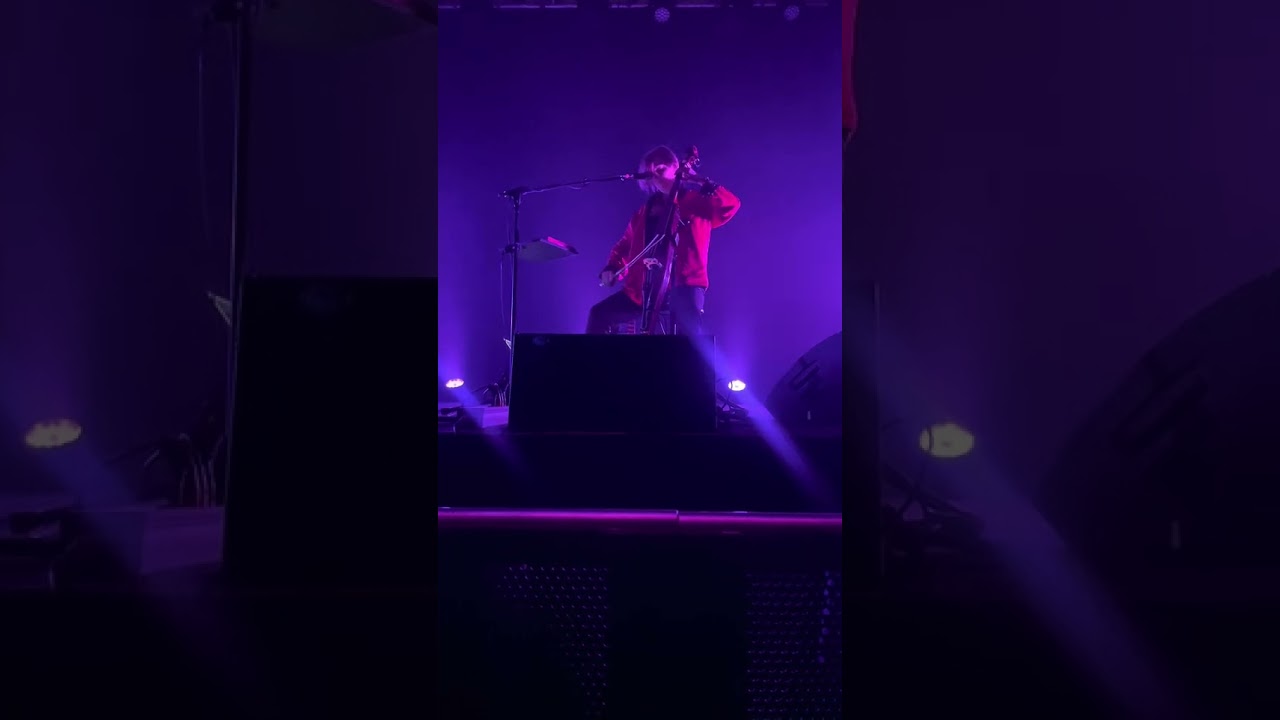
Shannon Hayden performs "Night by Dark Water," a live kirtan and spiritual music piece, at Stanford's Center for Computer Research in Music and Acoustics. The performance demonstrates how contemporary musicians are reviving and reframing kirtan—the call-and-response singing practice rooted in Hindu and yogic traditions—in academic and secular spaces. This session captures the intersection of devotional sound practice, live performance art, and contemplative music as a vehicle for presence and collective experience.
What is kirtan and how does it function as spiritual practice?
Kirtan is a participatory singing practice originating in Hindu, Sikh, and yogic traditions, where a lead vocalist chants sacred names, mantras, or devotional phrases, and the audience or sangha (spiritual community) responds with call-and-response patterns. Unlike concert music designed for passive listening, kirtan invites active vocal participation from all present, creating a shared sonic field that practitioners believe facilitates states of presence, devotion, and connection.
The practice operates on several levels simultaneously: musically, it uses repetition and rhythm to anchor attention; spiritually, it channels devotion through sound and breath; communally, it synchronizes individual voices into collective resonance. When Shannon Hayden performs kirtan pieces like "Night by Dark Water" in contemporary settings such as Stanford CCRMA, she bridges traditional practice with modern concert contexts, demonstrating how these ancient forms remain alive and relevant in 21st-century musical and contemplative spaces.
How does live performance shape the kirtan experience?
Live kirtan performance differs fundamentally from recorded music or even from silent meditation. The presence of a skilled vocalist creates what might be called a "sonic container"—a held space structured by melody, rhythm, and intention. The performer's breath, tone quality, and attention directly influence the field available to listeners. At a venue like Stanford CCRMA, a specialized acoustics research center, the technical qualities of the space itself become part of the practice: how sound reflects, decays, and travels through the room affects how participants experience and absorb the chanting.
Shannon Hayden's live performance also demonstrates the performer's role as both guide and fellow traveler. Rather than maintaining the detached professionalism of a concert musician, a kirtan vocalist remains present to their own practice while holding space for others. This requires real-time responsiveness—listening to the energy of the room, adjusting tempo or phrasing based on collective resonance, and using silence as purposefully as sound.
Why bring kirtan to academic institutions like Stanford CCRMA?
Placing kirtan in an academic music research environment signals an important cultural shift: the recognition that contemplative and devotional music practices merit serious scholarly and artistic attention. Stanford's Center for Computer Research in Music and Acoustics is known for bridging scientific inquiry with artistic practice—exploring how sound works, how technology shapes music, and how music shapes consciousness.
When Shannon Hayden performs at CCRMA, she's participating in a conversation that asks: What can neuroscience, acoustics, and music theory learn from thousands of years of devotional sound practice? Conversely, how can contemporary technology, research, and interdisciplinary inquiry deepen and preserve kirtan traditions? This positioning also makes the practice accessible to people—students, researchers, curious listeners—who might not encounter it in traditional Hindu or yoga contexts, potentially opening the practice to new practitioners while maintaining its essential integrity.
What is the relationship between darkness, water, and spiritual practice?
The title "Night by Dark Water" evokes archetypal imagery common in spiritual and contemplative literature: night as the unknown, as rest, as the dissolution of ordinary consciousness; dark water as the formless, the depths, the container that holds all possibility. In many mystical traditions, these images point to states of consciousness beyond the rational mind—the fertile void, the ocean of being, the dark night of the soul.
By choosing this title for a kirtan piece, Shannon Hayden may be signaling the practice's capacity to move practitioners beyond the visible and rational into subtler dimensions of experience. Kirtan, performed in a room, creates a kind of inner night—a cessation of ordinary thought patterns, a submersion in sound and rhythm. The practice becomes a way of entering these archetypal spaces through voice and collective resonance rather than through literal darkness or journey.
How does repetition in kirtan facilitate meditation and presence?
Repetition is the fundamental technology of kirtan. By singing the same phrase, name, or mantra many times—sometimes for 20, 30, or 45 minutes in traditional settings—the conscious mind eventually loosens its grip. The repetitive structure creates a container in which the thinking mind can relax; attention naturally anchors to the rhythm and melody rather than wandering through thought narratives.
This isn't intellectual monotony. Rather, each repetition creates space for subtler layers of experience to emerge. The same words sung on the tenth pass sound different from those sung on the first; emotional valences shift, and what appeared static reveals itself as infinitely textured. For participants, this repetition-as-gateway becomes a bridge between doing (singing) and being (present, open, aligned with something larger than individual ego).
Where to go from here
If you're drawn to Shannon Hayden's approach to kirtan, consider exploring: other contemporary kirtan artists who are revitalizing the tradition (Jai Uttal, Radha, Krishna Das); academic research on chanting and its neurological effects; and local kirtan circles or classes in yoga studios and spiritual communities. If you're interested in the intersection of music, consciousness, and technology, CCRMA and similar institutions offer workshops and open performances. You might also deepen your understanding of Hindu and yogic philosophy to appreciate the spiritual roots of the mantras and names being chanted. Finally, if possible, attend a live kirtan performance rather than only listening to recordings—the collective, embodied dimension is essential to the practice.