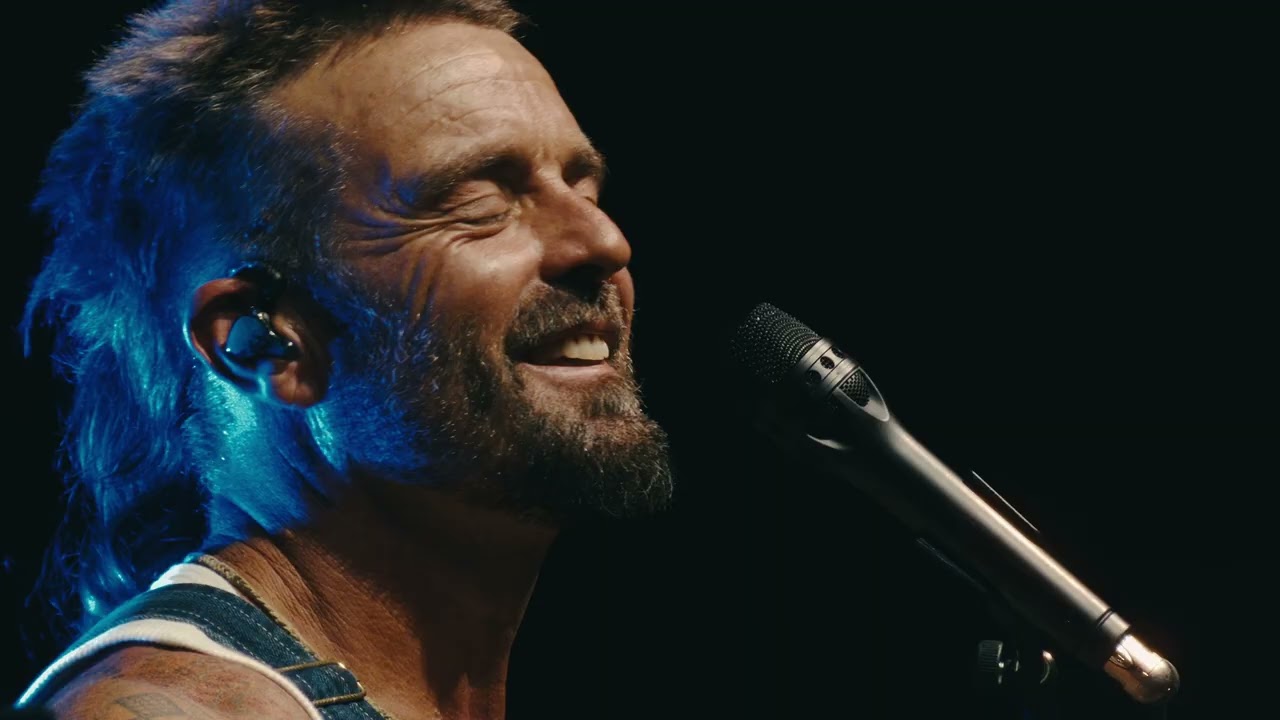
In a 2015 statement accompanying his song "Shame," Xavier Rudd reframes racism not as an innate human trait but as a learned, transmissible condition inherited from colonization and fragile historical moments. He argues that the ancient spirit of Australia—a connection to the land that passes through all of us—offers a counterforce to division, and that reconciliation depends on releasing guilt while confronting systemic racism head-on. Rather than blame individuals, Rudd calls for collective action to teach the next generation a different ancestral inheritance.
Xavier Rudd opens with a provocative premise: racism isn't natural. In his framing, it is "a condition, an evil thread that's been passed through the generations from a dark and fragile time" (0:36-0:44). This distinction matters. By naming racism as a condition—something acquired, inherited, and transmissible—rather than an inevitable feature of human nature, Rudd positions it as something that can be unlearned and shed.
This perspective echoes both Indigenous knowledge systems and contemporary psychology: behaviors and beliefs rooted in historical trauma and systemic oppression become normalized and passed forward like a default setting. The specificity of his claim is that these racist currents have "run through this country since colonization" (0:06-0:09), making Australia's particular colonial history the soil from which this condition grows. It is not abstract; it is embedded in the structures, stories, and social inheritance of a nation.
Rudd makes a counter-intuitive but crucial statement: "The injustices of the past are nobody's fault. No one needs to feel any guilt, shame or hurt" (0:46-0:51). This is not a dismissal of historical wrong. Rather, it is a strategic reframing of what reconciliation actually requires.
In conversations about colonization and ongoing racial injustice, guilt often becomes a barrier. Individuals who did not personally commit historical wrongs become paralyzed by inherited shame, or they defensively reject responsibility. Rudd's move is to separate the acknowledgment of systemic harm from personal culpability. You can recognize that racist systems exist and demand change without demanding that living people bear emotional punishment for crimes they did not commit. This allows for action without defensive posturing—a psychological opening for real dialogue.
Instead, Rudd calls to "lift that dark veil and shine a big bright light into this issue" (0:51-0:57). The metaphor shifts from shadow work (processing guilt and shame) to illumination and transparency. Reconciliation, in this frame, is not about emotional burden but about visibility and clarity.
Central to Rudd's argument is an appeal to what he calls "the true ancient spirit of this country" (0:62-0:65). This is not mystical language divorced from politics; it is rooted in Australia's Indigenous heritage and the deep relationship between humans and landscape that preceded European colonization by tens of thousands of years.
He argues that this spirit "whether we choose it or not passes through all of us and is a huge part of our connection to this amazing land" (0:68-0:76). In other words, all Australians—regardless of ancestral background—live on and draw from the same soil. That shared ground carries within it a different inheritance than racism: an interconnection with place and with each other that predates and transcends colonial divisions.
This is a nationalist argument reframed through reconciliation: unity is not a new invention but a return to something older and deeper than the racial hierarchies colonization imposed. Division, Rudd states, "goes against the true ancient spirit of this country" (0:62-0:65). It is not merely morally wrong; it is historically and spiritually out of alignment.
Rudd's most practical statement is this: "Why not offer our children the opportunity to learn more of that spirit rather than subject them to more confusion and darkness?" (0:77-0:86). The choice he presents is not between teaching nothing and teaching guilt, but between two forms of inheritance: one rooted in division and historical trauma, the other rooted in land, relationship, and the possibility of walking together.
This frames anti-racism education not as burden-loading but as opening. Children taught about Australia's ancient spirit and the injustices that fragmented it are given tools for belonging and for understanding their place. They are not made responsible for fixing what adults broke; they are offered a different story about who Australians can be together.
Rudd released "Shame" in response to the Adam Goodes controversy—a moment when high-profile racism directed at an Indigenous athlete sparked public conversation. Rather than deliver a sermon or manifesto, he offered the song "as a chance to ponder the idea of change" (0:89-0:93). He calls it a tool to "keep the fire for reconciliation burning into the future" (0:94-0:97).
The song's title itself—"Shame"—might initially seem at odds with his statement that no one should feel shame. But the shame belongs to the systems and inherited conditions, not to the people awakening to them. Art, in Rudd's offering, becomes a space to sit with difficult feeling without being paralyzed by it, and to move toward action: "respect each other and this beautiful nation and learn to protect land together" (0:101-0:109).
Rudd's 2015 statement remains relevant because it names a framework many reconciliation efforts skip over: the reframing of racism as learned rather than natural, the separation of systemic accountability from personal guilt, and the grounding of unity in something older than colonial division. If you are engaged in conversations about racism, national identity, or reconciliation, consider where guilt shows up and whether it serves action. Explore what "the ancient spirit" of place means in your own context—what existed before the divisions you inherit? And ask what story you are passing to the next generation: one of darkness and division, or one of shared connection to something deeper?