EveryGetaway

Browse All Retreats

Find your transformative retreat

retreats

Yoga Retreats
Meditation Retreats
Wellness Retreats
Spiritual Retreats
Adventure Retreats
Creative Retreats
Couples Retreats
Detox & Cleanse
Fitness Retreats
Corporate Retreats
Popular Destinations
BaliSedonaLos AngelesCosta RicaNew YorkSan FranciscoAustinMiamiJoshua TreeTulum
View All CategoriesView All Destinations

Explore All Features

Powerful tools to grow your events

Platform Features

Smart Dynamic Pricing
Ticket Categories
Assigned Seating
Abandoned Cart Recovery
Visitor Recovery
Donations & Sliding Scale
Affiliate Engine
Ticket Scanner
Coupon Codes
Custom Questions
Ticket Sharing
Upsells & Add-ons
Analytics & Reporting
Email Sequences
Waitlist / Notify / Remind
People & Places
Retreat LeadersRetreat OrganizersRetreat CentersKnowledge BaseInspiration
View All FeaturesAbout Us
PricingBlog
Language
Saved events
Browse All Events

retreats

Yoga RetreatsMeditation RetreatsWellness RetreatsSpiritual RetreatsAdventure RetreatsCreative RetreatsCouples RetreatsDetox & Cleanse

Popular Destinations

BaliSedonaLos AngelesCosta RicaNew YorkSan Francisco

People & Places

Retreat LeadersRetreat OrganizersRetreat CentersKnowledge BaseInspiration

Platform Features

Smart Dynamic PricingTicket CategoriesAssigned SeatingAbandoned Cart RecoveryVisitor RecoveryDonations & Sliding ScaleAffiliate EngineTicket ScannerCoupon CodesCustom QuestionsTicket SharingUpsells & Add-onsAnalytics & ReportingEmail SequencesWaitlist / Notify / Remind
View All FeaturesAbout Us
PricingBlog
Log inSeekersRetreat leaders
  • Browse All Retreats
  • For Seekers
  • Yoga Retreats
  • Meditation Retreats
  • Wellness Retreats
  • Spiritual Retreats
  • Adventure Retreats
  • Creative Retreats
  • Couples Retreats
  • Detox & Cleanse
  • Fitness Retreats
  • Corporate Retreats
  • Retreats
  • Workshops
  • All Categories →
  • Bali, Indonesia
  • Costa Rica
  • Tulum, Mexico
  • Sedona, Arizona
  • Thailand
  • Portugal
  • India
  • Hawaii
  • Greece
  • Spain
  • California
  • Colorado
  • Sri Lanka
  • Morocco
  • All Cities →
  • For Retreat leaders
  • For Organizations
  • Pricing
  • 500K+ Buyer Network
  • Abandoned Cart Recovery
  • Smart Dynamic Pricing
  • Ticket Categories
  • Recurring Events
  • Assigned Seating
  • Affiliate Engine
  • Waitlist / Notify
  • Ticket Scanner
  • Embed Widget
  • Event Syndication
  • Message Center
  • Integrations
  • Reports
  • All Features →
  • About
  • The Ecosystem
  • Blog
  • Glossary
  • Inspiration
  • Help Center
  • Contact
  • API Docs
  • Brand Assets
  • Careers
  • Press
  • Terms of Service
  • Privacy Policy

Retreats

  • Browse All Retreats
  • For Seekers
  • Yoga Retreats
  • Meditation Retreats
  • Wellness Retreats
  • Spiritual Retreats
  • Adventure Retreats
  • Creative Retreats
  • Couples Retreats
  • Detox & Cleanse
  • Fitness Retreats
  • Corporate Retreats
  • Retreats
  • Workshops
  • All Categories →

Destinations

  • Bali, Indonesia
  • Costa Rica
  • Tulum, Mexico
  • Sedona, Arizona
  • Thailand
  • Portugal
  • India
  • Hawaii
  • Greece
  • Spain
  • California
  • Colorado
  • Sri Lanka
  • Morocco
  • All Cities →

For Retreat leaders

  • For Retreat leaders
  • For Organizations
  • Pricing

Features

  • 500K+ Buyer Network
  • Abandoned Cart Recovery
  • Smart Dynamic Pricing
  • Ticket Categories
  • Recurring Events
  • Assigned Seating
  • Affiliate Engine
  • Waitlist / Notify
  • Ticket Scanner
  • Embed Widget
  • Event Syndication
  • Message Center
  • Integrations
  • Reports
  • All Features →

Company

  • About
  • The Ecosystem
  • Blog
  • Glossary
  • Inspiration
  • Help Center
  • Contact
  • API Docs
  • Brand Assets
  • Careers
  • Press
  • Terms of Service
  • Privacy Policy
EveryGetaway
© 2026 EveryGetaway. All rights reserved.
Inspiration

The Purpose of Artin Spiritual Practice

Be Here Now Network
Be Here Now Network
Aug 22, 2025
6 min read

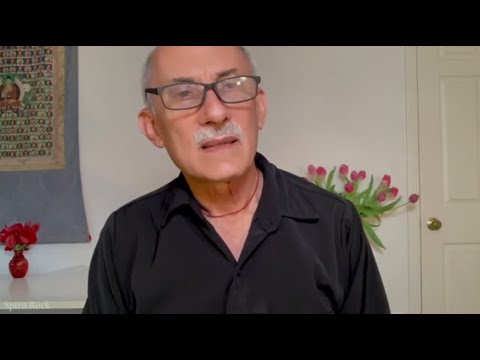
Jack Kornfield examines how art—particularly poetry—functions as a dharmic practice that opens perception to beauty, presence, and the sacred dimensions of experience. Rather than serving purely decorative or entertainment purposes, art becomes a vehicle for awakening consciousness and expressing truths that transcend ordinary language. Kornfield locates art within Buddhist contemplative practice as a tool that cultivates attention, emotional depth, and direct insight into the nature of mind and reality.

Read · 6 sections

What Is the Dharma of Art?

Jack Kornfield approaches art not as an aesthetic luxury but as an integral aspect of spiritual practice. The "dharma of poetry," as Kornfield frames it in the larger talk from which this clip is drawn, positions creative expression as a legitimate path of awakening. Art operates within the dharma—the natural law or truth—because it trains attention and reveals dimensions of reality that discursive thought cannot fully capture.

This perspective shifts art from the margins of spiritual life into its center. In Buddhist practice, the cultivation of beauty and aesthetic sensitivity has long been recognized as supporting both meditation and ethical development. Kornfield's teaching suggests that engaging with art—whether as creator or receiver—awakens faculties of perception that are dormant in ordinary consciousness. Art asks us to slow down, to notice subtlety, to sit with ambiguity and paradox in ways that formal meditation sometimes does not.

How Does Beauty Function as a Gateway?

Beauty, in Kornfield's framing, is not decorative overlay on reality but a fundamental quality of existence that art helps us perceive. When we encounter genuine beauty—in a line of poetry, a painting, a musical phrase—something shifts in our consciousness. The usual defenses, the habitual mental patterns, momentarily relax. We become present.

This function of beauty aligns closely with contemplative practice. Just as meditation trains the mind to recognize its own nature, beauty invites the heart to open to the sacred dimension of experience. Kornfield suggests that art acts as a door to states of consciousness that are ordinarily hidden behind the veil of conceptual thinking and emotional contraction. Poetry, in particular, works through image, metaphor, and rhythm to bypass the rational mind and speak directly to the intuitive, feeling heart.

The dharma of poetry is thus intimately connected to the development of what Buddhist practitioners call "right view"—the capacity to perceive reality more clearly, free from the distortions of greed, aversion, and delusion. Art cultivates this clarity not through argument but through direct sensory and emotional transmission.

Why Does Spiritual Tradition Include Artistic Practice?

Kornfield's teaching reflects a centuries-long recognition within Buddhist and other contemplative traditions that art is not peripheral to awakening but central to it. In Zen monasteries, practitioners have long engaged with poetry, painting, and calligraphy as forms of dharma practice. The same mind that sits in meditation can create or encounter art, and both activities serve the same fundamental purpose: awakening.

This integration reflects an understanding that consciousness expresses itself through multiple channels. While formal meditation develops concentration and insight, art develops sensitivity, emotional intelligence, and the capacity to perceive the numinous within ordinary experience. Together, they create a more complete practice of awakening.

Kornfield's emphasis on poetry specifically draws on a long lineage of Zen and Buddhist masters who used poetry to communicate what cannot be communicated directly. A single poem can point to awakening in ways that pages of explanation cannot. The poem works through indirection, suggestion, and aesthetic form to open the reader's mind to direct insight.

How Does Art Cultivate Presence and Attention?

One of the most practical functions Kornfield identifies in art is its capacity to train attention. When we truly engage with a poem, painting, or musical composition, we cannot remain lost in thought. The artwork demands our presence. We must listen, observe, feel. This is not passive reception but active engagement of the whole being.

In this way, art functions as a form of mindfulness practice. The reader of poetry, like the meditator on the breath, must return again and again to the present moment, to what is actually here. The metaphors in a poem, the colors in a painting, the melody in a song—these act as focal points for awareness, anchoring consciousness in the sensory present rather than allowing it to drift into fantasy, memory, or planning.

This training of attention through art has practical consequences for the spiritual path. A practitioner who learns to be present through engagement with beauty develops the same capacity for presence in formal practice and in daily life. The attention becomes more continuous, less fragmented. The heart becomes more responsive to subtle dimensions of experience.

What Distinguishes Spiritual Art from Commercial Art?

Kornfield's teaching implies a critical distinction between art created primarily for commercial success or entertainment and art created from a place of genuine insight and spiritual intention. The dharma of art suggests that the creator's consciousness—their degree of awakening, their intention, their depth of perception—infuses the work. Art created from greed, from the desire to manipulate or distract, carries a different energy than art created from love, from a desire to reveal truth, from a place of contemplative depth.

This does not mean that art must be explicitly "spiritual" in content. Rather, it means that the artist must be genuinely present and attuned while creating, and that genuine spiritual art arises from and speaks to the deepest dimensions of human experience. Such art may be playful, tragic, subtle, or bold—but it carries the mark of authenticity and awakeness.

From the receiver's end, this means that our engagement with art is also a practice requiring intention. To truly receive the dharma of a poem or painting, we must approach it with openness, with the same attitude of non-judgment and receptivity we bring to meditation. We must be willing to be changed by what we encounter.

Where Do We Go From Here?

Kornfield's teaching on the dharma of poetry invites practitioners to reconsider the role of art in their spiritual lives. Rather than viewing art as a distraction from "serious" practice, we might recognize it as one of the primary paths through which awakening unfolds. This could mean actively seeking out poets, artists, and musicians whose work springs from genuine spiritual depth. It could mean creating art ourselves, discovering that the creative act is itself a meditation, a way of training attention and expressing the inexpressible.

Practically, this might look like dedicating time to reading poetry slowly, with the same care we bring to sitting practice. It might mean visiting a gallery not to consume images but to be present with them. It might mean listening to music as a form of meditation. The key is approaching art with the awareness that beauty, when genuinely encountered, opens doors in consciousness that words and concepts cannot unlock.

For those on a Buddhist path specifically, Kornfield's teaching restores art to its traditional place as a legitimate expression of dharma. This invites a more integrated practice, one that honors both the stilled mind of meditation and the responsive heart that awakens through beauty. In this integration, the spiritual path becomes richer, more humanly complete, and more aligned with how awakening actually manifests in a fully embodied, artistically alive human being.

Comments

Loading the conversation…

Be Here Now Network
ArtistBe Here Now Network

Be Here Now Network is the creator of Heart Wisdom with Jack Kornfield, a podcast exploring consciousness, spirituality, and personal transformation. With 313 episodes, they have c…

View profileWebsite
Explore Topics
Art-dharmaPoetry-spiritualityBeauty-awakeningContemplative-practiceBuddhist-teachings

Got Questions?

Frequently Asked Questions

Kornfield positions art, particularly poetry, not as a decorative ornament but as a legitimate spiritual practice that awakens consciousness and trains attention. The dharma of art suggests that creative expression functions as a path to awakening, revealing dimensions of reality that conceptual thinking cannot capture.
In Kornfield's teaching, genuine beauty momentarily dissolves habitual mental patterns and defenses, allowing consciousness to become present and open to the sacred dimensions of experience. Art acts as a door to states of consciousness ordinarily hidden behind conceptual thinking and emotional contraction.
Yes. Engaging deeply with poetry, painting, or music requires continuous return to the present moment, training attention in the same way formal meditation does. Art functions as a form of mindfulness practice that anchors consciousness in sensory awareness.
Buddhist and other contemplative traditions recognize that consciousness awakens through multiple channels. While formal meditation develops concentration and insight, art develops sensitivity and the capacity to perceive the numinous within ordinary experience. Together they create a more complete practice.
Spiritual art arises from genuine insight, authentic presence, and a sincere intention to reveal truth rather than manipulate or entertain. The artist's degree of awakening and depth of perception infuse the work, creating art that carries authenticity and invites the receiver to genuine presence.
Poetry works through image, metaphor, and rhythm to bypass the rational mind and speak directly to intuitive understanding. In Buddhist traditions, poetry has long been used to communicate what cannot be expressed through direct explanation, pointing the reader's mind toward insight.
Read poetry slowly with the same care you bring to meditation, visit galleries with receptive presence rather than consuming images, or listen to music as meditation. The key is approaching art with awareness that genuine beauty opens dimensions of consciousness that words and concepts cannot unlock.

Continue Reading

More from Be

View All
When Science Meets the Unmeasurable: Paradigm Collapse and Spiritual Inquiry
Inspire

When Science Meets the Unmeasurable: Paradigm Collapse and Spiritual Inquiry

Ram Dass recounts his encounter with a Nobel laureate physicist who accepted every story about his guru—until one crossed the line. The gap …

1 min read
Be Here Now: The Stranger Who Changed Everything
Inspire

Be Here Now: The Stranger Who Changed Everything

A barefoot mystic appeared at a Kathmandu restaurant in 1969 and transmitted a teaching that reshaped American spirituality. This is the ori…

1 min read
Guided Meditation on Loving Awareness and Mindful Stillness
Inspire

Guided Meditation on Loving Awareness and Mindful Stillness

A 25-minute guided meditation teaching mindfulness of breath, body sensations, emotions, and thoughts through loving awareness and spacious …

1 min read
The Three Basic Truths: Impermanence, Suffering, and No-Self
Inspire

The Three Basic Truths: Impermanence, Suffering, and No-Self

Explore Buddhism's foundational teachings on impermanence, suffering, and no-self as gateways to liberation and freedom from identification.…

1 min read

Keep exploring

Continue your journey

More wisdom and gatherings from across the BrightStar directory.

More Articles

Browse the full library of teachings, interviews, and guides.

Back to all articles →

Teachers & Artists

Explore the lineages, musicians, and guides of the conscious world.

Explore artists →

Find an Event

Kirtan, retreats, sound baths, breathwork, festivals — happening soon.

Browse events →