How is the mind naturally structured?
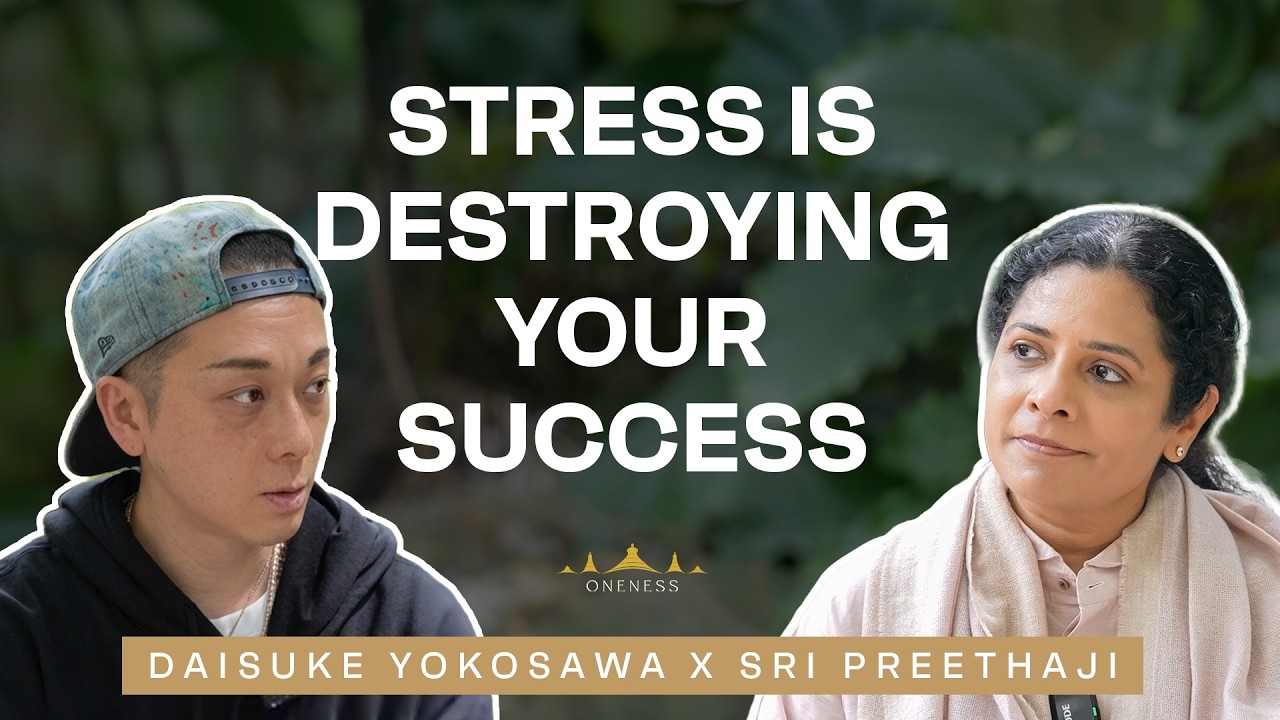
According to Sri Preethaji & Sri Krishnaji, the mind carries an intrinsic architectural principle: it is built for expansion. This is not a metaphorical claim but a description rooted in how consciousness and neural architecture actually function. When we examine the human mind—both at the level of lived experience and contemplative observation—we find that contraction, limitation, and constraint create suffering, friction, and a sense of disconnection from our own potential.
The mind's expansion is not merely psychological growth or intellectual development, though those may be symptoms. Rather, it refers to the mind's capacity to encompass more: more awareness, more presence, more capacity to hold complexity, contradiction, and vastness simultaneously. In a contracted state, the mind operates within narrow frameworks—fixed beliefs, rigid identities, defensive postures. In an expanded state, the mind becomes spacious, permeable, and capable of integrating experiences that would otherwise feel overwhelming or contradictory.
What does true achievement look like when aligned with the mind's nature?
The Oneness Movement teaches that ultimate achievement is not achieved despite the mind's nature, nor against it, but through alignment with it. When a person structures their life, values, and aspirations around contraction—around protecting a fixed self, defending a rigid identity, or accumulating external proof of worth—they are working against their own fundamental design. This creates an inherent friction that no amount of external success can resolve.
True achievement, by contrast, is what happens when a human being allows the mind to express its native capacity for expansion. This might manifest as:
- Increased presence and awareness: The capacity to be fully here, responding to what is actually happening rather than filtered through memory and anticipation.
- Integration rather than fragmentation: The ability to hold seeming opposites—strength and vulnerability, certainty and doubt, individual and universal—without collapsing into either extreme.
- Authentic capacity: Acting from genuine capability rather than compensatory drive or the need to prove oneself.
- Transmission of consciousness: The natural ability to uplift others' consciousness simply through one's presence and clarity.
Why do people pursue achievement through limitation?
A central question arises: if the mind is naturally wired for expansion, why do most people and most cultures orient toward achievement through limitation and contraction? The answer involves conditioning, fear, and the substitution of external markers for internal alignment.
From childhood, most humans are trained to believe that achievement comes through control—controlling behavior, controlling thoughts, controlling how others perceive you. This requires constant vigilance, judgment of self and others, and the maintenance of a defended identity. The mind becomes a tool for constraint: Don't be too much. Don't want too much. Don't take up too much space. Achievement within this framework means proving you have "succeeded" at these controls.
But this success is purchased at the cost of the mind's native capacity. A mind constantly engaged in self-monitoring, self-judgment, and defense is a contracted mind. It may accumulate impressive external achievements, yet the person operating it feels hollow, perpetually anxious, or driven by a hunger that no achievement satisfies.
What happens when consciousness aligns with expansion?
When a person begins to relax the grip of self-protection and allows the mind to expand—to become more inclusive, more aware, more permeable—a qualitatively different kind of achievement becomes possible. This is not mere positive thinking or visualization; it is a shift in the actual operating system of consciousness.
In an expanded state, the mind has access to more information, more creative possibility, more capacity to respond intelligently to complexity. Problems that seemed unsolvable from a contracted perspective reveal simple solutions. Relationships that were rigidified by defensive posturing become fluid and genuine. Work that felt like obligation becomes an expression of authentic engagement.
Importantly, the shift toward expansion doesn't require suppressing ambition or rejecting the desire to accomplish things in the world. Rather, ambition that flows from an expanded consciousness has a different quality: it arises from genuine interest, authentic vision, and the desire to contribute—not from the need to compensate for a sense of inadequacy or to prove worth.
How does the Oneness perspective redefine success?
Sri Preethaji & Sri Krishnaji invite a radical reconsideration of what "ultimate achievement" actually means. From the perspective of the Oneness Movement, ultimate achievement is not a destination to reach or a goal to accomplish. Rather, it is the continuous alignment of consciousness with its natural state—expansive, awake, integrated, and whole.
This reframing has several implications. First, it means that ultimate achievement is available now, in this moment, not postponed to some future when you have accumulated enough external markers of success. Second, it means that the quality of your consciousness—the degree to which your mind is expanded or contracted—is the actual measure of achievement, not the externals that consciousness produces. Third, it suggests that when consciousness is genuinely aligned with its expansionary nature, the external achievements that matter tend to manifest naturally, as a byproduct of clarity and authentic capacity.
In this view, a person who has reorganized their internal life around expansion—who has significantly opened their capacity for awareness, love, and authentic expression—has achieved something far more significant than someone who has accumulated wealth, status, or conventional accomplishments while remaining internally contracted and defended.
What practices support alignment with the mind's expansionary nature?
The Oneness Movement teachings point toward various practices and orientations that help the mind relax its habitual contractions and remember its natural state. These include meditation and contemplative practices that train the capacity for presence and non-judgment; conscious inquiry into the stories and beliefs that maintain contraction; relational practices that cultivate vulnerability and authentic connection; and ways of being that emphasize integration, compassion, and wholeness.
The specificity of practice matters less than the underlying orientation: the willingness to examine where you are contracted and to gradually allow more expansion, more openness, more authentic presence. This is not achieved through force or willpower applied to fix yourself. Rather, it happens through understanding—recognizing how contraction works, what it costs, and gently allowing a natural return to wholeness.
Where to go from here
The question "What is ultimate achievement?" invites you to examine your own definitions of success. Where have you oriented yourself toward external markers of achievement? Where might you be pursuing accomplishment through contraction—through self-judgment, self-protection, or the need to prove yourself? And what might become possible if you began to reorganize around the expansion of consciousness itself?
Exploring the teachings of Sri Preethaji & Sri Krishnaji on this topic offers both a philosophical reframing and practical pathways for recognizing and developing the mind's natural capacity for expansion. The invitation is to test this understanding directly: notice when your mind is contracting and when it is expanding. Observe what becomes possible from each state. Over time, you may discover that the ultimate achievement is not something to acquire from outside yourself, but something to allow and unveil from within—the full expression of consciousness in its natural, expansive state.
]]>