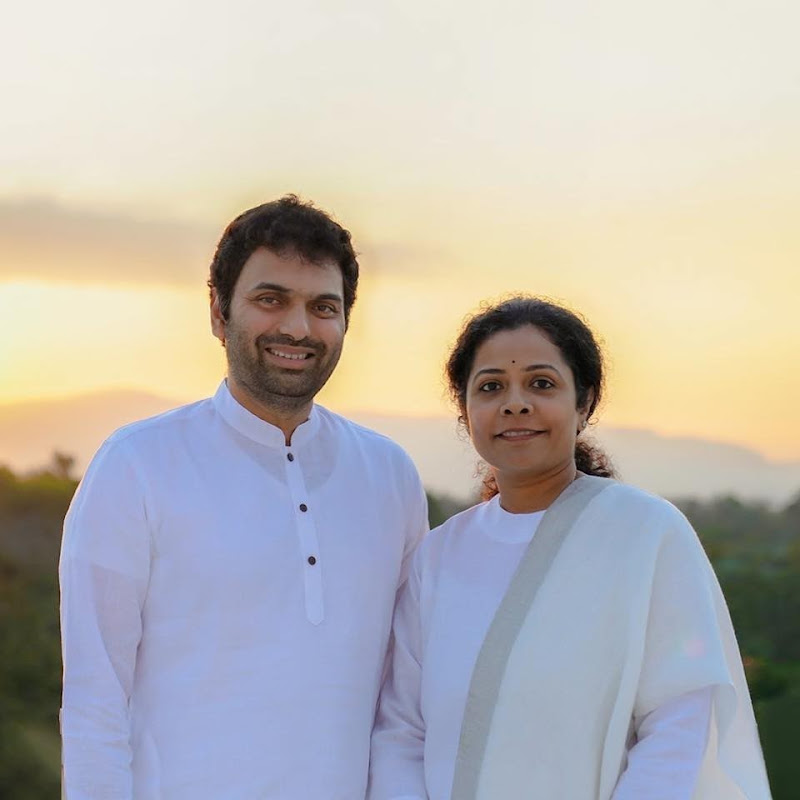
Sri Preethaji and Sri Krishnaji address a fundamental question: what does it mean for something to be "manifest"? The inquiry cuts to the heart of how consciousness relates to physical reality, exploring the distinction between the invisible potential within consciousness and the visible world of form. This teaching unpacks the mechanics of creation—how the unmanifest becomes manifest, and what this reveals about the nature of existence, intention, and human awareness.
The term manifest typically refers to something visible, tangible, or present in physical form. But Sri Preethaji and Sri Krishnaji go deeper, examining what lies beneath this simple definition. To manifest is not merely to appear—it is to emerge from an invisible dimension into the visible. This distinction matters profoundly because it implies that reality has layers: the unmanifest (potential, formless, invisible) and the manifest (actualized, formed, visible).
In the context of spiritual inquiry, manifestation is understood as a creative process. Something does not spontaneously appear in the physical world; it moves through stages of becoming. The teachers suggest that this process is not random or mechanical—it involves consciousness, intention, and a fundamental relationship between the observer and what is observed.
One of the core insights in the Oneness Movement teaching is that consciousness is not separate from the process of manifestation. Rather, consciousness is the ground from which all manifestation arises. Every visible thing—every form, every event, every circumstance—originates in the realm of consciousness before it appears in physical reality.
This invites a radical reframing: you are not separate from the process of manifestation. Your consciousness, your beliefs, your deepest assumptions about reality, and your quality of awareness directly influence what manifests in your life and in the world. This is not manifestation in the sense of wishful thinking or positive affirmations alone. It is a statement about the fundamental nature of consciousness as creative, relational, and participatory.
Sri Preethaji and Sri Krishnaji teach that there is a continuous bridge between the invisible realm of potential and the visible world of form. This bridge is not mystical in an abstract sense—it operates through intention, attention, and the quality of awareness you bring to life.
When you focus your consciousness on something—when you hold an intention, nurture a belief, or direct your attention—you are participating in the process of bringing something from the invisible into the visible. This is why the quality of your inner state matters so much. A fragmented, fearful, or unconscious mind will manifest different circumstances than a unified, conscious, and coherent mind.
The teaching suggests that manifestation is not about forcing outcomes through willpower. Rather, it is about aligning your consciousness with what you wish to create, removing internal obstacles, and allowing the natural creative power of consciousness to move through you.
The understanding of manifestation inherently involves recognizing multiple dimensions or layers of reality. The unmanifest is not "less real"—it is the source dimension from which the manifest arises. Think of it like this: a thought exists before you speak it aloud. The thought is real, but it is unmanifest in speech. Once you speak, it becomes manifest in the audible realm. But the thought had to exist first.
Similarly, every physical reality you perceive had to exist first as potential, as intention, as a possibility held within consciousness. The manifest world is the expression of what was previously unmanifest. Understanding this relationship is key to grasping how creation actually works.
Sri Preethaji and Sri Krishnaji emphasize that this is not philosophy—it is observable. In your own life, you can watch how ideas become actions, how intentions shape circumstances, how your inner state literally influences what you encounter. This is the living reality of manifestation.
A crucial element in the teaching is the recognition that human awareness is not passive. You are not simply a witness to reality; you are an active participant in its creation. The quality of your consciousness shapes what manifests around you and through you.
This has practical implications. If you carry limiting beliefs—"I am not worthy," "good things don't happen to me," "the world is dangerous"—these beliefs will filter your perception and literally shape what manifests in your experience. Conversely, if you cultivate clarity, wholeness, and aligned intention, you participate in bringing into being circumstances that reflect those qualities.
The teachers point to this as a reason why spiritual practice—meditation, self-inquiry, conscious living—is so important. These practices are not escapes from the world; they are tools for refining the quality of consciousness through which you participate in manifestation.
The exploration of what it means for something to be manifest invites you to examine your own relationship to reality. Notice how your beliefs shape your experience. Observe the connection between your inner state and the circumstances that arise around you. Consider what you are unconsciously manifesting through habitual patterns of thought, emotion, and attention.
You might begin a simple practice: become aware of an intention you hold, then observe how that intention—held with clarity and wholeness—begins to align circumstances in your life toward its fulfillment. Not through force, but through the natural creative power of a conscious, unified awareness. This experiential understanding of manifestation is far more valuable than any intellectual grasp of the concept.