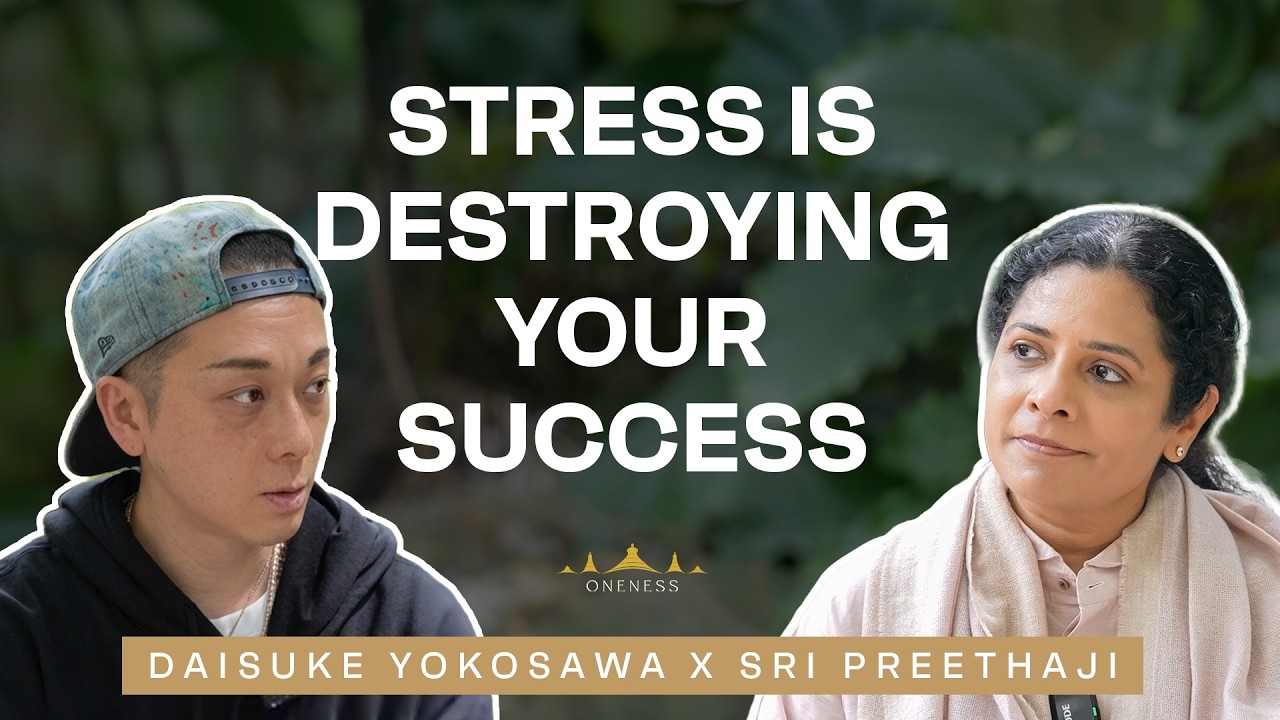
The question "Why isn't God helping me out of my problems?" reflects a fundamental misunderstanding of how spiritual aid works. Rather than divine intervention that removes obstacles externally, the Oneness Movement teaches that liberation from suffering comes through deepening connection—with ourselves, with others, and with the divine. When we embrace genuine connection, we gain the inner resources to navigate challenges and simultaneously contribute positively to the world, creating a reciprocal flow of support that dissolves the illusion of separation and suffering.
Why Divine Help Feels Absent During Suffering
When people experience difficulty, a common spiritual question emerges: "If God is all-powerful and loving, why doesn't He lift me out of this struggle?" This query assumes a transactional model of spiritual life—one where prayer or faith should trigger divine rescue. However, this framing misses how divine consciousness actually operates in human experience. The Oneness Movement suggests that the absence of immediate relief does not indicate divine indifference or absence, but rather points to a deeper mechanism of spiritual growth and awakening that requires our conscious participation.
The suffering itself becomes a gateway, not a prison. When we feel abandoned by divine help, we are actually being invited into a more intimate understanding of how consciousness works—not as an external force that solves problems for us, but as a presence that awakens within us the capacity to transform our relationship to those problems.
What Does Connection Have to Do With Spiritual Liberation?
The teaching emphasizes that "it is through connection that we find solace." This is not a vague invitation to community or social support, though those matter. Rather, connection here refers to several intersecting dimensions. First, there is connection to our own inner nature—the capacity to witness our suffering without being entirely identified with it. Second, there is connection to others, which breaks the isolation that amplifies suffering. Third, and most fundamentally, there is connection to the divine—not as a distant power but as the underlying consciousness permeating all existence.
When we experience what feels like abandonment by God, it often signals disconnection in these three domains simultaneously. We have lost touch with our own inner resilience, isolated ourselves in our difficulty, and experienced rupture in our sense of relationship with the sacred. These disconnections are not failures requiring punishment; they are invitations to reconnection. The divine "help" we seek is already present in the opportunity to rebuild these connections.
How Does Breaking Free From Suffering Actually Work?
The teaching opens with the invitation to "break free from the chains of suffering." This language is crucial—the metaphor is not rescue but liberation. Chains are structures we either consciously or unconsciously maintain. Breaking free implies active participation, not passive waiting for external salvation. When we remain bound by suffering, it is often because we have become identified with the problem itself; we have unconsciously agreed that this is who we are or that this is simply what life is.
Connection disrupts this contracted state. When we connect deeply with another person who sees us beyond our suffering, we experience a moment of non-identification with the pain. When we connect with our own breath, body, or thoughts as an observer rather than as the thought itself, we create space within the suffering. When we connect with the divine through prayer, meditation, or simple acknowledgment, we are reminded that we are not the sum of our circumstances.
Breaking free, then, is not a sudden removal of difficulty, but a gradual shift in our relationship to it. The problems may persist, but the sense of being imprisoned by them dissolves. This is the actual help that is available—not problem elimination, but consciousness expansion that makes the problem no longer the totality of our reality.
Why Does Positive Contribution Follow From Connection?
The teaching notes that through connection we "contribute positively to the world around us." This is not incidental but essential. When we are trapped in the illusion of separation—believing that our suffering is private, unique, and isolates us—we naturally become self-absorbed. We cannot genuinely contribute because we are consumed by our own narrative. However, when connection awakens us to the truth that all consciousness is fundamentally linked, that our inner state ripples outward and our struggles are not private but participated in by the whole, something shifts.
We begin to see that our healing is not selfish private work but service to the collective. Our willingness to face difficulty rather than deny it, to feel rather than numb, to stay present rather than escape, becomes medicine for others who witness that it is possible. Our connection to others naturally seeks expression through beneficial action, because we no longer experience them as truly separate from ourselves. Contribution is no longer an obligation; it becomes the natural overflow of an expanded consciousness.
What Is the Real Role of God in This Framework?
Rather than God as a problem-solver who either helps or fails to help based on worthiness or prayer content, the Oneness Movement suggests God as the fundamental ground of being—the consciousness within which all problems arise and through which all resolution occurs. God is not absent when we suffer; God is the very capacity within us to recognize suffering as something less than ultimate reality. God is the connection that calls us out of isolation.
When we ask "Why isn't God helping?", we are often asking from a contracted state of consciousness. From that state, help can only look like external intervention. But as our consciousness expands through connection, we discover that the help was always here—in our capacity to love, to witness, to transform, to heal, to contribute. The divine was never absent; we were unconscious of it. The "problem" was not that God wasn't helping, but that we couldn't receive help because we were disconnected from the channels through which it flows.
How Can We Practically Engage This Teaching?
If suffering has led you to ask "Where is God?", the teaching invites you to pause on that question and instead ask: "Where have I become disconnected?" Examine your inner world—are you aware of your breath, your body, your deepest values? Examine your relationships—are you isolating in your difficulty or allowing yourself to be seen? Examine your spiritual life—are you maintaining conscious connection to something sacred, or have you withdrawn into contraction?
Each of these reconnections is an answer to the prayer you didn't know you were praying. Each moment of genuine connection is divine help in its truest form. As you practice reconnecting—through meditation, through vulnerable conversation, through service, through remembering that you are not alone in your struggle—you will discover that the chains of suffering are not impenetrable. They loosen. They fall away. Not because a problem was solved externally, but because you have expanded internally into your full capacity as a conscious being participating in a fundamentally connected universe.
Where to Go From Here
This teaching invites a reorientation of the entire spiritual question. Rather than seeking rescue from circumstances, inquire into the quality of your connections. Begin a daily practice of deepening at least one of your three dimensions of connection: inner awareness through meditation or journaling, relational presence through quality conversation or service, and spiritual openness through prayer, nature contact, or contemplation. Notice how problems lose their grip not when they disappear, but when you no longer face them alone. The help you seek is waiting in the portal of genuine connection—with yourself, others, and the sacred dimension of existence.