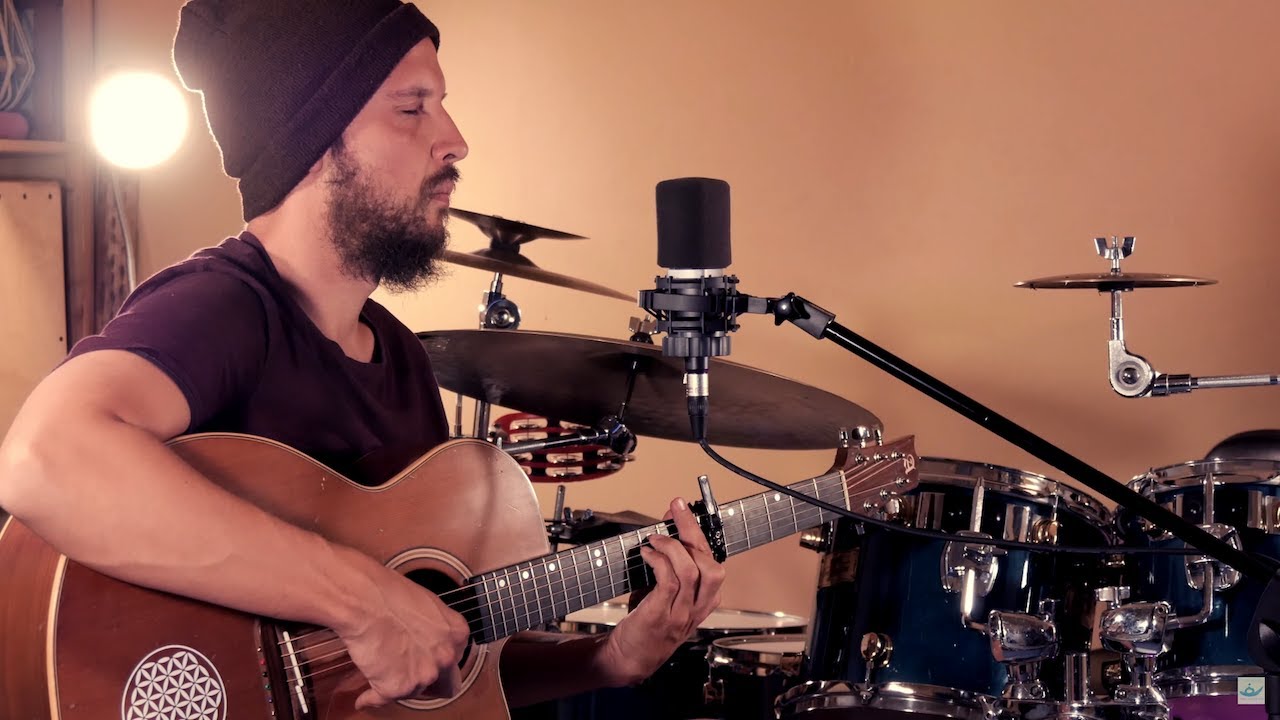
Eight minutes. That's the duration of Nirodha's "Narayana Hari Om," and for those eight minutes you inhabit a specific sonic world: acoustic, spare, devoted to repetition. A voice—steady but not formal, present but not virtuosic—moves through Sanskrit syllables: Narayana Hari Om, Narayana Hari Om. Instrumentation supports but doesn't ornament: strings, perhaps a drone instrument, moving with rather than around the voice. This is a live bhakti session, which means it's happening in real time, unedited and unadorned, a recording of actual singing rather than a composed and engineered track. Bhakti—devotional singing—has historically centered on presence and human exchange. Nirodha channels that immediacy through contemporary means: uploaded to YouTube, shared via Bandcamp, promoted through Instagram and Facebook. The mantra itself carries specific weight: Narayana, the sustaining divine presence; Hari, invoking grace and liberation; Om, the primordial sound said to contain all consciousness. Together they form both invocation and meditation focus.
The artist operating under the name Nirodha positions themselves as a kirtan artist—a singer of devotional chants. What we know arrives through metadata and platform presence. They maintain accounts on Instagram (@nirodhamusica) and Facebook, direct listeners to Bandcamp where the work can be encountered and supported, and identify their output under the label "Organic Meditation Music." This framing is deliberate: it signals both spiritual intention and sonic philosophy, suggesting a commitment to unprocessed, authentic sound sources in an era of infinite digital processing. The 2,167 YouTube views represent a real constituency—listeners specifically seeking this mantra, this artist's voice, this particular type of music.
That Nirodha released this as a "live session" carries significance. Live performance captures the moment of creation in real time: no second takes, no studio correction, no layers of processing or re-recording. For spiritual practices rooted in presence and immediacy, this liveness holds weight. The release categorizes this work as "meditation music," "acoustic mantra," and "sound healing"—each label reflecting contemporary frameworks through which practitioners encounter traditional forms. These categories are not incidental; they represent deliberate positioning within the contemporary wellness and spiritual music landscape.
The acoustic instrumentation reinforces presence: no synthesizers, no loops, no ambient pads, just strings and voice and breath. This choice aligns with the "Organic Meditation Music" framing—a deliberate positioning against the vast ecosystem of electronic ambient meditation albums. The cultural preference for organic, authentic sound sources has become significant in contemporary wellness communities. Whether through psychological resonance or purported vibrational effects, listeners increasingly seek out acoustic approaches to meditation music and mantra practice. Nirodha's release responds to and represents this preference.
The specific mantra "Narayana Hari Om" roots this session in Hindu and yogic philosophical traditions. In mantra practice, the semantic meaning of words matters—Narayana as the cosmic sustainer, Hari as divine grace and liberation—but so does the vibration of the sound itself as it's produced and received. The repetition creates focus, particularly for meditation. The Sanskrit syllables, unfamiliar to many Western listeners, create a functional quality of otherness: a step outside everyday language toward something perceived as sacred or transcendent. This unfamiliarity itself quiets the discursive mind that would otherwise generate thoughts and distraction.
Kirtan has undergone profound transformation over recent decades, moving from temple and ashram contexts into yoga studios, meditation centers, concert venues, and now digital platforms. The tags in Nirodha's release—"#Kirtan," "#Mantra," "#AcousticMantra"—connect this work to a global revival and reimagining. What was traditionally devotional practice within religious contexts has become, for many Western listeners, a secular form of meditation support, a wellness modality, a personal spiritual practice. Nirodha's acoustic approach fits within this evolution without abandoning essential elements: the mantra itself, the devotional attention, the sound vibration, the intention toward spiritual focus. There is no need for a congregation or a guru to encounter this form of kirtan. A listener alone with headphones can enter the practice, can repeat the mantra, can experience its effects.
This shift—from communal temple singing to solitary digital listening—represents a fundamental democratization of access. Historically, to reach listeners with kirtan music, an artist needed institutional support: a record label, a yoga studio network, a meditation center, a guru's lineage and authority. Digital platforms have flattened these barriers. An artist can record a live session on modest equipment, upload it to YouTube and Bandcamp, build an audience through social media, and sustain their practice through direct listener support. Nirodha's release through Bandcamp exemplifies this model: the platform prioritizes fair artist compensation and enables listeners to support work that might never reach mainstream streaming numbers. The 2,167 views suggest a niche audience, but for independent artists working in spiritual music, that niche is often both sustainable and meaningful.
The release is explicitly positioned within "sound healing" frameworks—a broad field spanning scientifically-grounded approaches and more esoteric practices. The description tags include "#RelaxingMusic" and "#SoundHealing," reflecting how this work is marketed toward listeners seeking stress reduction, emotional processing, or spiritual alignment. An acoustic mantra session offers multiple potential benefits simultaneously: the repetitive nature aids relaxation and focus, supporting meditative states; the spiritual framing invites psychological shifts and meaning-making; the live, organic quality appeals to listeners skeptical of electronic meditation music; the mantra itself, if practitioners engage with its meaning, becomes a container for intention and spiritual attention.
All of this unfolds in a specific historical moment: a 2021 release, shared and promoted in real time on social platforms, part of a larger cultural turn toward meditation and spiritual practice in secular Western contexts. The pandemic's isolation, the rise of at-home yoga and meditation, increasing openness to non-Christian spiritual practices, the influence of diaspora teachers and yoga culture—these conditions create space for an acoustic kirtan session to find listeners. Nirodha's work exists squarely in this context, participating in and reflecting a genuine shift in how spiritual practices are shared, marketed, practiced, and understood. The live bhakti session, originally grounded in specific religious contexts, becomes a meditation album, a sound healing tool, a focus for personal spiritual intention, a standalone artistic work. These are not corruptions but adaptations—evidence of how traditional practices take new forms while retaining their essential character.
The value of this work lies ultimately in encountering it directly. To understand what Narayana Hari Om offers requires listening: allowing the mantra to work across eight minutes, noticing how repetition affects your own mind and body, experiencing the acoustic instrumentation's immediacy, sitting with the Sanskrit syllables and the invocation they carry.
Where to go from here
Nirodha's full catalog and additional kirtan recordings are available on Bandcamp at nirodhamusic.bandcamp.com, where listeners can stream, download, and directly support the artist. For ongoing updates on new releases and live sessions, follow Nirodha on Instagram (@nirodhamusica) and Facebook (@nirodhamusic). The artist sits within a thriving ecosystem of independent acoustic kirtan and mantra musicians, available through platforms like Bandcamp, Spotify, YouTube, and specialized meditation music services. Beginning a personal mantra practice with Narayana Hari Om requires nothing but willingness to listen: press play, allow repetition to work, and notice what unfolds over eight minutes of devoted attention.