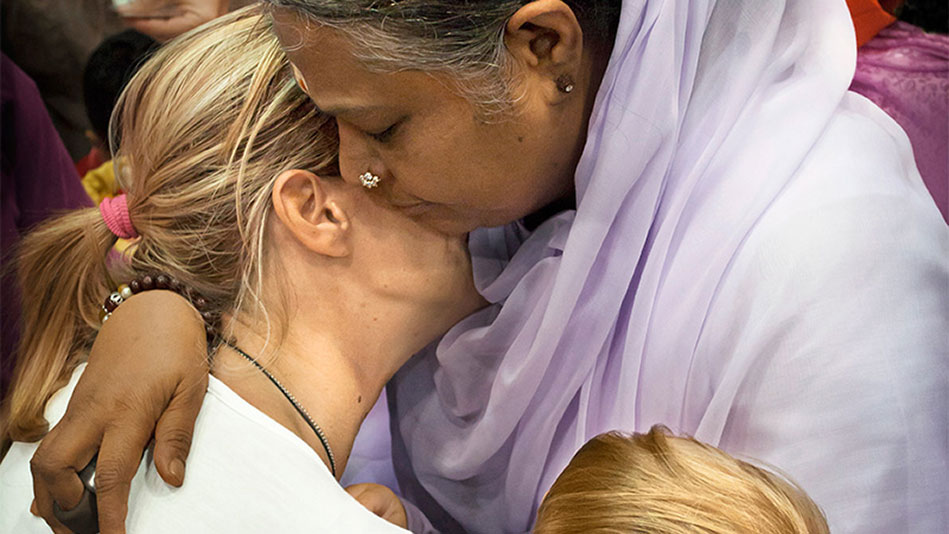
Finding the Divine in Every Moment
Amma's profound assertion, "In every smile and every tear, the divine is present," invites us to recognize the sacredness woven into the fabric of our everyday experiences. This statement serves as a gentle reminder that both joy and sorrow are not merely human emotions but gateways to a deeper understanding of the divine. In a world often characterized by distraction and superficiality, this teaching beckons us to pause and reflect on the spiritual significance of our emotional landscape.
By acknowledging the divine presence in both our smiles and tears, we cultivate a holistic view of life that embraces the full spectrum of human experience. This perspective encourages us to see beyond the surface of our emotions, inviting us to explore the deeper truths that lie beneath. In doing so, we can transform our understanding of happiness and suffering, recognizing them as integral parts of our spiritual journey rather than opposing forces.
The image / the metaphor
The imagery in Amma's quote evokes a rich tapestry of human experience, where smiles symbolize joy, connection, and love, while tears represent sorrow, loss, and vulnerability. The choice of the words "smile" and "tear" captures the essence of our emotional existence, suggesting that both states are equally valid expressions of our humanity. This duality reflects the complexity of life, where moments of elation coexist with those of despair, and both are imbued with divine significance.
In the speaker's tradition
Amma's teachings are rooted in the bhakti tradition, which emphasizes devotion and love for the divine as a means of spiritual realization. In this context, the recognition of the divine in every smile and tear aligns with the concept of bhakti itself, where the devotee sees the presence of the divine in all aspects of life. This perspective encourages a deep, personal relationship with the divine, fostering an understanding that every experience—joyful or painful—can lead us closer to spiritual truth.
Moreover, the idea of divine presence in our emotions resonates with the concept of kenosis, or self-emptying, found in various spiritual traditions. By allowing ourselves to fully experience our emotions, we create space for divine grace to enter our lives. This aligns with the teachings found in texts such as the Bhagavad Gita, where the importance of surrendering to the divine will is emphasized, allowing us to navigate the complexities of life with a sense of purpose and connection.
Living the teaching
Consider a modern scenario where this teaching can be applied: a friend shares the news of a personal loss. In this moment, we might feel compelled to offer words of comfort, but Amma's teaching invites us to go deeper. Instead of merely offering platitudes, we can sit with our friend in their sorrow, recognizing that their tears are a sacred expression of their humanity. By being present with them, we honor the divine presence in their grief, creating a space for healing and connection.
In another application, think about a challenging moment in your own life, perhaps a time when you felt overwhelmed by sadness or frustration. Instead of pushing those feelings away, you might choose to embrace them, understanding that they too are part of your spiritual journey. By acknowledging your tears as a manifestation of the divine, you can transform your suffering into a source of strength and insight, allowing it to guide you toward greater compassion for yourself and others.
A reflection
As we contemplate Amma's words, we are invited to reflect on the ways we experience the divine in our daily lives. How can we cultivate a deeper awareness of the sacredness present in both our smiles and our tears? This question encourages us to explore our emotional landscape with curiosity and openness, recognizing that every experience, whether joyful or painful, is an opportunity for spiritual growth and connection.