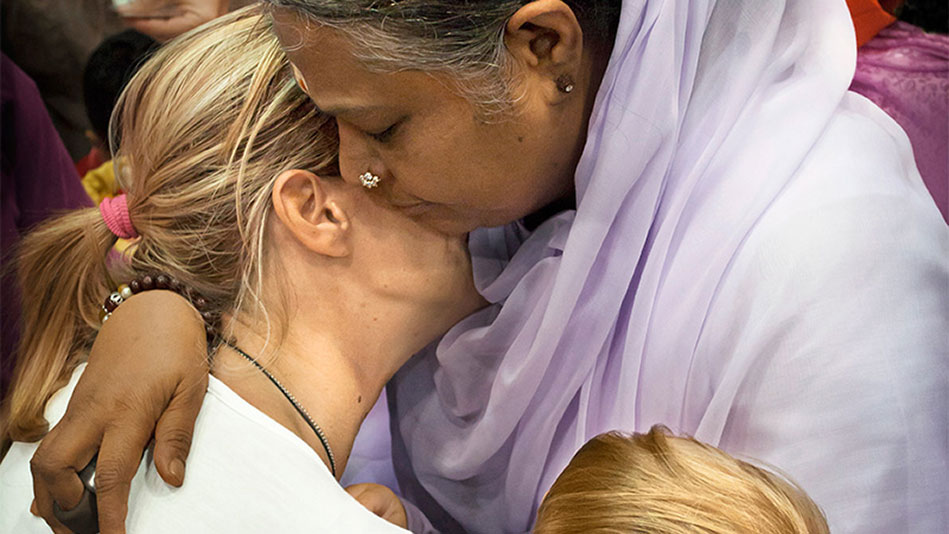
The True Wealth of Love
Amma's poignant assertion, "Wealth without love is poverty," invites us to reconsider our understanding of abundance and fulfillment. In a world often obsessed with material gain, this statement serves as a profound reminder that true richness lies not in possessions but in the depth of our connections with others. The stakes are high; without love, even the most lavish lifestyle can feel hollow, leading to a sense of emptiness that material wealth cannot fill.
This quote challenges us to reflect on what we value in our lives. It compels us to ask ourselves whether our pursuits are genuinely enriching or merely distractions from a deeper longing for connection and compassion. In this light, love emerges as the essential currency of life, transforming our experiences and relationships into a tapestry of meaning that transcends the superficial allure of wealth.
The image / the metaphor
At first glance, the imagery in Amma's quote juxtaposes two seemingly opposing concepts: wealth and love. Wealth conjures images of abundance, prosperity, and material success, while love evokes feelings of warmth, connection, and emotional richness. The verb "is" in the phrase "is poverty" suggests a stark reality; it implies that without love, the accumulation of wealth is not just insufficient but fundamentally lacking, rendering it a form of poverty in the emotional and spiritual sense.
Diving deeper into the metaphor, we can see that love acts as a lens through which we perceive and engage with the world. It is not merely an emotional state but a transformative force that enriches our experiences. When we approach life through the lens of love, we find that our relationships, endeavors, and even our material possessions take on new significance, becoming vessels for connection rather than mere objects of desire.
In the speaker's tradition
Amma's teachings are deeply rooted in the bhakti tradition, which emphasizes devotion and love as the pathways to spiritual realization. In bhakti, the concept of dharma plays a crucial role, guiding individuals to live in alignment with their true purpose and to cultivate love and compassion in their interactions. This aligns with the idea of kenosis, or self-emptying, where one relinquishes the ego's desires to embrace a life of love and service, ultimately leading to a richer existence.
Furthermore, the notion of sunyata, or emptiness, resonates with Amma's message. In recognizing that material wealth is transient and ultimately unfulfilling, we can cultivate a sense of inner richness that transcends the physical realm. This perspective is echoed in various texts, including the Bhagavad Gita, which teaches that true wealth is found in selfless action and devotion to others, reinforcing the idea that love is the foundation of a meaningful life.
Living the teaching
Consider a modern scenario where this teaching resonates: a successful entrepreneur who has amassed considerable wealth but feels isolated and unfulfilled. Despite the accolades and material comforts, the absence of genuine relationships leaves a void that no amount of money can fill. This individual might find themselves questioning the purpose of their success, realizing that without love and connection, their achievements feel like a hollow victory.
A reflection
As we contemplate Amma's profound statement, we are invited to reflect on our own lives: How do we define wealth, and what role does love play in our understanding of abundance? In a world that often equates success with material gain, this question challenges us to seek deeper connections and to recognize the true richness that love brings to our lives. What steps can we take today to cultivate love in our relationships and to ensure that our pursuits align with our deepest values?