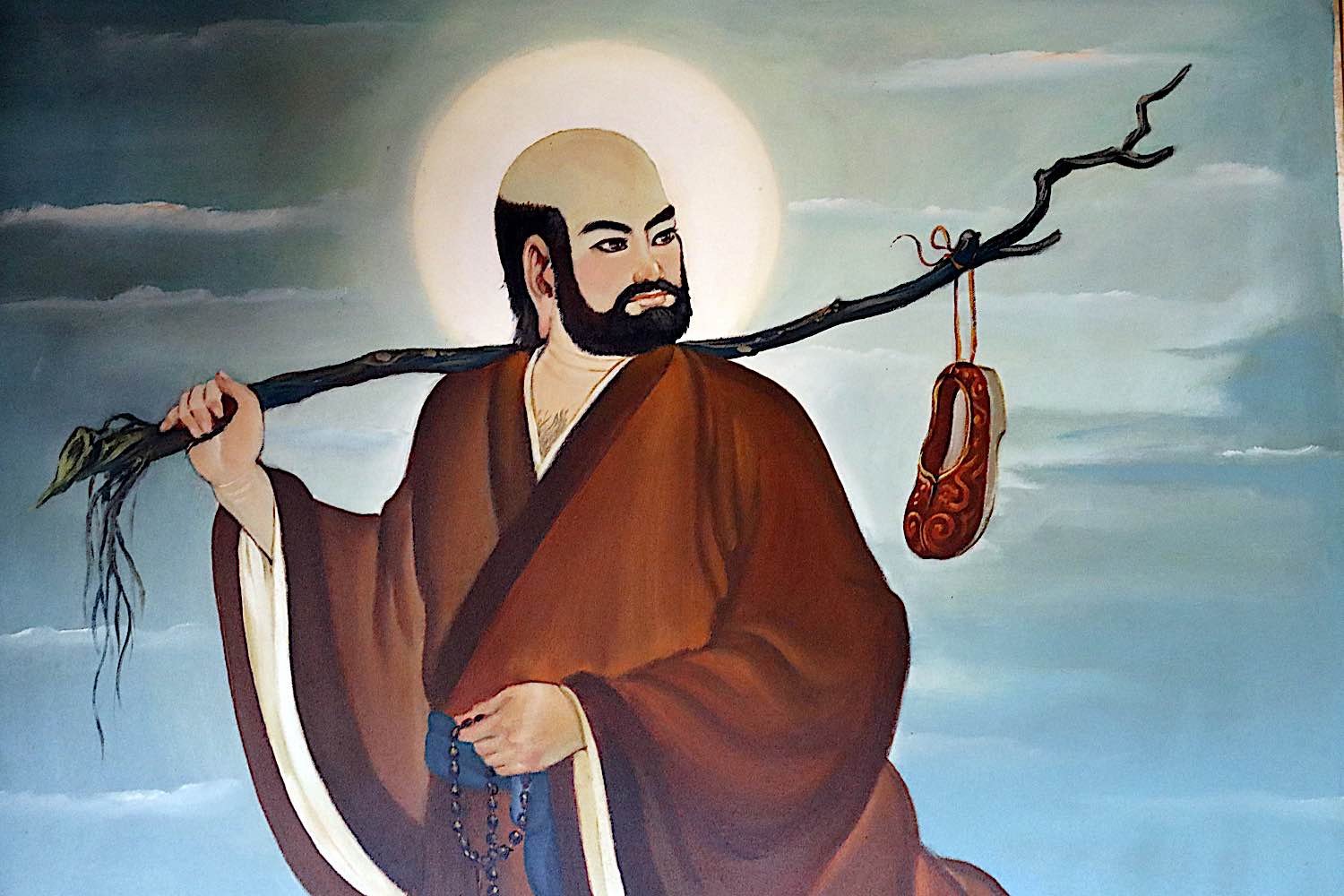
Quenching the Thirst of Direct Experience
Bodhidharma's exhortation to "drink from the water itself" invites us to engage directly with the essence of our experiences rather than merely relying on secondhand accounts or abstract concepts. This call to action emphasizes the importance of personal experience in the pursuit of truth and understanding. In a world often saturated with opinions and interpretations, the challenge lies in seeking the source of wisdom within ourselves, where genuine insight resides.
To drink from the water itself is to immerse oneself in the immediacy of life, to taste the richness of existence without the filter of preconceived notions or external validations. This teaching resonates deeply within the Zen tradition, where the emphasis is placed on direct-knowing—an experiential understanding that transcends intellectualization. It beckons us to step away from the distractions of the mind and to engage with reality as it is, unmediated and pure.
The image / the metaphor
The imagery of drinking water evokes a sense of nourishment and vitality. Water, a fundamental element of life, symbolizes clarity, purity, and the essence of existence itself. The act of drinking suggests a deep, intimate engagement with this essence, where one is not merely observing from a distance but actively participating in the experience. The choice of the verb "drink" implies a necessity, a craving for something vital that can only be satisfied through direct interaction.
In the speaker's tradition
Bodhidharma, the legendary figure credited with bringing Zen Buddhism to China, emphasized the importance of direct experience in understanding the nature of reality. This teaching aligns closely with the concept of prajna, or wisdom, which is cultivated through personal insight rather than intellectual study. In Zen, the path to enlightenment is often described as a journey of self-discovery, where one must confront the illusions of the mind and engage with the world directly, much like drinking from the water itself.
In the context of Bodhidharma's teachings, we can draw parallels to the notion of sunyata, or emptiness, which invites practitioners to recognize the transient nature of all phenomena. Just as water flows and adapts to its surroundings, so too must we learn to navigate the ever-changing landscape of our experiences. This understanding is echoed in the Heart Sutra, which states, "Form is emptiness, emptiness is form," reminding us that the essence of reality is found not in fixed concepts but in the fluidity of direct experience.
Living the teaching
Consider a modern scenario where this teaching might resonate: a person attending a meditation retreat, eager to learn about mindfulness. They arrive with a head full of expectations and theories about meditation, yet they find themselves struggling to quiet the mind. In this moment, the invitation to "drink from the water itself" becomes a powerful reminder to let go of preconceived notions and simply engage with the practice as it unfolds. By immersing themselves in the experience of each breath, they begin to taste the richness of presence, discovering insights that transcend intellectual understanding.
In a different application, imagine a relationship strained by misunderstandings and assumptions. Here, the teaching encourages individuals to step back from their judgments and truly listen to one another. By "drinking from the water" of their partner's words and emotions, they can cultivate empathy and connection, moving beyond the surface of their disagreements. This direct engagement fosters a deeper understanding, allowing the relationship to flourish in a way that mere intellectual discourse could never achieve.
A reflection
As we contemplate Bodhidharma's profound invitation, we are left with a contemplative question: What does it mean for me to drink from the water itself in my own life? In what areas do I find myself relying on secondhand knowledge or external validation, rather than engaging directly with my experiences? This inquiry invites us to explore the depths of our own understanding, encouraging us to seek the essence of truth within the immediacy of our lives.
