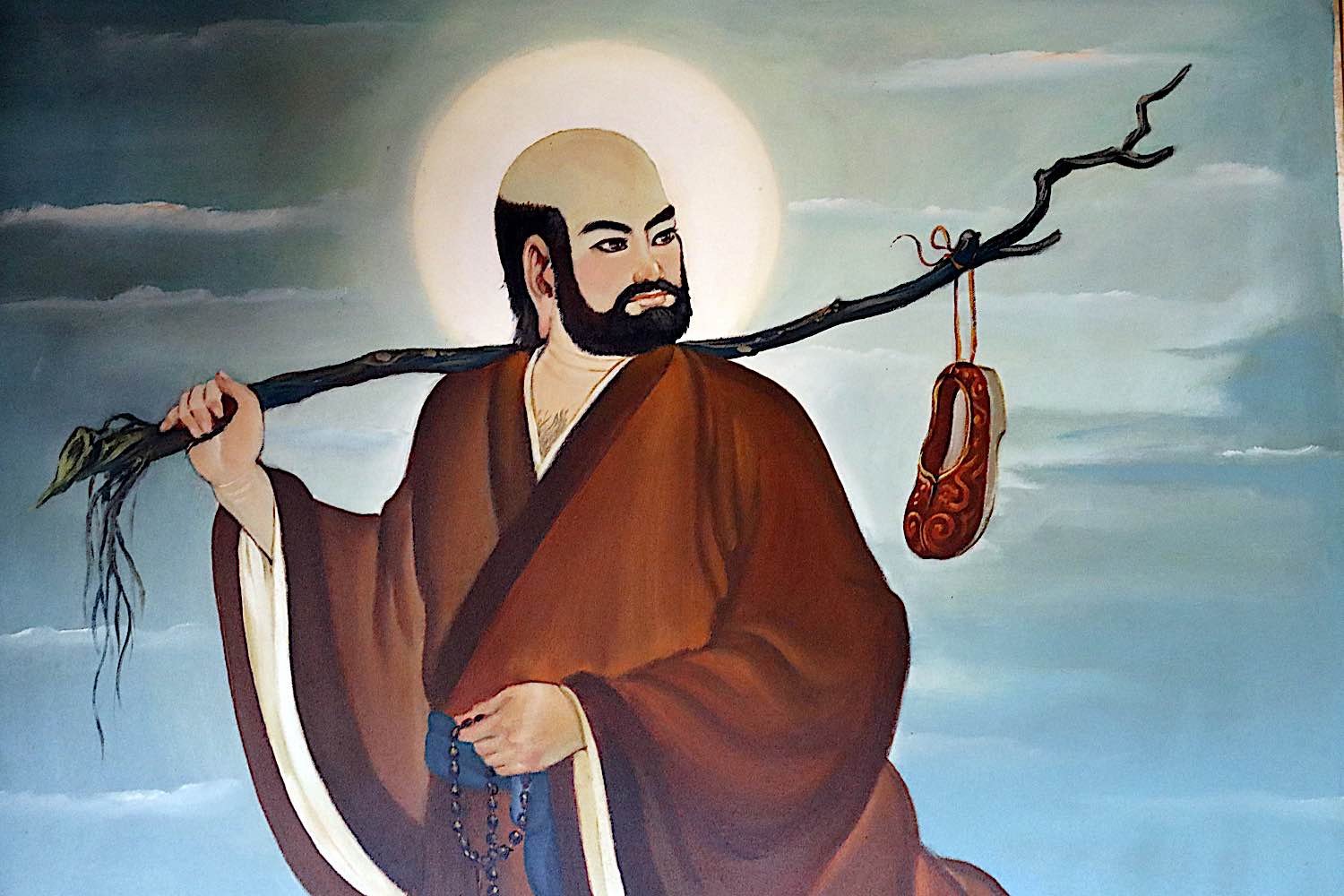
Walking Free: The Liberation of Self in Zen Practice
Bodhidharma's succinct exhortation, "Drop the burden of self; walk free," invites us to consider the profound implications of relinquishing our tightly held identities and the weight they impose upon us. In a world where self-definition often becomes a source of suffering, this teaching beckons us toward a path of liberation. The stakes are high; to let go of the self is to embrace a more expansive existence, one that is not confined by the narratives we construct around our lives.
This call to freedom resonates deeply within the Zen tradition, where the self is often seen as an illusion that binds us to cycles of desire and dissatisfaction. Bodhidharma, as the founder of Zen Buddhism, emphasizes that true liberation arises not from external circumstances but from an internal shift in perception. By shedding the burdens of self, we open ourselves to the possibility of experiencing life in its fullness, unencumbered by the limitations we impose upon ourselves.
The image / the metaphor
The imagery in Bodhidharma's quote evokes a sense of lightness and release. The act of dropping a burden suggests a physical and emotional unshackling, a letting go of the weight that we carry in our minds and hearts. The verb "walk" implies movement, progress, and the freedom to navigate life without the encumbrance of self-imposed limitations. This metaphor speaks to the essence of Zen practice, where the journey toward enlightenment is often described as a path of simplicity and clarity.
In the speaker's tradition
Within the context of Zen Buddhism, Bodhidharma's teaching aligns with the concept of sunyata, or emptiness, which posits that the self is not a fixed entity but rather a fluid construct shaped by our experiences and perceptions. This understanding invites practitioners to explore the nature of their existence beyond the confines of ego. The practice of meditation, a cornerstone of Zen, serves as a means to cultivate awareness of this emptiness, enabling individuals to recognize the transient nature of thoughts and feelings that contribute to the burden of self.
In the broader Buddhist tradition, this idea resonates with the notion of dharma, which refers to the path of truth and righteousness. The teachings of the Buddha emphasize the importance of letting go of attachments to achieve liberation from suffering. In texts such as the Heart Sutra, the essence of emptiness is articulated, reinforcing the idea that clinging to the self only perpetuates our suffering. Bodhidharma's succinct wisdom encapsulates this profound truth, urging us to embrace the freedom that comes from releasing our attachment to self.
Living the teaching
Consider a modern scenario where the burden of self manifests in the workplace. An individual may find themselves overwhelmed by the need to prove their worth through accolades and recognition. This constant striving can lead to stress and burnout, as the weight of expectations becomes increasingly heavy. By applying Bodhidharma's teaching, one might begin to recognize that their value is not contingent upon external validation but rather inherent in their being. This shift in perspective allows for a more relaxed engagement with work, fostering creativity and collaboration rather than competition.
In the realm of relationships, the burden of self can create barriers to genuine connection. When we cling to our identities, we may find ourselves defensive or closed off, fearing vulnerability. By embracing the teaching of dropping the burden of self, we can approach our interactions with openness and compassion. This practice encourages us to listen deeply and respond authentically, fostering deeper connections that transcend the superficial layers of ego. In moments of conflict, this teaching can serve as a reminder to step back from our personal narratives and engage with others from a place of understanding and empathy.
A reflection
As we contemplate Bodhidharma's invitation to "drop the burden of self," we are called to reflect on the ways in which we cling to our identities and the stories we tell ourselves. What would it mean to walk free from these burdens? In what areas of your life do you feel constrained by the weight of self? Allow this contemplation to guide you toward a deeper understanding of your own experience and the potential for liberation that lies within.
