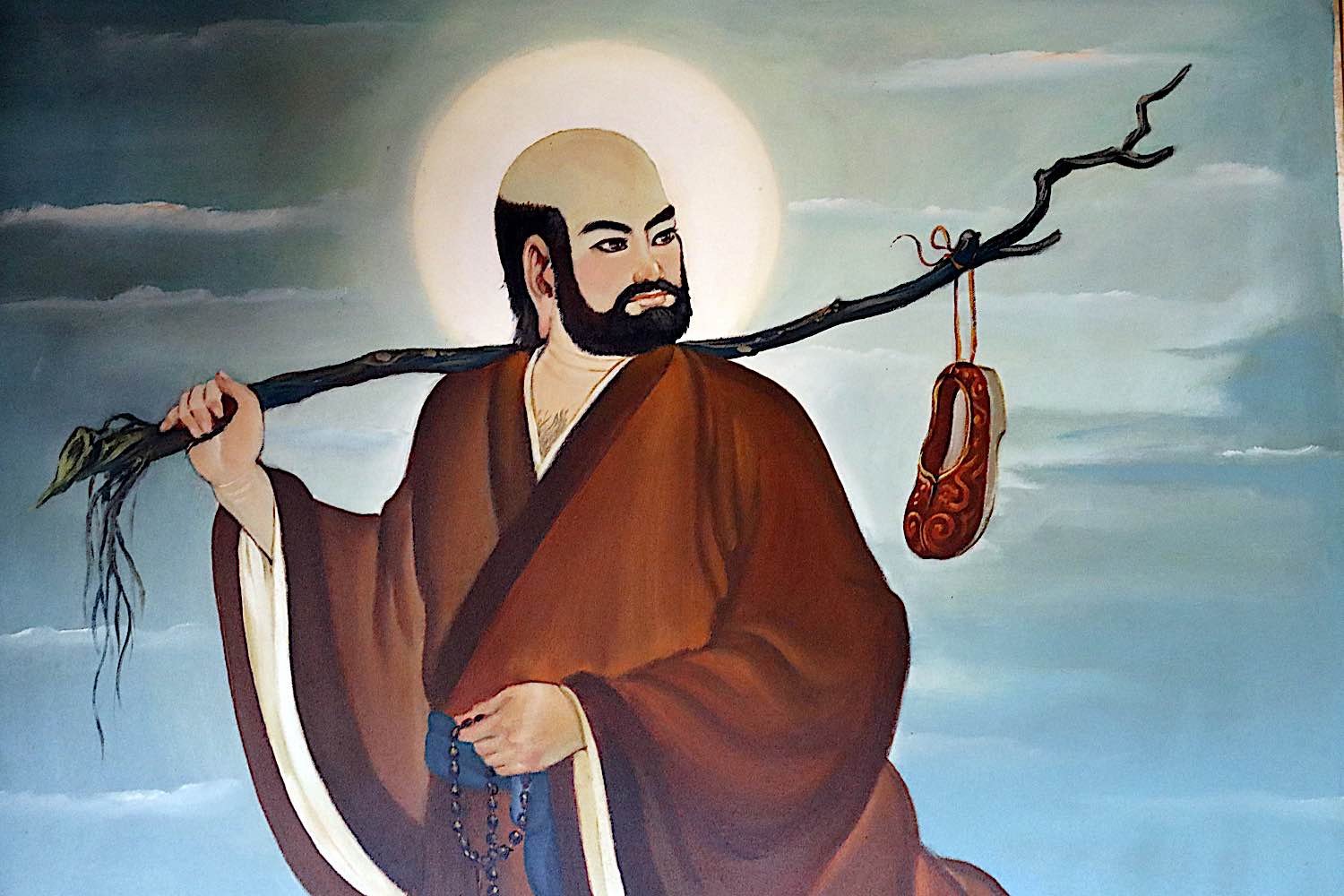
In the succinct wisdom of Bodhidharma, "He who clings to the finger never sees," we encounter a profound invitation to release our attachments to superficial signs and symbols. This quote challenges us to transcend the distractions of the material world and to seek a deeper understanding of reality. The stakes are high: in our clinging, we risk missing the essence of our experiences, the very truths that lie beyond the surface. To grasp this teaching is to embark on a journey toward clarity and insight, where true seeing becomes possible.
As we delve deeper into this teaching, we recognize that the finger serves as a metaphor for all that we might cling to in our lives—ideas, beliefs, relationships, and even our own identities. Bodhidharma's words resonate with the urgency of our times, where distractions abound and the noise of modern life can easily drown out the whispers of deeper truths. To cling is to hold tightly to something that ultimately cannot provide the fulfillment we seek. In letting go, we open ourselves to the vastness of experience and the richness of direct perception.
The image / the metaphor
The imagery of "the finger" evokes a vivid picture of someone pointing toward something significant, yet the act of clinging to the finger itself obscures the view of what is being pointed to. The verb "clings" suggests a desperate grasping, a refusal to let go, which ultimately leads to a narrow focus that blinds us to the broader landscape of existence. This metaphor captures the essence of our human tendency to fixate on the tangible, the immediate, rather than embracing the intangible truths that lie beyond our grasp.
Delving deeper into this metaphor, we can see that the finger represents not just physical objects, but also our thoughts, emotions, and attachments. When we cling to these ephemeral aspects of life, we become ensnared in a web of illusion, mistaking the pointer for the truth itself. The act of seeing, in its truest sense, requires a release from these attachments, allowing us to perceive the world with clarity and openness. In this way, Bodhidharma invites us to cultivate a direct experience of reality, unmediated by our preconceived notions and desires.
In the speaker's tradition
Bodhidharma, the legendary founder of Zen Buddhism, speaks from a rich tradition that emphasizes direct experience and the nature of reality. Central to Zen is the concept of *dharma*, which refers to the truth or law that governs the universe. In this context, clinging to the finger symbolizes our attachment to a limited understanding of the *dharma*, preventing us from experiencing the profound emptiness (*sunyata*) that underlies all phenomena. This teaching echoes the Zen practice of *koan*, where practitioners are encouraged to confront paradoxes that challenge their habitual ways of thinking, ultimately leading to a deeper awakening.
In the *Wake-up Sermon*, Bodhidharma emphasizes the importance of direct perception, urging practitioners to look beyond the finger to grasp the essence of their own being. This resonates with the teachings found in the *Heart Sutra*, which articulates the notion that form is emptiness and emptiness is form. By recognizing the interdependence of all things, we can begin to see that clinging to the finger not only limits our understanding but also perpetuates suffering. The liberation from this cycle is found in the practice of mindfulness and the cultivation of *prajna*, or wisdom, which allows us to see things as they truly are.
Living the teaching
Consider a modern scenario where this teaching might resonate: a person engrossed in their smartphone, scrolling through social media feeds, fixated on the images and stories presented. In this moment of clinging to the digital finger, they miss the vibrant life unfolding around them—the laughter of friends, the beauty of nature, the richness of human connection. This scenario illustrates how our attachments to technology and external validation can cloud our perception, preventing us from fully engaging with the present moment and the deeper truths it holds.
In the realm of relationships, this teaching can manifest in the way we cling to expectations or past grievances. When we hold tightly to our narratives about others, we risk losing sight of their true essence and the potential for growth and change. By letting go of these attachments, we create space for deeper understanding and compassion. In daily practice, this might involve mindfulness exercises that encourage us to observe our thoughts and feelings without judgment, allowing us to release our grip on the finger and embrace the fullness of our experiences.
A reflection
As we contemplate Bodhidharma's profound words, we are invited to reflect on our own lives: What fingers are we clinging to that prevent us from seeing the deeper truths of our existence? In what ways do our attachments limit our perception and understanding? This inquiry opens the door to a transformative journey, one that encourages us to let go and embrace the vastness of life with an open heart and mind.
