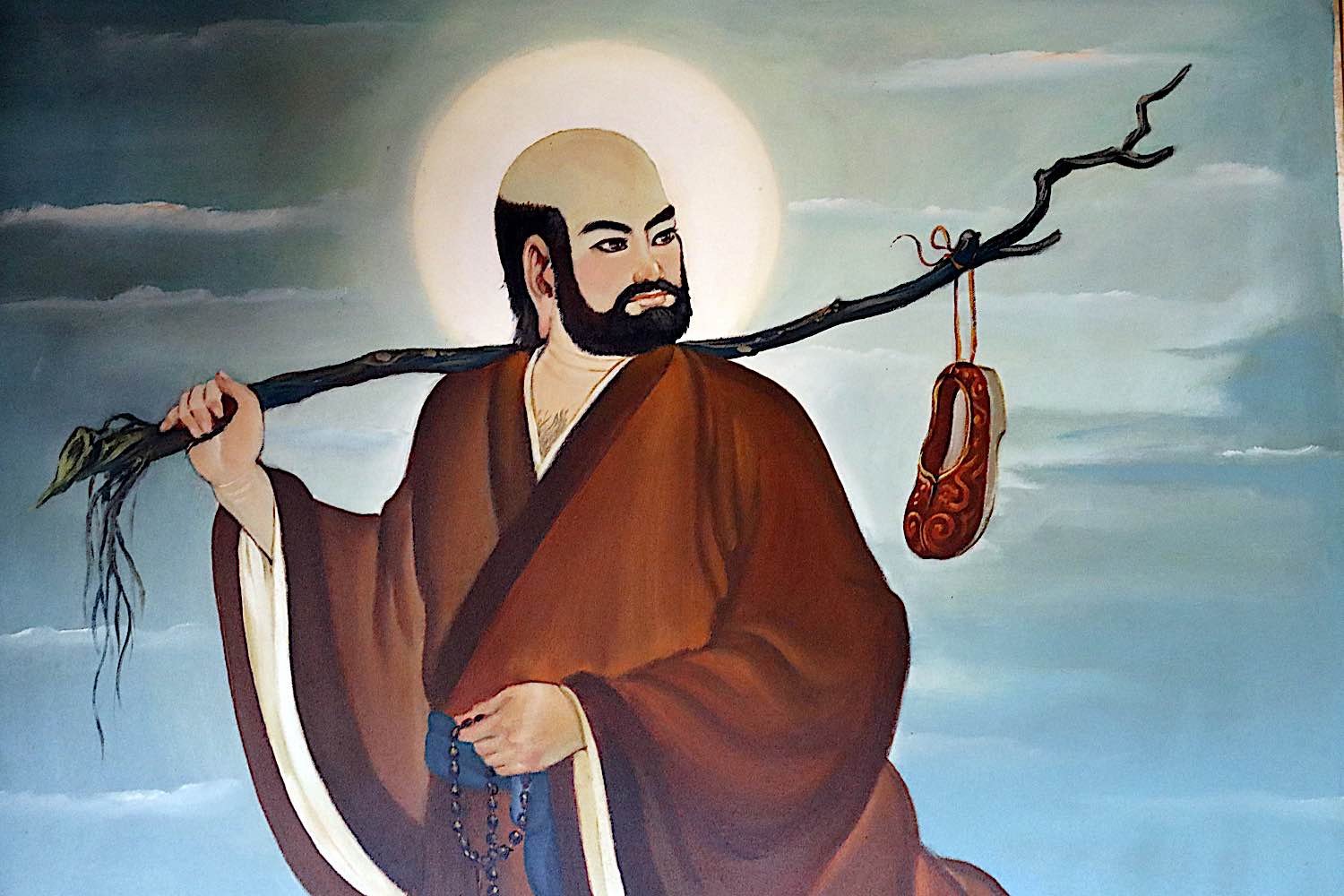
Awakening Through the Veil of Delusion
In the profound words of Bodhidharma, "In the moment of seeing, delusion vanishes." This statement encapsulates a pivotal insight in Zen practice, suggesting that true understanding and clarity arise in an instant of awareness. The stakes are high: our lives are often clouded by misconceptions and distractions, leading us away from the essence of our being. To grasp the significance of this moment is to touch the very heart of awakening, where the layers of delusion peel away, revealing the luminous truth of existence.
Delusion, in this context, refers not merely to ignorance but to the habitual patterns of thought and perception that obscure our true nature. Bodhidharma invites us to consider the transformative power of seeing—an act that transcends mere visual perception and delves into the depths of insight. This moment of clarity is not a distant goal but an immediate possibility, urging us to cultivate awareness in our daily lives. By embracing this teaching, we can begin to dismantle the barriers that separate us from our authentic selves and the world around us.
The image / the metaphor
The imagery in Bodhidharma's quote evokes a sudden illumination, a moment where the fog of confusion dissipates, allowing the light of understanding to shine through. The verb "seeing" is particularly significant; it implies an active engagement with reality rather than passive observation. This seeing is not limited to the physical act of looking but encompasses a deeper, contemplative awareness that penetrates the surface of our experiences. In this moment, delusion—characterized by ignorance and misunderstanding—ceases to exist, as clarity takes its place.
Diving deeper into the metaphor, we can envision delusion as a veil that shrouds our perception, distorting our understanding of ourselves and the world. The act of seeing, then, becomes a powerful tool for liberation, a means to pierce through the layers of illusion that bind us. This moment of awakening is akin to the Zen concept of "satori," where enlightenment is not a gradual process but a sudden realization that transforms our experience. It is in this instant that we recognize the interconnectedness of all things, dissolving the boundaries that separate us from the universe.
In the speaker's tradition
Bodhidharma, the legendary figure credited with bringing Zen Buddhism to China, emphasizes the importance of direct experience in understanding the nature of reality. His teachings resonate with the concept of "dharma," which refers to the truth or law that governs the universe. In Zen, awakening is not merely an intellectual exercise but a profound realization that arises from direct engagement with life. This aligns with the notion of "prajna," or wisdom, which is cultivated through mindfulness and presence in the moment.
In the context of Bodhidharma's "Bloodstream Sermon," we find echoes of the teachings found in other Zen texts, such as the "Heart Sutra," which speaks of "sunyata," or emptiness. Both texts invite practitioners to look beyond the illusions of the self and the material world, urging them to recognize the inherent emptiness that underlies all phenomena. This recognition is not a nihilistic void but a fertile ground for awakening, where the true nature of existence can be seen clearly, free from the distortions of delusion.
Living the teaching
Consider a modern scenario where this teaching might resonate: a moment of frustration during a challenging work project. As stress mounts, it becomes easy to lose sight of the bigger picture, allowing delusion to cloud judgment and foster negative emotions. However, if one pauses to truly see the situation—acknowledging the feelings of frustration without judgment—clarity can emerge. In that instant, the delusion of being overwhelmed dissipates, revealing a path forward that is grounded in awareness and presence.
This teaching can also be applied in the realm of relationships. Imagine a disagreement with a loved one, where misunderstandings and assumptions create a chasm between two people. By taking a moment to truly see the other’s perspective—listening deeply and with compassion—delusion gives way to empathy. In this space of understanding, the barriers that separate us begin to dissolve, allowing for connection and healing. Such moments remind us that awakening is not only a personal journey but a relational one, where the act of seeing can transform our interactions and deepen our bonds.
A reflection
As we contemplate Bodhidharma's profound insight, we are invited to reflect on our own lives: What moments of clarity have pierced through the fog of delusion for us? In what areas do we still find ourselves ensnared by misconceptions? This contemplation encourages us to cultivate a practice of awareness, inviting us to explore the depths of our own seeing. By engaging with this question, we can begin to uncover the layers of our own delusions and step into a more authentic experience of life.
