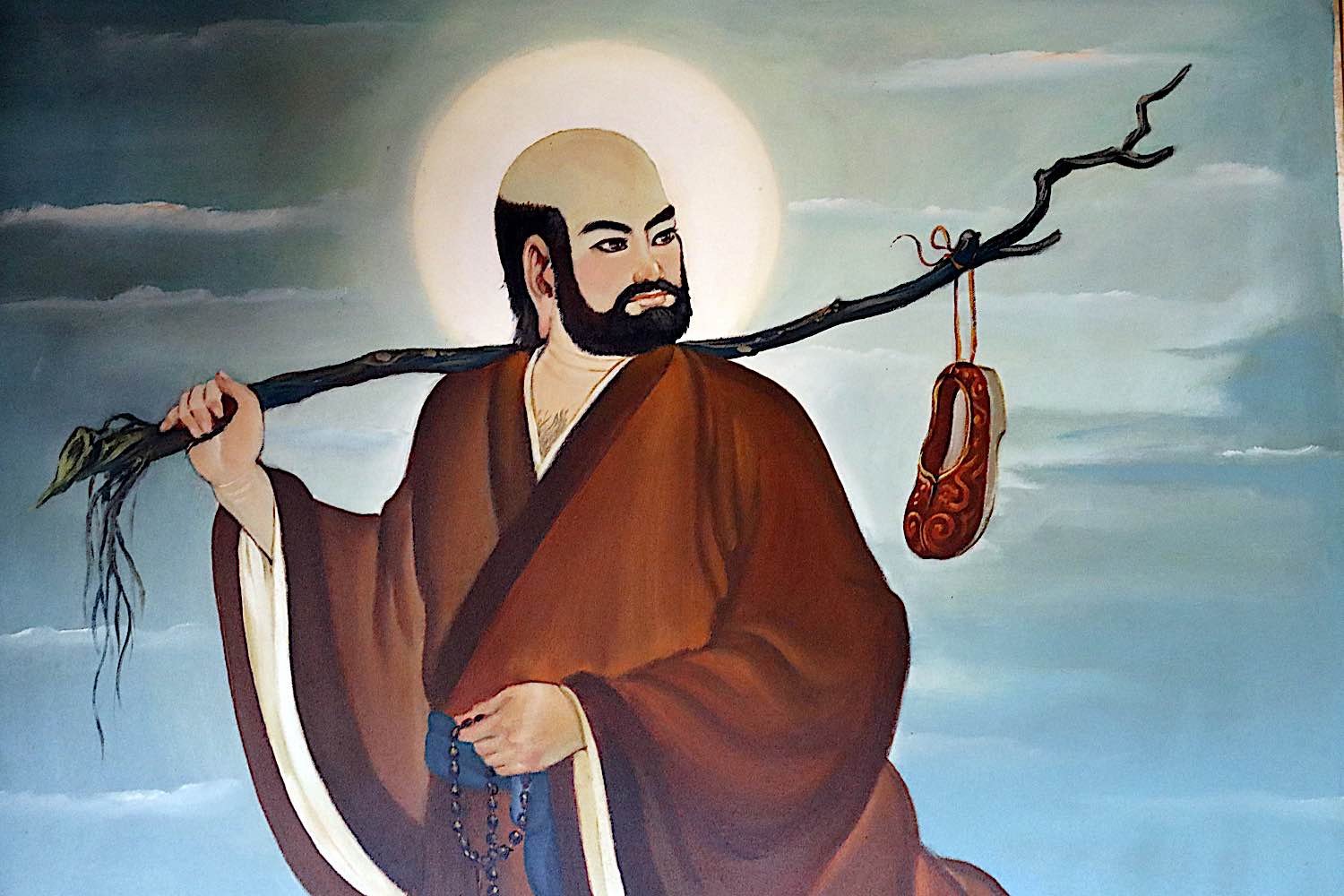
Embodied Truth: The Path to Authentic Being
Bodhidharma's profound assertion, "To meet the truth, be the truth," invites us to consider the intimate relationship between our inner reality and the external world. This statement challenges us to transcend mere intellectual understanding of truth and instead embody it in our daily lives. In a world often clouded by illusions and distractions, this teaching serves as a clarion call to authenticity, urging us to align our thoughts, words, and actions with the essence of truth itself.
At its core, this quote speaks to the transformative power of being genuine. It suggests that truth is not merely an abstract concept to be grasped but a living experience that must be realized through our very existence. By embodying truth, we become vessels of clarity and integrity, illuminating the path for ourselves and others. This notion resonates deeply within the Zen tradition, where the practice of being present and authentic is paramount to spiritual awakening.
The image / the metaphor
The imagery in Bodhidharma's quote evokes a sense of active participation in the unfolding of truth. The verbs "meet" and "be" suggest a dynamic relationship, where truth is not something to be passively observed but actively engaged with. To "meet" implies an encounter, a recognition of truth as a living entity that requires our presence and attention. Meanwhile, to "be" the truth emphasizes the necessity of integration; it calls for a seamless alignment between our inner selves and our outward expressions.
Diving deeper into this metaphor, we find that the act of being truth is akin to a dance between the self and the universe. It suggests that truth is not a static destination but a fluid state of being that we must continuously cultivate. In this light, the quote becomes a reminder that our journey toward truth is not solely about seeking knowledge but about embodying the very essence of what we seek. This embodiment transforms our interactions and relationships, allowing us to resonate with a deeper authenticity.
In the speaker's tradition
Bodhidharma, the legendary figure credited with bringing Zen Buddhism to China, emphasizes the importance of direct experience over theoretical knowledge. His teachings often revolve around concepts such as dharma, which refers to the natural order of the universe and our place within it. In Zen, the idea of kenosis, or self-emptying, aligns closely with Bodhidharma's call to embody truth. By letting go of preconceived notions and attachments, we create space for the truth to manifest within us.
This notion of embodiment is echoed in the Zen text "The Heart Sutra," which speaks of sunyata, or emptiness, as a fundamental aspect of reality. The sutra teaches that form is emptiness and emptiness is form, suggesting that our understanding of truth must transcend dualistic thinking. In this context, Bodhidharma's quote serves as a guiding principle, encouraging practitioners to dissolve the barriers between self and truth, ultimately leading to a profound realization of interconnectedness.
Living the teaching
Consider a modern scenario where this teaching can be applied: a workplace filled with tension and competition. In such an environment, individuals often feel pressured to present a façade of competence and confidence, masking their true feelings and vulnerabilities. By embodying truth in this context, one might choose to express their authentic self, sharing their challenges and uncertainties with colleagues. This act of vulnerability can foster a culture of openness and trust, allowing others to feel safe in doing the same, ultimately transforming the workplace into a more harmonious space.
Another application of this teaching can be found in personal relationships, particularly during moments of conflict. When faced with a disagreement, individuals often resort to defensiveness or avoidance, straying from their authentic selves. By choosing to "be the truth," one can approach the situation with honesty and compassion, expressing their feelings and needs without blame. This commitment to authenticity not only deepens the connection between individuals but also paves the way for resolution and understanding, illustrating the profound impact of living in alignment with truth.
A reflection
As we contemplate Bodhidharma's invitation to "meet the truth" by "being the truth," we are prompted to reflect on our own lives. In what areas do we find ourselves disconnected from our authentic selves? What practices can we cultivate to bridge this gap and embody truth more fully? These questions invite us into a deeper exploration of our relationship with truth, encouraging us to embrace the transformative power of authenticity in our daily lives.
