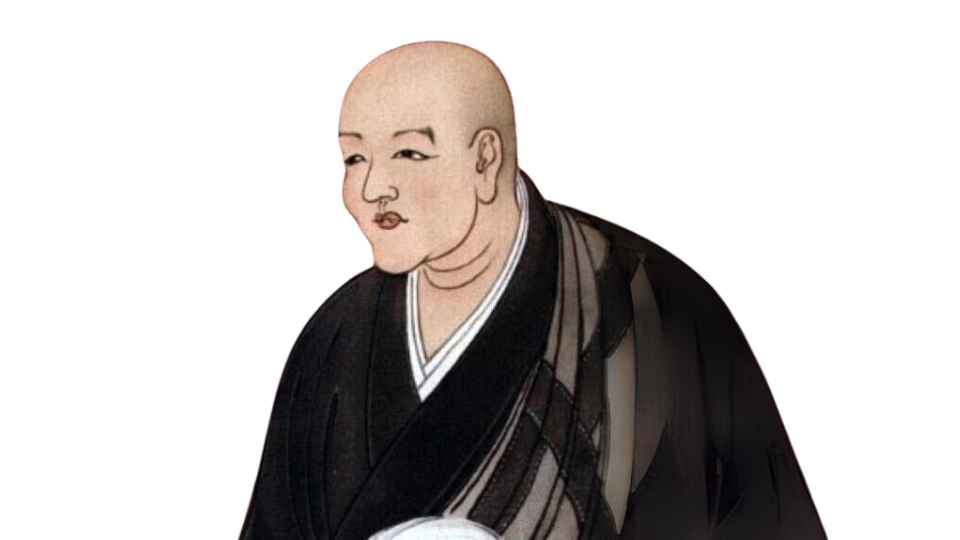
Embracing Wholeness: The Interweaving of Practice and Daily Life
Dōgen's assertion that "there is no separation between the practice and the daily activity" invites us to reconsider the boundaries we often draw between our spiritual pursuits and the mundane tasks of everyday life. This profound insight challenges the notion that spiritual practice exists in isolation, separate from the world we inhabit. Instead, it suggests that our daily activities can be imbued with the same depth and intentionality as our formal practices, urging us to recognize the sacredness in every moment.
In a society that often compartmentalizes experiences—where work, leisure, and spiritual practice are seen as distinct realms—Dōgen's teaching serves as a reminder of the interconnectedness of all aspects of existence. By integrating our practice into our daily activities, we cultivate a holistic approach to life that honors the present moment. This integration not only enriches our spiritual journey but also transforms the ordinary into the extraordinary, allowing us to experience the fullness of life with clarity and purpose.
The image / the metaphor
The imagery in Dōgen's quote evokes a seamless tapestry where the threads of practice and daily activity are woven together. The verbs "practice" and "activity" suggest a dynamic interplay, where each moment is an opportunity for engagement and awareness. This notion of integration implies that every action, no matter how trivial it may seem, can be approached with mindfulness and intention, thus elevating it to a form of practice.
Delving deeper into this metaphor, we can envision life as a continuous flow, where the act of washing dishes, walking, or even conversing with a friend becomes a sacred practice. The absence of separation between practice and daily life encourages us to embrace each moment fully, recognizing that enlightenment is not a distant goal but a reality that unfolds in the here and now. This perspective invites us to cultivate a sense of presence, allowing the mundane to become a canvas for spiritual expression.
In the speaker's tradition
Dōgen, a pivotal figure in Zen Buddhism, emphasizes the concept of "practice-enlightenment," which posits that the act of practicing is itself a manifestation of enlightenment. This idea resonates with the Buddhist principle of "sunyata," or emptiness, which teaches that all phenomena are interconnected and devoid of inherent separation. By understanding that our daily activities are not separate from our spiritual practice, we align ourselves with the fundamental nature of reality, where dualities dissolve and wholeness prevails.
In his seminal work, "Shobogenzo," Dōgen elaborates on the relationship between practice and reality, stating that "to study the Buddha Way is to study the self." This profound insight underscores the importance of engaging with our daily lives as a means of self-discovery and transformation. The act of cooking, for instance, becomes a meditation on impermanence and interdependence, allowing us to experience the essence of our being through the simplest of tasks.
Living the teaching
Consider a modern scenario where this teaching can be applied: imagine a busy professional who feels overwhelmed by the demands of work and family life. In the midst of juggling responsibilities, this individual might find themselves rushing through tasks, viewing them as mere obligations rather than opportunities for connection and presence. By embracing Dōgen's teaching, they can transform their approach, infusing each task—be it responding to emails or preparing dinner—with mindfulness and intention, thereby enriching their experience and fostering a deeper sense of fulfillment.
In relationships, this integration of practice into daily life can manifest in profound ways. Picture a moment of conflict between partners, where frustration and misunderstanding arise. Instead of reacting impulsively, one partner might pause to breathe and reflect, recognizing that their response is an extension of their practice. By choosing to engage with compassion and awareness, they not only address the immediate issue but also deepen the relational bond, illustrating how the principles of Zen can illuminate even the most challenging moments.
A reflection
As we contemplate Dōgen's assertion, we are invited to explore the ways in which we can bridge the gap between our spiritual practice and our daily activities. How might our lives transform if we approached each moment with the same reverence we reserve for formal meditation? In what ways can we cultivate a sense of presence in our everyday tasks, allowing them to become vehicles for mindfulness and awakening? These questions beckon us to reflect on the sacredness of our existence and the potential for every moment to be a practice of the heart.


