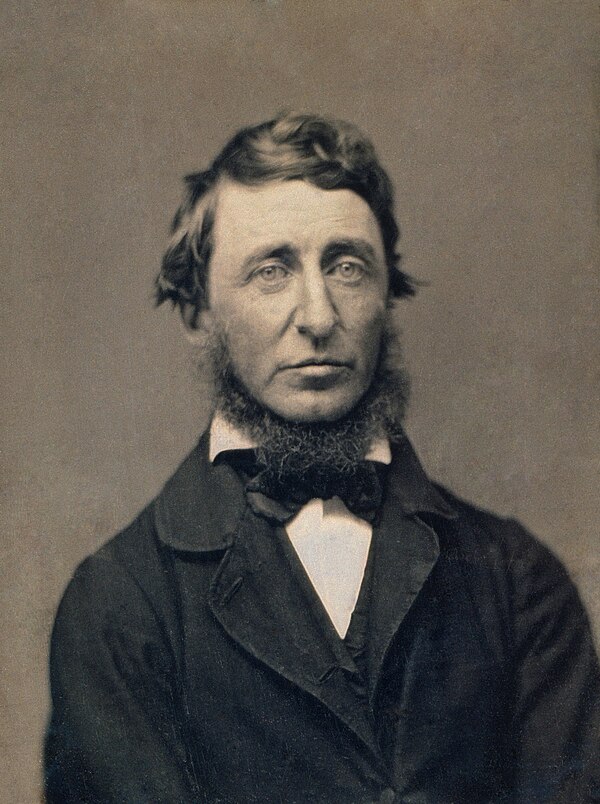
Henry David Thoreau's assertion that "All good things are wild and free" invites us to reconsider the nature of goodness and the essence of freedom. In a world often characterized by constraints and expectations, this quote serves as a reminder that true fulfillment lies in embracing the untamed aspects of life. It challenges us to seek out the wildness that exists not only in nature but also within ourselves, suggesting that the most profound joys and truths are found when we allow ourselves to be unshackled from societal norms.
This exploration of wildness and freedom is particularly poignant in today's context, where many feel confined by the rigid structures of modern life. Thoreau's words resonate as a call to reconnect with our innate instincts and passions, to step outside the boundaries that society imposes. By doing so, we may discover a deeper sense of authenticity and purpose, one that aligns with the natural rhythms of life and the universe. This journey toward wildness is not merely an act of rebellion; it is an invitation to embrace our true selves and the beauty that comes with it.
The image / the metaphor
At the heart of Thoreau's quote lies a vivid imagery that evokes the essence of nature—wild and free. The choice of the words "wild" and "free" conjures images of untamed landscapes, where life flourishes without the constraints of human intervention. This imagery speaks to a primal state of existence, one where the spirit is unencumbered and the heart is open to the wonders of the world. The verbs chosen suggest a dynamic quality, emphasizing that goodness is not static but rather a living, breathing force that thrives in the wild.
Diving deeper into the metaphor, we can interpret "wild" as a representation of authenticity and spontaneity, while "free" embodies liberation from societal expectations. Together, they paint a picture of a life lived in alignment with one's true nature, where joy and fulfillment arise from embracing the unpredictable and the unknown. This wildness is not chaos; rather, it is a harmonious dance with the universe, a celebration of the interconnectedness of all beings. In this light, Thoreau's quote becomes a profound reminder that the essence of goodness is found in the freedom to explore, to express, and to exist without fear.
In the speaker's tradition
Thoreau's philosophy is deeply rooted in the tradition of transcendentalism, which emphasizes the inherent goodness of both people and nature. This movement encourages individuals to trust their intuition and to seek truth through personal experience rather than through established doctrines. Concepts such as dharma, which refers to one's true path or duty, resonate with Thoreau's call for authenticity and wildness. In this context, the idea of living in accordance with one's true nature aligns with the transcendental belief that each person has a unique role in the tapestry of existence.
In his seminal work, "Walden," Thoreau illustrates the importance of simplicity and self-reliance, echoing the sentiments found in other transcendental texts. The notion of "kenosis," or self-emptying, can also be seen as a parallel to Thoreau's invitation to shed societal expectations and embrace a more authentic existence. By letting go of the clutter that obscures our true selves, we can cultivate a deeper connection with the wildness that surrounds us and within us, ultimately leading to a more fulfilling life.
Living the teaching
Consider a modern scenario where the teaching of wildness and freedom can be applied: a person feeling trapped in a corporate job that stifles their creativity. This individual might find themselves yearning for a life that reflects their passions and values, yet fear holds them back. By embracing Thoreau's wisdom, they may begin to explore alternative paths, such as pursuing a creative venture or engaging in community projects that resonate with their true self. This journey toward wildness may initially feel daunting, but it is through these steps that they can reclaim their freedom and discover the joy of living authentically.
A reflection
As we contemplate Thoreau's assertion that "All good things are wild and free," we are invited to reflect on our own lives. What aspects of our existence feel constrained by societal norms, and how might we begin to embrace our wildness? In what ways can we cultivate a sense of freedom that allows us to express our true selves? These questions serve as a starting point for a deeper exploration of our relationship with goodness, wildness, and the freedom that lies within each of us.


