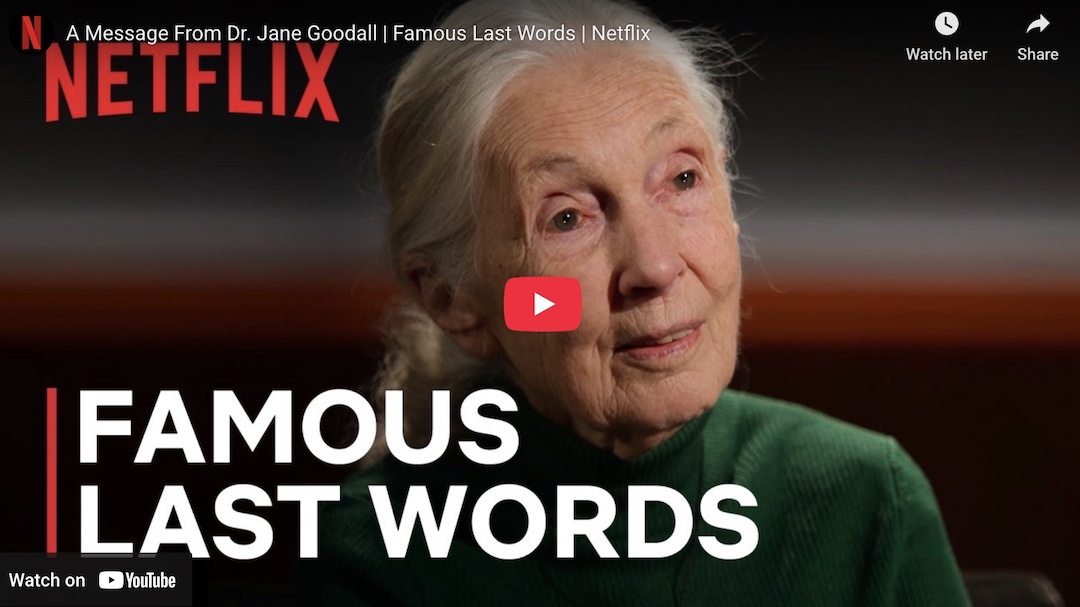
Every Day a Choice: The Power of Positive Impact
Jane Goodall's assertion that "You cannot get through a single day without having an impact. Make it positive" serves as a profound reminder of our interconnectedness and the weight of our daily actions. Each moment presents an opportunity to influence the world around us, whether through our words, choices, or even our silence. The stakes are high; in a world often clouded by negativity, the call to make a positive impact becomes not just a personal responsibility but a collective necessity.
This quote invites us to reflect on the nature of our existence and the ripple effects of our behavior. It challenges us to consider how our daily interactions shape not only our lives but also the lives of others and the environment. In a time when the urgency for ecological and social healing is palpable, Goodall's words resonate deeply, urging us to cultivate a mindset that prioritizes positivity and compassion in every encounter.
The image / the metaphor
At its core, Goodall's quote paints a vivid picture of daily life as a canvas upon which we can leave our mark. The imagery of "impact" evokes a sense of action and consequence, suggesting that our choices are not made in isolation but rather contribute to a larger tapestry of existence. The verbs "get through" and "make" imply a journey and an active role in shaping outcomes, emphasizing that we are not mere bystanders in our lives but rather participants with agency.
Diving deeper into the metaphor, we can see that each day is not just a passage of time but a series of interconnected moments where our intentions and actions can either uplift or diminish. The notion of making an impact invites us to consider the quality of our contributions—whether they are rooted in kindness, understanding, and respect, or in indifference and negativity. This metaphor serves as a reminder that our daily choices, however small, can create waves of change that extend far beyond our immediate surroundings.
In the speaker's tradition
Jane Goodall's work is deeply rooted in the tradition of contemplative ecology, which emphasizes the interconnectedness of all living beings and the moral responsibility we hold towards the planet and each other. Concepts such as dharma, which refers to the ethical path or duty, resonate with Goodall's call to make a positive impact. In this context, our daily actions can be seen as expressions of our dharma, where we align our choices with the greater good of the community and the environment.
Furthermore, Goodall's perspective echoes the teachings found in various spiritual texts that advocate for mindfulness and compassion. For instance, the Buddhist concept of sunyata, or emptiness, encourages us to recognize the interdependent nature of existence, prompting us to act with awareness of how our actions affect the whole. In this light, Goodall's message becomes a call to embody these teachings, reminding us that our daily lives are opportunities to practice compassion and mindfulness.
Living the teaching
Consider a modern scenario where this teaching can be applied: a busy workplace where stress and competition often overshadow collaboration and support. In such an environment, one might choose to offer a kind word or a helping hand to a colleague struggling with their workload. This simple act of positivity not only uplifts the individual but can also foster a culture of support and cooperation, illustrating how one person's choice can create a ripple effect of goodwill.
A reflection
As we contemplate Goodall's quote, we are invited to reflect on our own daily choices and their impacts. What small actions can we take today to ensure that our influence is a positive one? This question encourages us to engage in a mindful examination of our intentions and behaviors, prompting us to consider how we can contribute to a more compassionate and interconnected world.