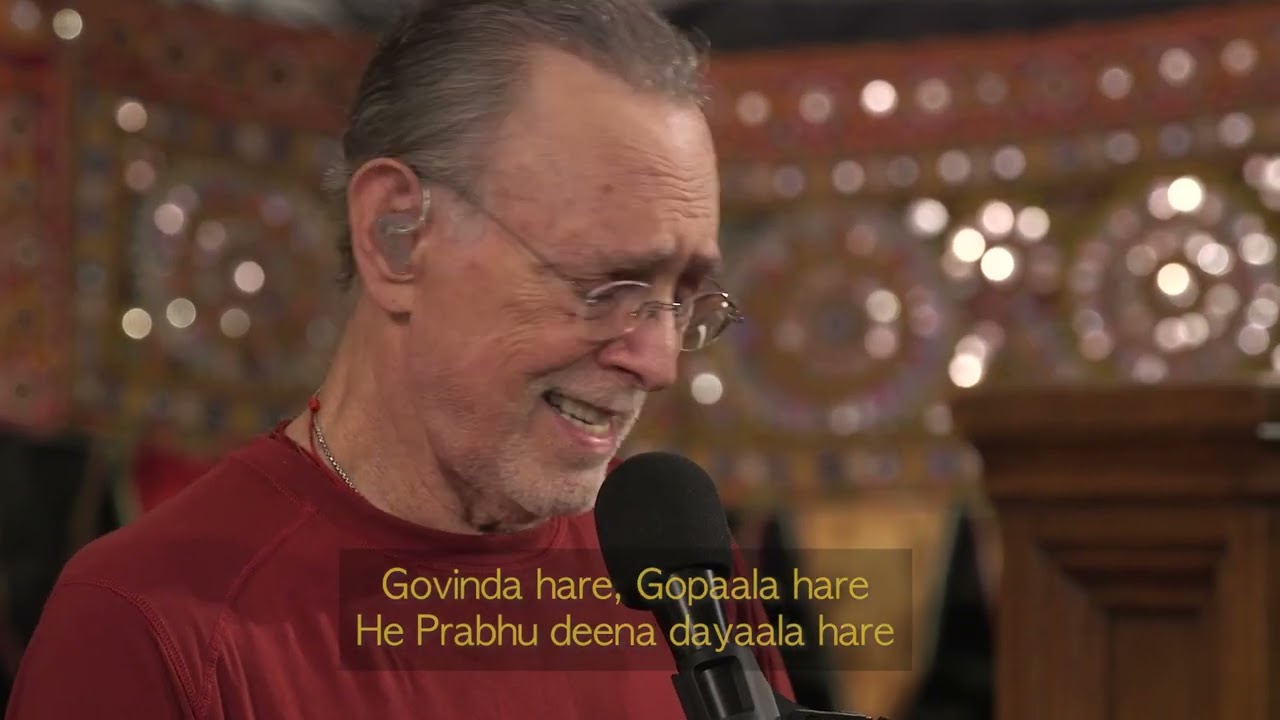
In the words of Krishna Das, "In every kirtan, Maharaj-ji embraces." This profound statement invites us to explore the essence of kirtan, a devotional practice that transcends mere singing to become a sacred communion with the divine. The stakes of this exploration are high; it beckons us to consider how presence, love, and connection manifest in our lives, particularly in moments of collective worship and personal devotion. The embrace of Maharaj-ji, a revered figure in the bhakti tradition, symbolizes a deep, unconditional love that is available to all who seek it.
As we delve deeper into this quote, we uncover layers of meaning that resonate with the heart of bhakti, or devotional love. Kirtan, often characterized by call-and-response chanting, serves as a vehicle for spiritual awakening and communal bonding. The act of embracing, as suggested by Krishna Das, is not merely physical; it is an invitation to experience a profound sense of belonging and acceptance. In this embrace, we are reminded that we are never alone in our spiritual journey, and that the divine presence is always accessible, waiting to envelop us in love and grace.
The image / the metaphor
The imagery of Maharaj-ji's embrace conjures a sense of warmth and safety, evoking feelings of being held and cherished. The verb "embraces" suggests an active, ongoing relationship, one that is not limited to a singular moment but is a continuous invitation to experience divine love. This embrace is not exclusive; it is expansive, welcoming all who gather in the spirit of kirtan. The act of singing together creates a shared space where individual hearts can merge into a collective experience of devotion, fostering a sense of unity and connection.
Diving deeper into the metaphor, we can see that this embrace represents more than just a physical act; it embodies the essence of acceptance and surrender. In the context of bhakti, to be embraced by Maharaj-ji is to be invited into a state of grace where one's burdens are lifted, and the heart is opened. This metaphor speaks to the transformative power of love, suggesting that through the practice of kirtan, we can experience a profound shift in our awareness, moving from isolation to interconnectedness, from fear to love.
In the speaker's tradition
Krishna Das, as a prominent figure in the bhakti tradition, embodies the principles of devotion and surrender that are central to this spiritual path. Bhakti, which translates to "devotion" or "loving attachment," emphasizes the importance of cultivating a personal relationship with the divine. This relationship is characterized by qualities such as humility, love, and a willingness to let go of the ego—concepts that resonate deeply with the idea of kenosis, or self-emptying. In this context, Maharaj-ji's embrace can be seen as a reflection of the divine's unconditional love, inviting practitioners to surrender their fears and open their hearts.
In the Bhagavad Gita, a foundational text in the bhakti tradition, Lord Krishna speaks of surrendering to the divine will as a path to liberation. He assures Arjuna that those who take refuge in him will be embraced and protected. This promise echoes the sentiment expressed by Krishna Das, reinforcing the idea that through kirtan and devotion, we can experience the divine embrace that Maharaj-ji represents. The act of singing together becomes a powerful means of surrendering to love, allowing us to transcend our individual struggles and connect with something greater.
Living the teaching
Consider a modern scenario where the teaching of Maharaj-ji's embrace can be applied: a community gathering for a kirtan session. In this space, individuals come together, each carrying their own stories, struggles, and joys. As the music begins and voices rise in unison, the atmosphere transforms. Participants find themselves enveloped in a collective energy that transcends their individual experiences. In this moment, the embrace of Maharaj-ji becomes palpable, reminding each person that they are part of a larger tapestry of love and support, where their vulnerabilities are met with acceptance and compassion.
Another application of this teaching can be found in personal relationships, particularly during difficult moments. Imagine a conflict arising between two friends, where misunderstandings have created distance. By embodying the spirit of Maharaj-ji's embrace, one friend can choose to approach the situation with openness and love, seeking to understand rather than to defend. This act of embracing the other, despite differences, can lead to healing and reconciliation, illustrating how the principles of bhakti can transform our interactions and deepen our connections with those around us.
A reflection
As we reflect on the quote, "In every kirtan, Maharaj-ji embraces," we are invited to consider the nature of our own experiences of presence and connection. How can we cultivate a sense of divine embrace in our daily lives, both in moments of joy and in times of struggle? This contemplative question encourages us to explore the ways in which we can open our hearts to receive love and support, not only from the divine but also from our communities and relationships. In doing so, we may find that the embrace of Maharaj-ji is always available, waiting for us to step into its warmth.