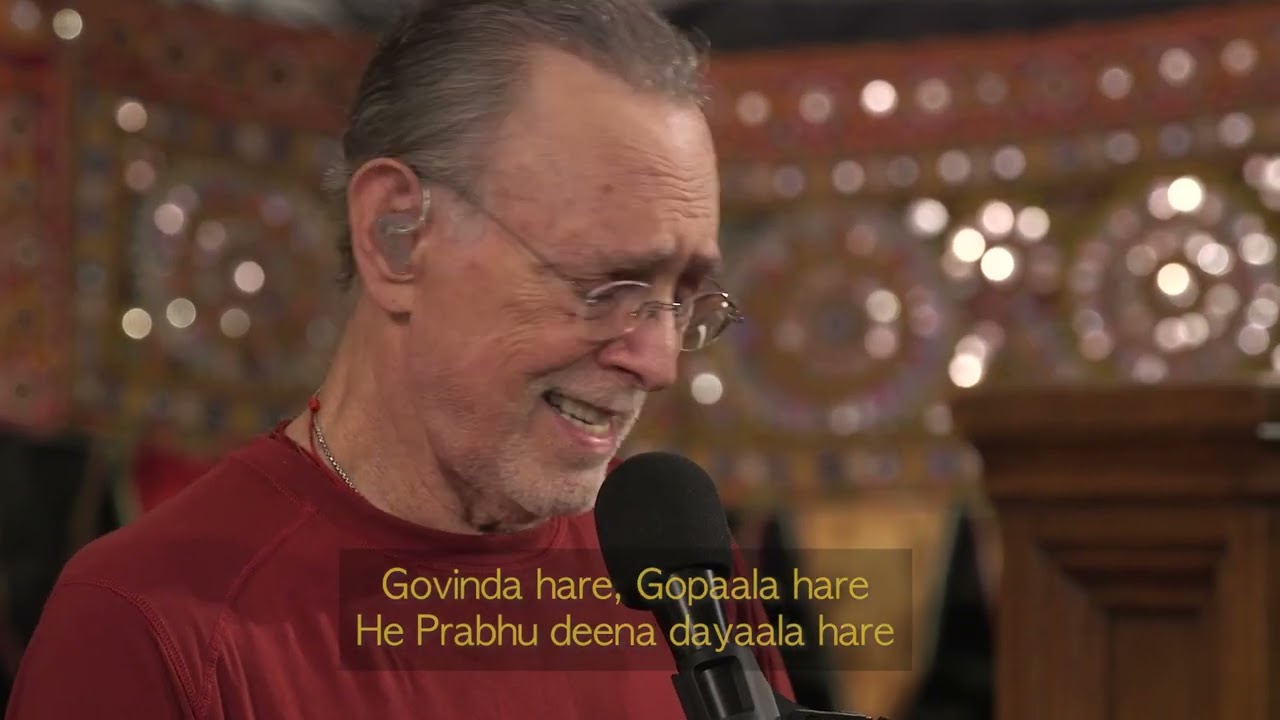
In the words of Krishna Das, "Kirtan is the easiest way to find your heart." This statement invites us to consider the profound simplicity of kirtan—a devotional practice rooted in the bhakti tradition. It suggests that amidst the complexities of life, there exists a pathway to our innermost selves that is both accessible and transformative. The heart, often seen as the seat of our true essence, can be reached through the melodic repetition of sacred sounds, allowing us to transcend the noise of our daily existence.
To delve deeper, we must recognize that the heart is not merely an organ but a symbol of our emotional and spiritual core. In a world that often prioritizes intellect and material success, Krishna Das's assertion serves as a gentle reminder of the ease with which we can reconnect with our authentic selves. Kirtan, with its call-and-response format, invites participation and community, creating a space where the heart can be unveiled and celebrated. This practice not only fosters individual introspection but also cultivates a collective experience of love and devotion.
The image / the metaphor
The imagery of "finding your heart" evokes a sense of exploration and discovery. The verb "find" suggests that the heart is not lost but perhaps obscured by the layers of our experiences, thoughts, and societal expectations. Kirtan acts as a beacon, illuminating the path back to our essence. The act of chanting, often accompanied by rhythmic instruments, creates a felt sense of connection, both to ourselves and to the divine. It is an invitation to strip away the distractions and to listen deeply to the resonance of our own being.
Diving deeper into this metaphor, we can see that kirtan serves as a bridge between the mundane and the sacred. The repetitive nature of the chants allows the mind to settle, creating a fertile ground for the heart to emerge. In this way, kirtan becomes a form of meditation, where the sound vibrations align with the heartbeat of the universe, guiding us toward a state of inner peace and clarity. The ease that Krishna Das speaks of is not merely a convenience; it is a profound alignment with the flow of life itself.
In the speaker's tradition
Krishna Das, a prominent figure in the bhakti tradition, embodies the essence of devotion through his music and teachings. Bhakti, which translates to "devotion" or "love," emphasizes the importance of surrendering the ego to connect with the divine. This practice is closely related to concepts such as dharma, the moral order of the universe, and kenosis, the act of self-emptying to allow for divine presence. In this context, kirtan becomes a tool for practitioners to dissolve the barriers that separate them from their true nature and from each other.
In the sacred texts of the bhakti tradition, such as the *Bhagavad Gita*, we find echoes of this teaching. The Gita speaks of the importance of devotion and surrender, urging individuals to act with love and compassion. The practice of kirtan aligns with the Gita's call to engage in selfless action, reminding us that through devotion, we can access a deeper understanding of ourselves and our place in the cosmos. The heart, as the locus of this connection, becomes a source of wisdom and guidance.
Living the teaching
Consider a modern scenario where the teaching of kirtan can be applied: imagine a busy professional, overwhelmed by the demands of work and life. In the midst of this chaos, they discover a local kirtan gathering. As they participate, they find themselves swept away by the music, the community, and the shared intention of love and devotion. In this space, the burdens of their daily life begin to dissolve, and they experience a profound sense of belonging and peace. This is the transformative power of kirtan, offering a refuge where the heart can be found amidst the noise.
Another application of this teaching can be seen in personal relationships. In moments of conflict or misunderstanding, individuals can turn to kirtan as a practice to cultivate compassion and empathy. By engaging in this shared experience of chanting, partners can reconnect with their hearts, allowing love to flow freely once again. The ease that Krishna Das speaks of becomes a guiding principle, reminding us that through devotion and shared practice, we can navigate the complexities of our relationships with grace and understanding.
A reflection
As we contemplate the essence of Krishna Das's words, we are invited to ask ourselves: How can I create space in my life for the practice of kirtan, and what might I discover about my heart in the process? This question encourages us to explore the ways in which we can integrate the practice of kirtan into our daily routines, fostering a deeper connection with ourselves and with others. In this exploration, we may find that the journey to our hearts is not only about individual discovery but also about the collective experience of love and devotion that binds us all.