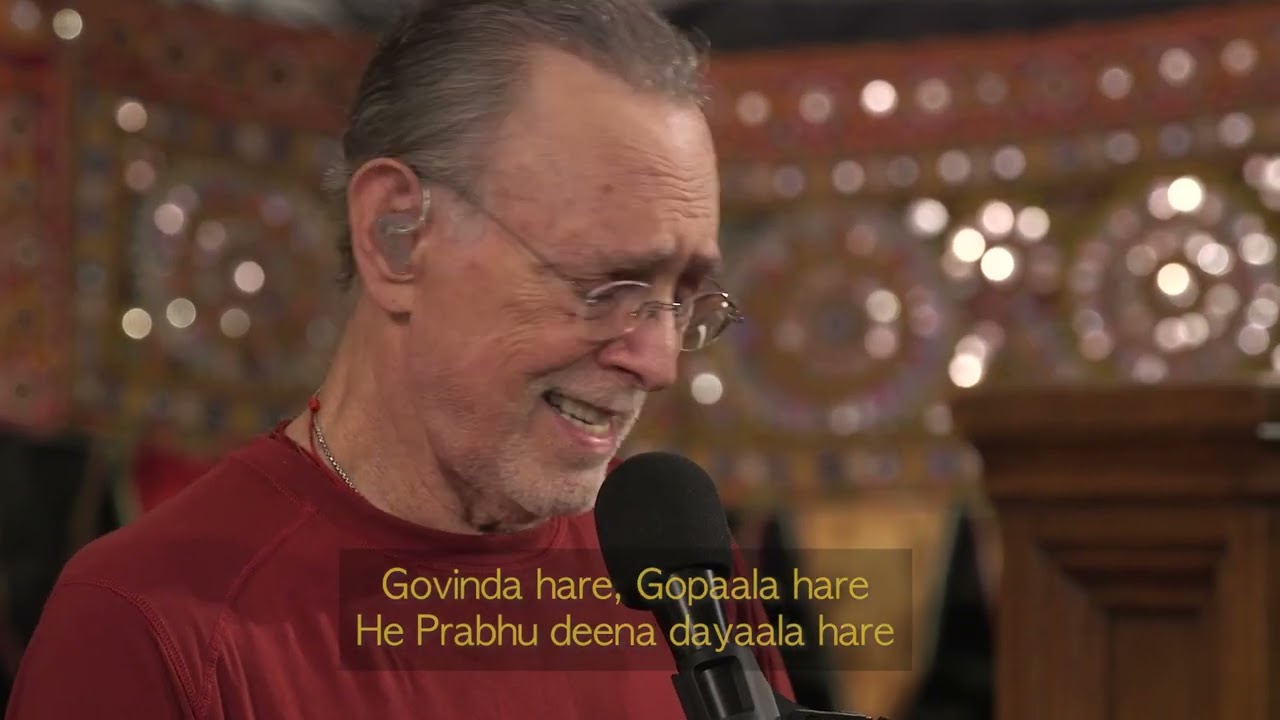
Krishna Das beautifully encapsulates a profound truth when he states, "Maharaj-ji's love is everywhere, all the time." This assertion invites us to consider the omnipresence of divine love, suggesting that it is not a fleeting emotion but a constant, underlying force that permeates our existence. Understanding this concept can transform our perception of reality, urging us to seek and recognize love in every moment and interaction. It challenges us to cultivate awareness and gratitude for the love that surrounds us, even in the most mundane aspects of life.
Delving deeper, we find that this quote speaks to the essence of bhakti, the devotional path that emphasizes love and surrender to the divine. It suggests that love is not confined to specific moments or experiences; rather, it is a continuous thread woven through the fabric of our lives. By acknowledging that Maharaj-ji's love is always present, we are invited to shift our focus from seeking love externally to recognizing it within ourselves and in the world around us. This shift can lead to a profound sense of peace and connection, as we begin to see love as an ever-present reality rather than a distant ideal.
The image / the metaphor
The imagery in Krishna Das's quote evokes a sense of warmth and comfort, suggesting that love is not only abundant but also accessible at all times. The phrase "everywhere, all the time" creates a vivid picture of love as an omnipresent force, akin to the air we breathe or the sunlight that nourishes the earth. This metaphor invites us to consider love as a fundamental aspect of our existence, something that envelops us and sustains us, regardless of our circumstances. It implies that love is not a commodity to be earned or lost but a divine gift that is perpetually available to us.
Going deeper into this metaphor, we can explore the implications of recognizing love as a constant presence. It encourages us to cultivate a mindset of receptivity, allowing ourselves to be open to love in all its forms. This perspective can transform our interactions with others, as we begin to see them not merely as individuals but as vessels of divine love. By embracing this understanding, we can foster a sense of interconnectedness, realizing that we are all part of a larger tapestry of love that transcends individual experiences and challenges.
In the speaker's tradition
Krishna Das, rooted in the bhakti tradition, draws upon concepts that emphasize love, devotion, and surrender to the divine. In bhakti, love is not just an emotion but a path to spiritual realization, where the devotee seeks to dissolve the ego and merge with the divine essence. This idea resonates with the concept of kenosis, or self-emptying, where one relinquishes personal desires to embrace a greater love. Similarly, the notion of sunyata, or emptiness, invites us to let go of attachments and recognize the inherent love that exists in the void, allowing us to experience the fullness of divine presence.
A relevant text that echoes this sentiment is the Bhagavad Gita, where Krishna speaks of the importance of surrendering to the divine will. In Chapter 18, verse 66, he urges Arjuna to abandon all forms of religion and simply surrender to him, promising liberation from all sins. This call to surrender is deeply intertwined with the understanding that love is ever-present; by letting go of our fears and attachments, we open ourselves to the boundless love that surrounds us. In this way, Krishna Das's quote serves as a reminder of the transformative power of love within the bhakti tradition.
Living the teaching
Consider a modern scenario where this teaching can be applied: imagine navigating a busy city street, surrounded by the hustle and bustle of daily life. In the midst of the chaos, it can be easy to overlook the love that exists in simple gestures—a smile from a stranger, the kindness of a shopkeeper, or the laughter of children playing nearby. By consciously choosing to recognize these moments as expressions of Maharaj-ji's love, we can cultivate a sense of gratitude and connection, transforming our experience of the world from one of isolation to one of belonging.
Another application of this teaching can be found in our relationships, particularly during challenging moments. When conflicts arise, it is often easy to become entrenched in our perspectives, losing sight of the love that initially brought us together. By remembering that love is always present, we can approach these situations with compassion and understanding, seeking to reconnect with the underlying bond that unites us. This practice of recognizing love in difficult times not only fosters healing but also deepens our relationships, allowing us to navigate challenges with grace and empathy.
A reflection
As we contemplate Krishna Das's assertion that "Maharaj-ji's love is everywhere, all the time," we are invited to reflect on our own experiences of love in daily life. How can we cultivate a greater awareness of the love that surrounds us, even in moments of difficulty or uncertainty? This question encourages us to explore the ways in which we can open our hearts to the omnipresence of love, allowing it to guide our actions and interactions. In doing so, we may find that love is not just a distant ideal but a living reality that enriches our lives and connects us to one another.