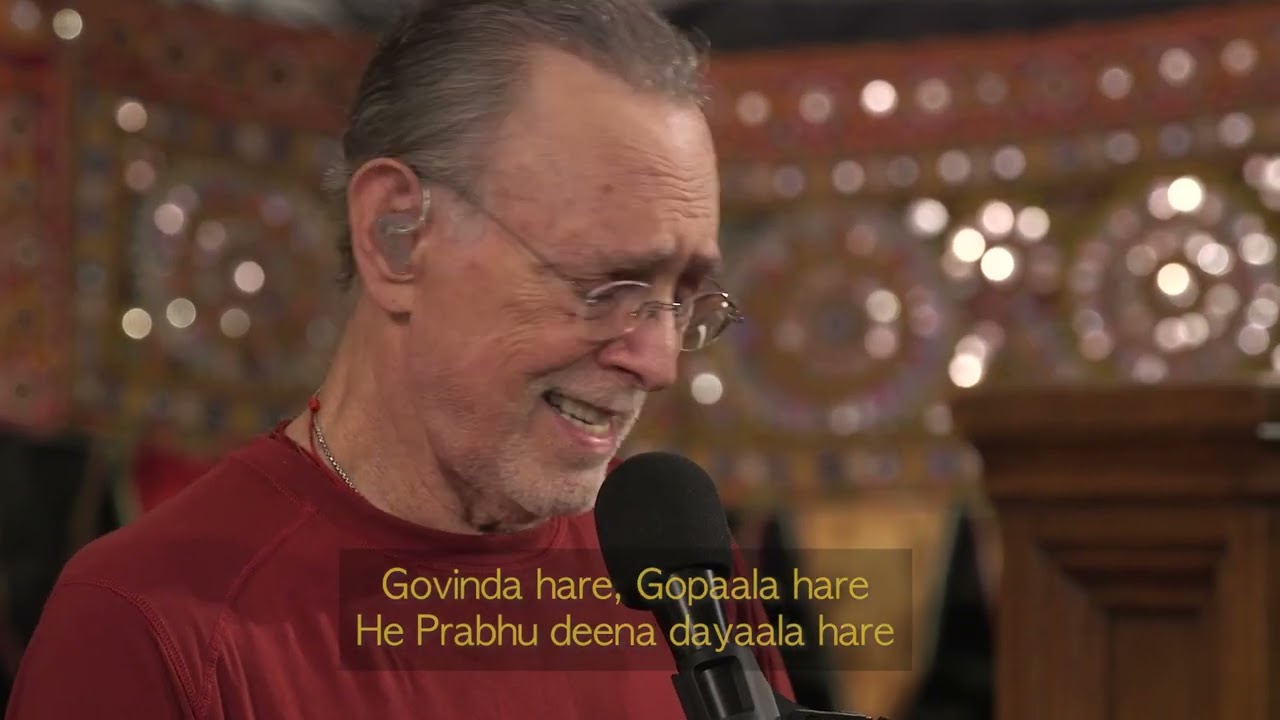
The Power of the Name: Beyond Words
In the profound words of Krishna Das, "You don't need words. You need the Name." This statement invites us to explore the essence of spiritual connection that transcends the limitations of language. In a world often dominated by verbal communication, the quote emphasizes the significance of the divine Name as a direct conduit to the sacred. It suggests that true understanding and connection lie not in the complexity of our expressions but in the simplicity and purity of invoking the Name.
Delving deeper, we find that this quote speaks to the heart of bhakti, the devotional path that emphasizes love and surrender to the divine. Words, while powerful, can sometimes create barriers or misunderstandings. The Name, however, serves as a bridge, a direct link to the divine presence that resides within and around us. This teaching invites us to reflect on our own spiritual practices and the ways in which we seek connection, urging us to prioritize the essence of our devotion over the intricacies of our language.
The image / the metaphor
At its core, the quote presents a striking image: the contrast between the abundance of words and the singularity of the Name. Words can be seen as a vast ocean, filled with currents and waves that can distract or overwhelm. In contrast, the Name stands as a still point, a sacred anchor that draws us into the depths of our being. The verbs chosen—“need” and “require”—imply a sense of urgency and necessity, suggesting that in our spiritual journey, it is not the multitude of words that will guide us, but the focused invocation of the divine Name.
Going deeper into this metaphor, we can consider the Name as a key that unlocks the door to our innermost selves. Just as a key is designed to fit a specific lock, the Name resonates with our soul, allowing us to access the divine essence that is often obscured by the noise of everyday life. This imagery invites us to contemplate how we might simplify our spiritual practices, stripping away the excess and returning to the fundamental act of devotion that the Name embodies.
In the speaker's tradition
Krishna Das, rooted in the tradition of bhakti, draws upon a rich tapestry of spiritual concepts that illuminate the significance of the Name. In bhakti, the act of devotion is not merely about worship but about cultivating a deep, personal relationship with the divine. This relationship often involves practices such as chanting, which serve to dissolve the ego and foster a state of kenosis—a self-emptying that allows the divine presence to fill us. The Name, therefore, becomes a focal point for this surrender, a means of experiencing the divine in its most intimate form.
To further contextualize this teaching, we can look to the Bhagavad Gita, where Lord Krishna emphasizes the importance of devotion and surrender. In Chapter 9, Verse 22, he assures his devotees that those who are devoted to him will have their needs fulfilled. This assurance reflects the essence of the Name as a source of sustenance and support, reinforcing the idea that when we call upon the Name with sincerity, we are met with divine grace and presence. The Name, in this sense, is not just a word but a living embodiment of the divine relationship we seek.
Living the teaching
Consider a modern scenario where this teaching can be applied: imagine a busy professional overwhelmed by the demands of work and life. In moments of stress, they may find themselves reaching for words—complaining, explaining, or seeking validation from others. Yet, if they were to pause and invoke the Name, they might discover a profound sense of peace and clarity. This simple act of calling upon the Name can serve as a reminder of their connection to something greater, grounding them in the present moment and alleviating the burdens of their thoughts.
In a different context, let’s explore the dynamics of a challenging relationship. When conflicts arise, it is easy to become entangled in a web of words—arguments, accusations, and misunderstandings. However, if one partner were to focus on the Name, perhaps through a shared practice of chanting or silent invocation, they might find a pathway to compassion and understanding. The Name can act as a balm, softening hearts and opening channels of communication that transcend the limitations of verbal expression, fostering a deeper connection rooted in love and devotion.
A reflection
As we contemplate the essence of Krishna Das's quote, we are invited to reflect on our own spiritual practices and the role of the Name in our lives. How often do we find ourselves caught in the web of words, seeking to articulate our experiences or feelings? In what ways might we simplify our approach to spirituality by returning to the invocation of the Name? This contemplation encourages us to explore the depths of our devotion and the transformative power of the Name, inviting us to experience the divine presence that lies beyond language.