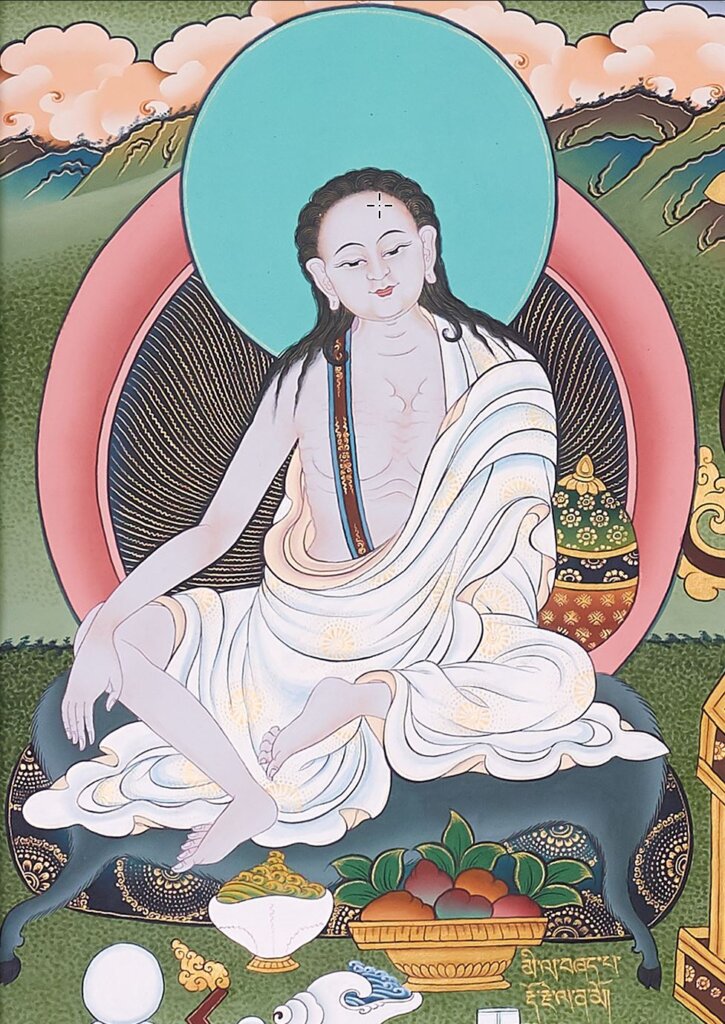
The Illusion of Possession: Embracing Impermanence
Milarepa's poignant assertion, "Acquisitions end in dispersion," invites us to reflect on the transient nature of material wealth and the futility of clinging to possessions. In a world that often equates success with accumulation, this teaching serves as a gentle reminder of the impermanence that underlies all things. Understanding this truth can liberate us from the relentless pursuit of more, allowing us to cultivate a deeper sense of peace and contentment.
As we navigate our lives, the allure of acquisition can be intoxicating, leading us to believe that happiness lies just beyond our next purchase or achievement. Yet, Milarepa's wisdom urges us to confront the reality that all things, including our possessions, are subject to change and eventual loss. This realization is not merely a philosophical exercise; it is a profound invitation to shift our focus from external accumulation to internal richness, fostering a life grounded in mindfulness and presence.
The image / the metaphor
The imagery in Milarepa's quote evokes a sense of flow and movement, suggesting that what we acquire is not meant to be held tightly but rather to be experienced and released. The word "acquisitions" conjures the act of gathering, of bringing things into our lives, while "dispersion" implies a scattering, a letting go. This duality captures the essence of our relationship with material possessions: they come into our lives, but ultimately, they cannot be held forever.
Diving deeper into the metaphor, we can see that "dispersion" symbolizes not just the physical loss of possessions but also the emotional and spiritual ramifications of attachment. When we cling to what we own, we create a false sense of security, believing that our worth is tied to our belongings. Milarepa's teaching encourages us to recognize that true wealth lies not in what we possess but in our capacity to experience life fully, embracing both joy and sorrow as they come and go.
In the speaker's tradition
Milarepa, a revered figure in Tibetan Buddhism, embodies the principles of impermanence and non-attachment that are central to the Buddhist path. His life story, marked by profound transformation and spiritual awakening, illustrates the concept of dharma—the natural law that governs the universe and guides us toward enlightenment. In this context, the notion of kenosis, or self-emptying, resonates deeply, as it invites us to relinquish our attachments and open ourselves to the flow of life.
Moreover, Milarepa's teachings echo the Buddhist concept of sunyata, or emptiness, which posits that all phenomena are devoid of inherent existence. This understanding challenges the very foundation of our attachment to possessions, urging us to see them as temporary manifestations rather than permanent fixtures. In the "Songs of Milarepa," we find a rich tapestry of wisdom that reinforces the idea that true liberation comes from recognizing the fleeting nature of all things, including our desires and acquisitions.
Living the teaching
Consider a modern scenario where this teaching resonates: a person who tirelessly works to climb the corporate ladder, believing that each promotion will bring them closer to happiness. As they acquire wealth and status, they may initially feel fulfilled, but over time, the pressures and responsibilities associated with their position begin to weigh heavily. In this context, Milarepa's insight serves as a powerful reminder that the pursuit of external validation can lead to a sense of emptiness, as the joy derived from acquisitions is often short-lived.
In a different application, imagine a relationship where one partner clings to the idea of control, fearing that any change might lead to loss. This attachment can create tension and distance, as the fear of dispersion overshadows the beauty of connection. By embracing Milarepa's teaching, both partners can learn to let go of rigid expectations and cultivate a deeper appreciation for the present moment, recognizing that love, like all things, is impermanent and requires a willingness to flow with its natural rhythms.
A reflection
As we contemplate Milarepa's profound statement, we are invited to ask ourselves: What attachments in my life are causing me suffering, and how might I begin to release them? This question encourages us to explore the areas where we cling too tightly, whether to material possessions, relationships, or even our own identities. By reflecting on this teaching, we can begin to cultivate a sense of freedom that arises from recognizing the impermanence of all things, allowing us to live more fully in the present.
