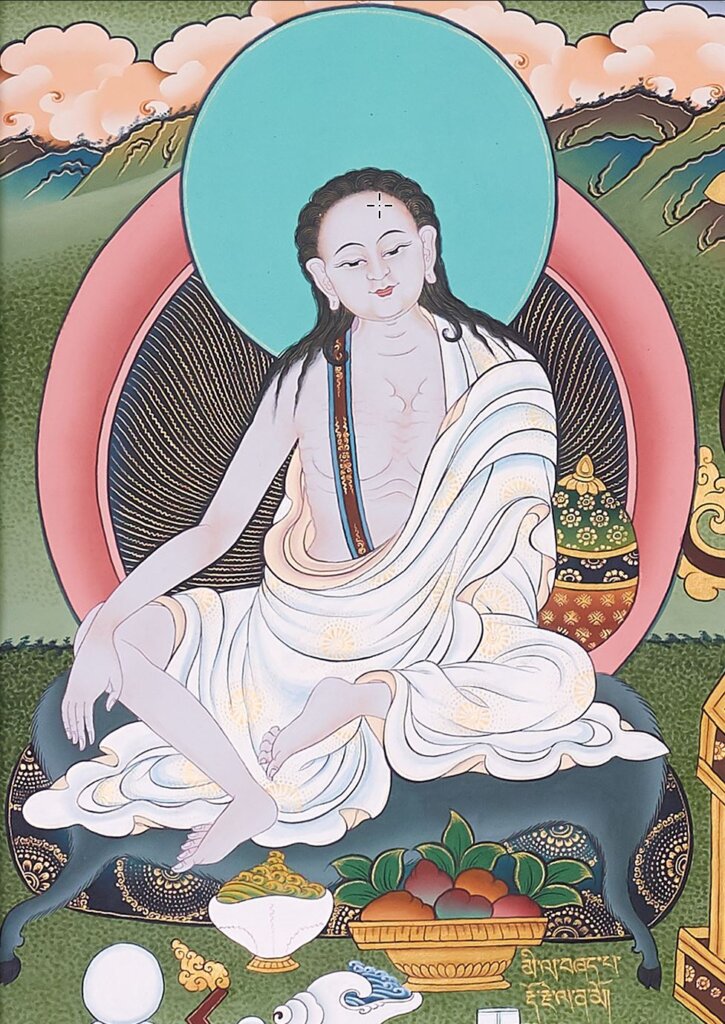
The Art of Letting Go: Embracing Impermanence
Milarepa's poignant observation, "Then it dissolves on its own," invites us to reflect on the transient nature of our experiences and emotions. In a world often characterized by attachment and clinging, this quote serves as a gentle reminder of the inevitability of change. It beckons us to recognize that pain, joy, and all states of being are not permanent fixtures but rather fleeting moments in the vast tapestry of existence. Understanding this can liberate us from the burdens of our attachments, allowing us to navigate life with greater ease and acceptance.
As we delve deeper into this teaching, we begin to see that the dissolution Milarepa speaks of is not merely a passive fading away but an active process of transformation. It suggests that our struggles and sorrows, when met with awareness and acceptance, can naturally dissipate without force or resistance. This perspective encourages us to cultivate a sense of equanimity, recognizing that every experience, whether pleasurable or painful, is part of a larger cycle of life. By embracing impermanence, we can find freedom in the very things that once seemed to bind us.
The image / the metaphor
At its core, Milarepa's quote evokes a vivid image of dissolution, conjuring the idea of something solid and defined gradually losing its form. The choice of the verb "dissolves" suggests a gentle, almost organic process, where the boundaries of our experiences blur and fade away. This imagery resonates deeply with the natural world, where ice melts into water, and clouds disperse into the vast sky. Such metaphors remind us that nothing is truly fixed; rather, everything is in a constant state of flux, inviting us to witness the beauty of transformation.
Diving deeper into this metaphor, we can see that dissolution is not merely about loss but also about liberation. When we allow our attachments to dissolve, we create space for new experiences and insights to emerge. This process can be likened to the shedding of autumn leaves, which, while seemingly a loss, paves the way for new growth in the spring. In this light, Milarepa's words encourage us to embrace the cycles of our lives, recognizing that each ending is also a beginning, and each moment of pain can lead to profound healing and understanding.
In the speaker's tradition
Milarepa, a revered figure in Tibetan Buddhism, embodies the essence of transformation through suffering and the pursuit of enlightenment. His teachings often center around the concepts of impermanence (anicca) and the emptiness of all phenomena (sunyata). These ideas resonate deeply within the Buddhist tradition, where the understanding of the transient nature of existence is fundamental to the path of liberation. By recognizing that all things are subject to change, we can cultivate a sense of detachment that allows us to engage with life more fully, without being ensnared by our desires and fears.
In the context of Milarepa's life, his journey from a life of vengeance to one of profound spiritual realization exemplifies the transformative power of embracing impermanence. His songs, found in the "Songs of Milarepa," often reflect on the nature of suffering and the path to enlightenment. One such verse speaks to the idea that clinging to the self leads to suffering, while letting go opens the door to liberation. This echoes the teachings found in the Heart Sutra, which emphasizes the emptiness of all forms and the liberation that arises from understanding this truth.
Living the teaching
Consider a modern scenario where this teaching might resonate: a person grappling with the end of a significant relationship. The pain of loss can feel overwhelming, as if the very fabric of one's identity is unraveling. Yet, if one were to embrace Milarepa's insight, they might begin to see this dissolution not as an end but as an opportunity for growth. By allowing the feelings of grief to arise and eventually dissolve, they can create space for new connections and experiences, ultimately leading to a deeper understanding of love and self.
Another application of this teaching might occur in the realm of daily practice. Imagine a moment of frustration during a meditation session, where thoughts and distractions seem to dominate the experience. Instead of resisting these feelings, one could gently acknowledge their presence, allowing them to dissolve without judgment. This practice of acceptance fosters a sense of peace, illustrating that even in moments of turmoil, there is a natural ebb and flow to our experiences. By embracing this process, we cultivate resilience and a deeper connection to the present moment.
A reflection
As we contemplate Milarepa's profound words, we are invited to consider the impermanence that permeates our lives. What attachments or burdens are we clinging to that may benefit from the gentle act of dissolution? In recognizing the transient nature of our experiences, we can begin to let go of what no longer serves us, opening ourselves to the beauty of the present moment. How might our lives transform if we embraced the idea that everything, including our pain, is destined to dissolve in its own time?
