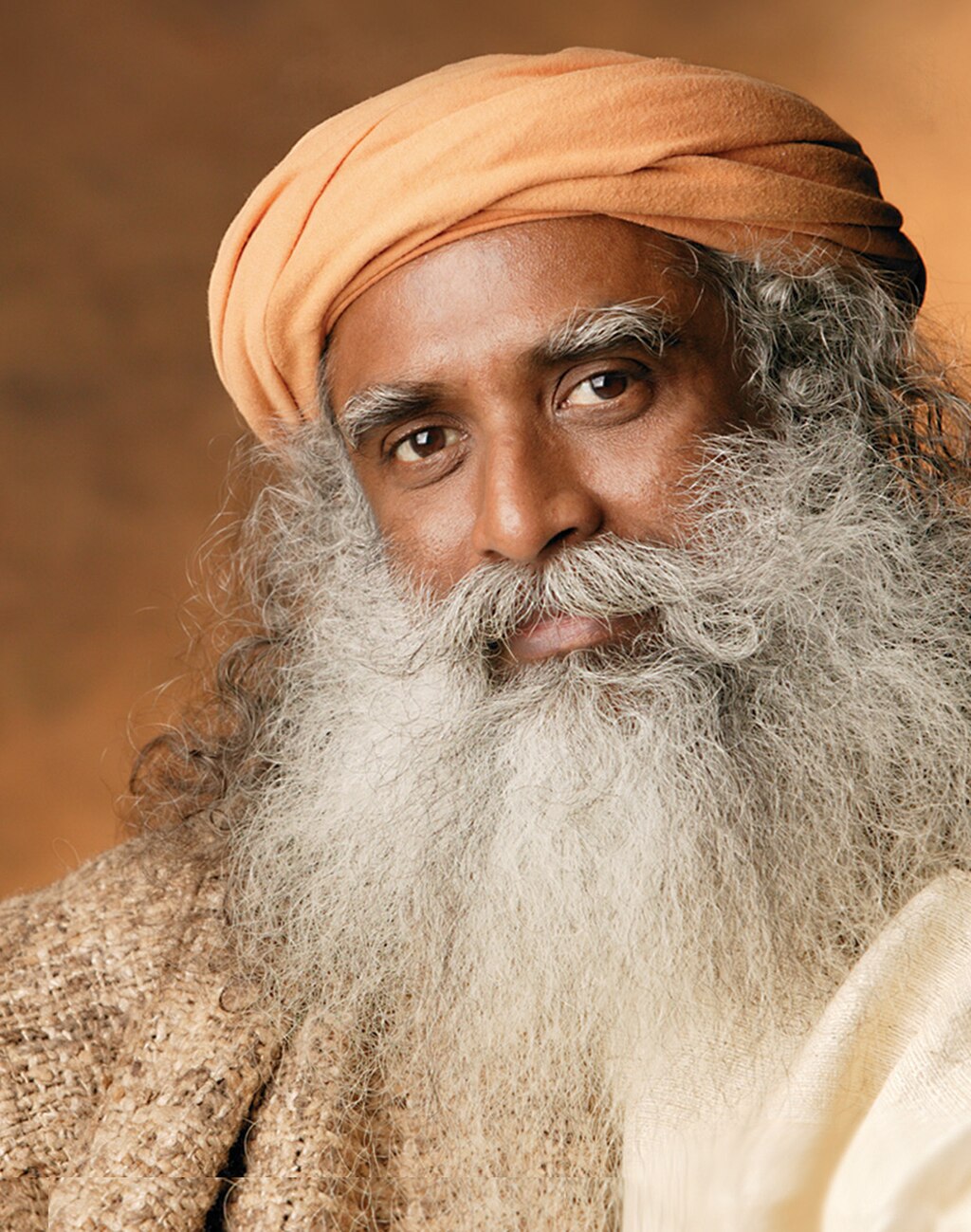
The Limits of Logic: Embracing the Whole of Reality
Sadhguru's assertion that "logic is just a small slice of reality" invites us to reconsider the boundaries of our understanding. In a world increasingly dominated by rational thought and empirical evidence, this statement serves as a poignant reminder of the limitations inherent in a purely logical framework. The stakes are high; if we confine ourselves to logic alone, we risk missing the vast, nuanced tapestry of existence that encompasses emotion, intuition, and spiritual insight.
This perspective challenges us to expand our consciousness beyond the confines of rationality. While logic provides a valuable tool for navigating certain aspects of life, it cannot encapsulate the entirety of human experience. Embracing the fullness of reality requires a willingness to engage with the ineffable, the mysterious, and the deeply felt aspects of our existence. In doing so, we open ourselves to a richer, more profound understanding of ourselves and the world around us.
The image / the metaphor
The imagery in Sadhguru's quote evokes a sense of limitation, suggesting that logic, while useful, is akin to a slice of a much larger pie. The choice of the word "slice" implies that there is much more to be experienced beyond what is immediately visible or understandable. This metaphor invites us to consider the vastness of reality, which encompasses not only the rational but also the emotional, spiritual, and experiential dimensions of life.
Diving deeper into this metaphor, we can envision reality as a multi-layered tapestry, where each thread represents different aspects of existence. Logic may be one thread, but it is interwoven with others such as intuition, creativity, and spiritual insight. To fully appreciate the richness of life, we must learn to see beyond the surface and recognize the interconnectedness of all these threads, understanding that each contributes to the whole.
In the speaker's tradition
Within the context of Sadhguru's teachings, this idea resonates deeply with the principles of yoga and the broader spiritual tradition from which it springs. Concepts such as dharma, or one's path in life, and prajna, or wisdom, emphasize the importance of understanding reality in its entirety. In yoga philosophy, the pursuit of knowledge is not merely an intellectual endeavor; it is a holistic journey that encompasses body, mind, and spirit, urging practitioners to transcend the limitations of logic alone.
Moreover, this teaching aligns with the Buddhist concept of sunyata, or emptiness, which suggests that our perceptions of reality are often clouded by attachment to fixed ideas and beliefs. Just as sunyata invites us to let go of rigid constructs, Sadhguru's assertion encourages us to embrace a more expansive view of existence. In texts like the Bhagavad Gita, the interplay between knowledge and wisdom is explored, illustrating that true understanding transcends mere intellectual reasoning.
Living the teaching
Consider a modern scenario where this teaching can be applied: a workplace conflict that arises from differing opinions. In such situations, individuals often rely on logical arguments to defend their positions, leading to a stalemate. However, if one were to step back and recognize that logic is just a slice of reality, they might approach the conflict with greater empathy and openness. By acknowledging the emotional undercurrents and the personal experiences of others, a more holistic resolution can emerge, fostering collaboration rather than division.
A reflection
As we contemplate Sadhguru's insight, we are invited to reflect on our own relationship with logic and reality. How often do we find ourselves relying solely on rational thought, neglecting the emotional and spiritual dimensions of our experiences? In what ways can we cultivate a more holistic understanding of ourselves and the world around us? These questions encourage us to explore the boundaries of our perceptions and to embrace the fullness of reality in our daily lives.