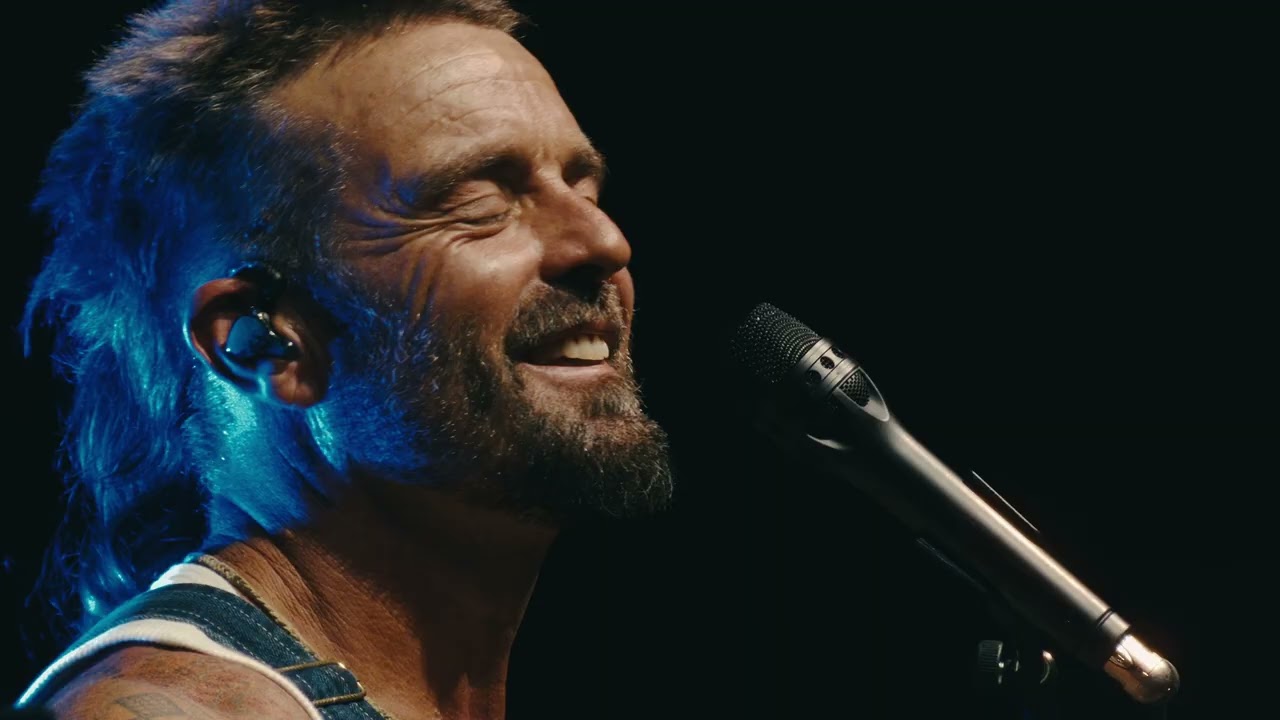
"World Order" is a song about intergenerational patterns, personal failings, and the redemptive power of struggle. Xavier Rudd traces how the way we tend our relationships and treat others echoes through family lines, how our wounds both break and shape us, and how making progress through pain deepens our bonds and sense of belonging. The song moves from reckoning with inherited patterns toward a vision of balance, healing, and the desire simply to be present with loved ones.
How Do Family Patterns Carry Across Generations?
The song opens with a central metaphor: "the way that you tend to your garden / maybe the way that you treat all the humans and the we you neglect through the seasons / may resemble your own in a demons" (45–73s). Rudd uses the image of a garden to suggest that how we care for—or neglect—the people around us creates a template, a lived model that gets inherited. Our children watch. They learn not from our words, but from how we behave when no one is looking, how we handle struggle, how we show up or disappear.
The phrase "blooded is thicker than water but your grandson just didn't fit the order" (73–85s) acknowledges a painful reality: family bonds are supposed to be unbreakable, yet family systems also enforce rigid hierarchies, expectations, and belonging conditions. Rudd suggests that when someone—a grandson, a child, a person—doesn't fit the mold the family has established, they face rejection or estrangement. The "order" is a set of unwritten rules about who is allowed, what is acceptable, what kind of life is blessed or cursed. Breaking that order often means breaking connection.
What Happens When the Heart Breaks?
Rudd shifts into reckoning with vulnerability: "to be blessed with a heart that is open / but can easily bru and be broken" (87–100s). There is no safety in an open heart. The price of loving and being vulnerable is the risk of shattering. This is not sentiment; it is honest acknowledgment. People with open hearts are wounded more easily. The song doesn't shy from this reality—it names it.
He continues: "failings you feel will not fter [matter] / and the flame in the distance it will flicker / shortcomings if truth be spoken / we keep the depth of the wounds fair shallow" (134–160s). The song recognizes that we all fail, fall short, carry wounds we don't fully process. Many of us keep our pain shallow, never diving to the real depth, never allowing ourselves to grieve or sit with the weight of what happened. We minimize. We move on. But the flame—the light, the hope, the vitality—flickers under the burden of unprocessed hurt.
Why Does Struggle Make Joy Sweeter?
The turning point comes here: "when life stings and it burn / blood it is sticker and water / no matter the story for the order" (169–184s). When life inflicts real pain—when it stings, when it burns—the deeper truth emerges: blood is thicker than water. No matter what order or system tried to divide us, no matter what story we've been told about who belongs and who doesn't, family—chosen or biological—holds. Connection endures. And in that endurance is redemption.
Rudd's description of the song in the video notes captures this precisely: "We live, we learn, we grow and our self realisation is ever changing and not always easy. But when we make it through times of struggle, the good times are even sweeter." The implication is profound: without the struggle, joy has no depth. Without the burnt-down feeling, without having faced your own demons and failings, sweetness is just sugar. It doesn't nourish.
What Does It Mean to Simply Want to Be With Someone?
The chorus arrives as a counter-narrative to all the demand and expectation that came before: "you want me to change / you want me to be / want me to see something I cannot see / mountains I've climbed / valleys i f / Rivers I cross / and to me you come / you got my back / I got your hand / and I just want to be with you" (271–300s). The voice in the song refuses the constant pressure to transform, to become someone else, to achieve or prove something. Instead, it asks for something radically simple: presence. Reciprocal presence. You have my back, I have yours, and in that mutual support, I just want to be with you.
This is repeated like a mantra, building in intensity: "I been making progress every day / I just want to be with / I can see the changes that I made / and I just want to be" (300–324s). The speaker acknowledges growth and change—progress is real, changes are visible—but strips away the need to prove anything or justify the journey. The goal is not achievement. It is companionship. Presence. Being seen and knowing the other person is still standing beside you.
How Is Balance Found Between Mind and Body, Individual and Land?
Later, the song expands into a vision of integrated living: "feed in the dirt / hearts in the sea / striving for balance / hard mind and body / connected to land / connected to love / finding alignment through the ways we've learned" (345–359s). Rudd articulates a wholeness that bridges multiple dimensions: the practical grounding in earth, the emotional openness to the sea, the cognitive discipline, and the bodily aliveness. These are not separate. They are all part of one fabric—a life lived in connection to place, to love, to the knowledge we've accumulated through living.
The response to this integrated vision is a call to action: "open to change / open to feel / willing to face up and willing to heal" (359–363s). Balance is not static. It requires constant willingness—to change when necessary, to feel rather than numb, to face the difficult truths head-on, and to do the work of healing. This is not a destination. It is a practice, a daily orientation toward growth and wholeness.
Where to Go From Here
"World Order" functions as a map of personal reckoning. If you are caught in inherited family patterns, the song suggests that naming them is the first step—acknowledging how the garden you tend reflects what you witnessed, what you were taught, what hurt you. If you are struggling with the gap between who you are and who others want you to be, Rudd offers permission to stop performing and start being. If you are carrying unhealed wounds, the song normalizes that depth and suggests that only by fully feeling pain can you access authentic joy and connection.
Listen to the song not as advice, but as testimony—a companion's voice reflecting back the complexity of being human, of loving imperfectly, of growing through struggle, and of choosing, over and over, to show up and simply be with the people who matter. The world order—the rigid systems and hierarchies—may try to sort and separate us. But blood is thicker. Connection endures. And in that endurance, there is everything.