It's 2 a.m., and you're staring at the ceiling again. Your mind won't settle. Your body won't relax. You've tried everything—reading, white noise machines, the useless spiral of phone scrolling. What you haven't tried, or what you've tried wrong, is the oldest human technology for invitation into rest: another human voice, guiding you down.
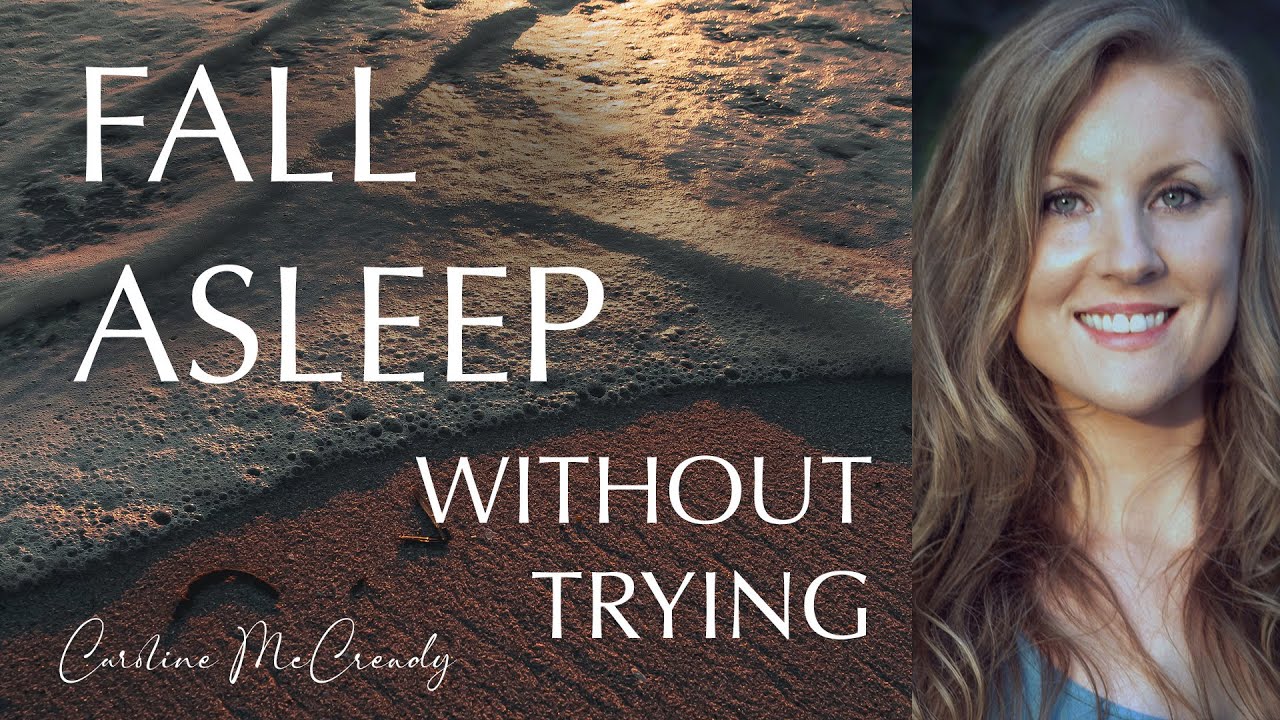
Caroline McCready's two-hour Peaceful Deep Sleep Meditation for a Restful Night exemplifies a particular philosophy about how rest should unfold. Published in 2021, it has accumulated over 716,000 views—a number that testifies to how many people are searching for meditations that take sleep seriously, that understand rest as a practice requiring time and attention rather than a quick pharmacological fix.
What is a sleep meditation?
Sleep meditation exists in a category of its own. It's related to regular meditation, certainly, but it's oriented toward a different outcome. Where a mindfulness practice cultivates awareness, a sleep meditation aims for the opposite: the letting-go of awareness into rest. The voice isn't inviting you to observe your breath or notice your thoughts. It's inviting you to release both.
The mechanism is deceptively simple. A human voice—calm, unhurried, without any edge—gives the mind something to follow besides anxiety or the remnants of the day. As attention settles onto the voice, other thoughts lose their urgency. The voice itself models a slowed rhythm. It breathes slowly. It pauses between sentences, creating space. The body, sensing safety in this auditory environment, begins to relax. Breath deepens. Muscles release tension. The nervous system downshifts.
This is fundamentally not new. Lullabies work this way. Bedtime stories work this way. Mothers have sung children to sleep for millennia. What McCready's meditation does is apply this ancient principle with contemporary structure and intentionality, treating sleep as a contemplative destination worthy of careful guidance.
Why does the two-hour format matter?
A typical guided sleep meditation runs fifteen to thirty minutes—just enough time to quiet the mind if you're already half-asleep. But if you're wired, anxious, ruminating, or simply in the habit of insomnia, thirty minutes isn't enough. Your nervous system hasn't had time to fully shift. You're still too close to the energy of wakefulness.
McCready's meditation operates on a different timeline. It's structured in three phases: an introductory section, then a guided meditation lasting roughly an hour, then a music-only phase that carries you through the second hour and into sleep.
This structure reveals an understanding of actual sleep. It acknowledges that different people will reach sleep at different points in the journey. Some listeners will drift off within the first thirty minutes, soothed by the voice. Others will remain conscious through the entire guided section, their minds still following the guidance. And some will surface and re-submerge multiple times, never fully asleep or awake, simply in the liminal space between.
By transitioning to music-only, the meditation doesn't demand constant engagement. You're not expected to "stay present" (a common point of frustration for people trying regular meditations before bed). Instead, it accepts and accommodates the reality that you might fall asleep—might want to fall asleep—and it provides a beautiful sonic environment to fall asleep into. The music doesn't stop being nourishing when you're unconscious; it simply becomes the last thing your ears receive before sleep takes over.
Two hours, then, isn't excessive. It's generous. It gives the nervous system permission to take its time, to move through its own natural descent into rest without rushing.
How does guided voice work for sleep?
There's neuroscience behind why this works, though McCready's meditation doesn't need to be "explained" to be effective. But understanding it can deepen appreciation for the practice.
When you listen to a calm voice, your brain's threat-detection systems—the amygdala and related stress centers—receive signals that safety is present. A human voice carrying no urgency or alarm essentially tells your nervous system: You are not in danger. Once that message lands, the sympathetic nervous system (responsible for fight-or-flight arousal) can downregulate. The parasympathetic system (responsible for rest-and-digest calm) can come online.
Rhythmic, slow-paced guidance also slows your brain-wave activity. Brainwaves naturally shift through different frequencies depending on your state: beta waves during active alertness, alpha waves during calm wakefulness, theta waves during light sleep and deep meditation. A meditation designed for sleep gently invites your brainwaves to slow from beta into alpha, then toward theta. Music, particularly instrumental music without sudden changes, supports this transition.
What makes the voice and music integral?
McCready provides both the vocal guidance and the original music. This unity matters. Rather than moving from a guided meditation by one artist to "sleep music" by another—a jarring shift in sonic personality—you remain within a single creative sensibility. The voice and the music speak the same language. They're responsive to the same aesthetic.
The use of original music is significant. McCready isn't relying on stock ambient tracks; she's created something specific to support this meditation. That creation process—the choices about tempo, instrumentation, texture—reflects intention. The music isn't afterthought; it's integral.
The fact that she performs both the voice and the music also means the meditation carries what we might call a "signature presence." You're not being guided by a generic recording, but by a particular person offering her attention and her voice and her music to support your rest. This personalization, even when the listener doesn't know the creator, carries neurological weight.
How do people actually use this practice?
The 716,000 views represent a lot of repeated listening. People don't typically watch a two-hour meditation once; they return to it. Some use it nightly as a sleep practice. Others reach for it during periods of insomnia or stress. Some listen all the way through and never remember falling asleep. Others drift off at the thirty-minute mark and never hear most of the meditation.
All of these are valid uses. There's no "correct" way to engage with a sleep meditation. The point is not performance but rest.
What tends to work best is treating it as a regular practice rather than an emergency measure. When you listen repeatedly, your nervous system begins to recognize the pattern—the introduction, the voice, the music—and learns to associate these sounds with rest. Conditioning, essentially, but in service of something your body already wants.
What other resources support this approach?
McCready's YouTube channel includes related offerings: breathing meditations for daily practice, deeper rest sessions beyond this particular meditation, and other sleep-focused content. This suggests a philosophy that acknowledges different needs and different entry points. Some people come to meditation through sleep. Others practice regularly and use meditations to deepen rest on nights when sleep is elusive. The availability of options—different lengths, different approaches—respects this diversity.
How do you set yourself up for success?
If you're exploring this meditation, set yourself up for success. Listen in bed, or on whatever comfortable surface you've designated for sleep. Headphones work; so do speakers. Some people set a timer so they know when two hours will end (though you likely won't notice). Others simply let it play and wake naturally.
Release the idea that you need to "do it right." Meditation language often emphasizes doing—sitting correctly, observing properly, maintaining awareness. Sleep meditation inverts this. Success looks like not doing, like surrendering. If you fall asleep in the first five minutes, that's success. If you remain aware throughout and your mind feels clearer and your body more rested, that's also success.
Some people find that listening to the same meditation repeatedly deepens its effects. Others prefer variety. Listen to what your own experience tells you.
Where to go from here
If this meditation becomes a regular practice, McCready's other sleep meditations offer different lengths and approaches, allowing you to match your practice to whatever time and need you're facing on any given night. The breathing meditations can support daytime calm, potentially making sleep easier when night comes.
The larger point: sleep meditation is no longer a fringe practice. Over 700,000 people have found value in this particular recording. Many more explore others. It's worth taking seriously—not as a supplement to "real" meditation, but as its own legitimate path toward rest, restoration, and the renewal that only sleep can offer.