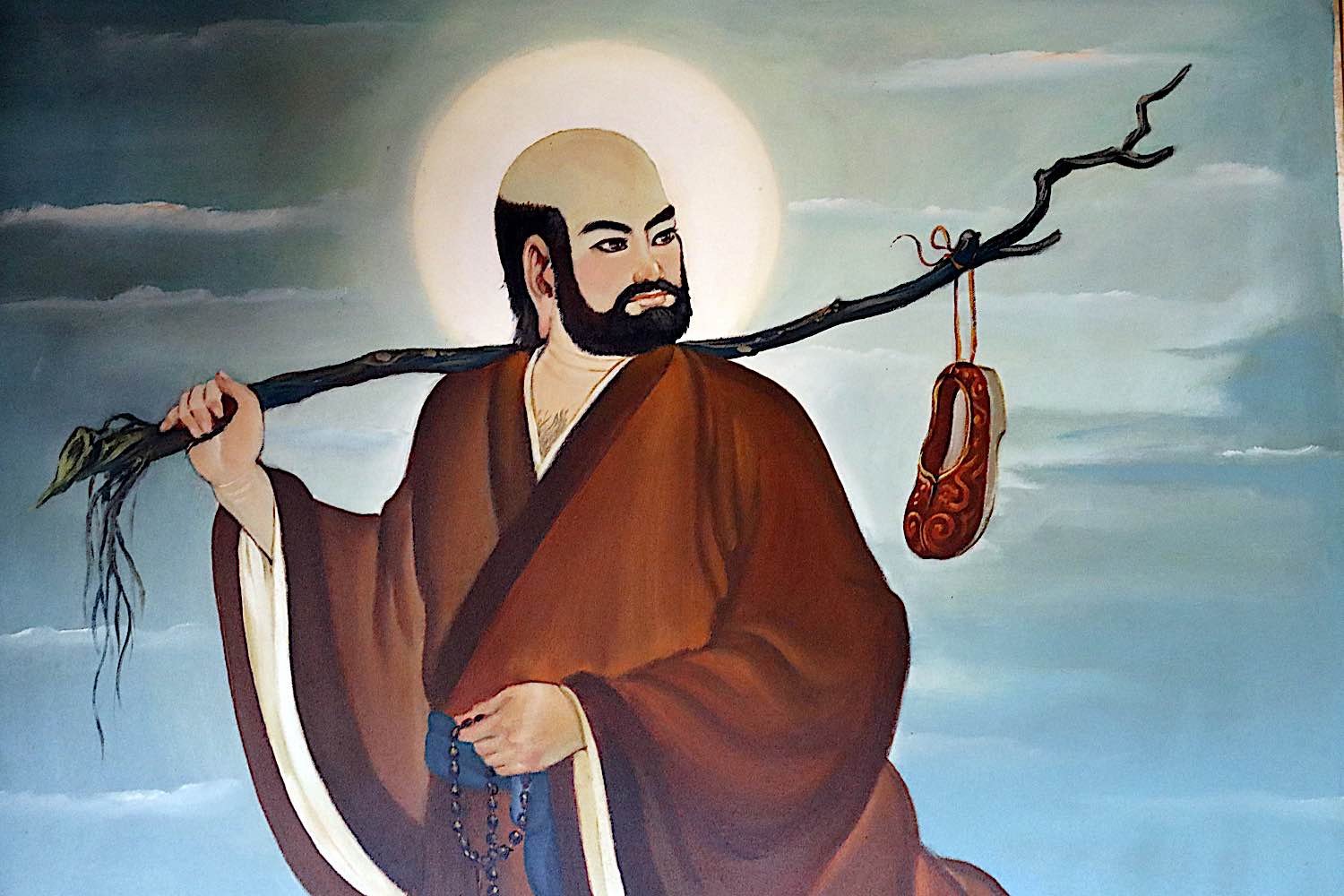
The Stillness of Awakening: Unveiling the Buddha-Mind
Bodhidharma's succinct exhortation, "Just sit, and the buddha-mind reveals itself," invites us into a profound exploration of stillness and presence. In a world often characterized by frenetic activity and incessant distraction, this call to simply sit offers a radical alternative: the promise of awakening through the act of being. It suggests that within each of us lies an inherent clarity and wisdom, waiting to be uncovered through the practice of meditation. The stakes are high; in our hurried lives, we risk losing touch with this deeper aspect of ourselves, the essence that connects us to the universe.
This invitation to sit is not merely a suggestion for physical stillness but a profound spiritual practice that transcends the act itself. It beckons us to cultivate a state of awareness that allows the buddha-mind—our innate capacity for insight and compassion—to emerge. In this context, "sitting" becomes a metaphor for the inner work of letting go of our habitual patterns of thought and behavior. It is an invitation to embrace the present moment fully, to allow ourselves to be vulnerable and open to the unfolding of our true nature.
The image / the metaphor
The imagery of "just sit" evokes a sense of simplicity and immediacy. The verb "sit" implies a grounding, a return to the body and breath, anchoring us in the present. It suggests a cessation of striving, a moment to pause and simply be. This act of sitting is not passive; rather, it is an active engagement with our inner landscape, a willingness to confront the chaos of our minds and the turbulence of our emotions. The phrase "buddha-mind" further enriches this imagery, pointing to a state of consciousness that is inherently wise, compassionate, and free from delusion.
Diving deeper into the metaphor, we find that sitting is a practice of surrender. It is an invitation to relinquish our attachments to outcomes, to thoughts, and to the incessant chatter of the mind. In this stillness, we create the space for the buddha-mind to reveal itself, suggesting that enlightenment is not something to be attained but rather something to be uncovered. The act of sitting becomes a portal through which we can access the profound depths of our being, where clarity and insight reside, waiting patiently for our recognition.
In the speaker's tradition
Bodhidharma, the legendary figure credited with bringing Zen Buddhism to China, emphasizes the importance of direct experience over intellectual understanding. Within the Zen tradition, concepts such as dharma and prajna (wisdom) are central to the practice. The notion of "just sitting" aligns with the Zen principle of shikantaza, or "just sitting," which embodies a non-dual awareness that transcends the dualities of thought and perception. This practice invites us to experience reality as it is, free from the distortions of our conditioned minds.
Living the teaching
Consider a modern scenario where the teaching of "just sit" can be applied: a busy professional overwhelmed by the demands of work and life. In the midst of deadlines and responsibilities, taking a moment to sit in stillness can serve as a powerful antidote to stress. This practice allows the individual to step back from the chaos, creating a space for clarity and insight to emerge. In this stillness, one may find that the solutions to pressing problems become more apparent, and a sense of calm begins to permeate their experience.
A reflection
As we contemplate Bodhidharma's invitation to "just sit," we are called to reflect on our own relationship with stillness. In what ways do we resist the practice of sitting, and how might this resistance be rooted in our fears or distractions? What insights might arise if we were to embrace the simplicity of just being, allowing the buddha-mind to reveal itself within us? This contemplation invites us to explore the depths of our own experience, opening the door to a profound awakening that is always available, waiting for our willingness to engage.
