EveryGetaway

Parcourir tous les Retreats

Find your transformative retreat

retreats

Yoga Retreats
Meditation Retreats
Wellness Retreats
Spiritual Retreats
Adventure Retreats
Creative Retreats
Couples Retreats
Detox & Cleanse
Fitness Retreats
Corporate Retreats
Destinations populaires
BaliSedonaLos AngelesCosta RicaNew YorkSan FranciscoAustinMiamiJoshua TreeTulum
Voir toutes les catégoriesVoir toutes les destinations

Explorer toutes les fonctionnalités

Des outils puissants pour développer tes événements

Fonctionnalités de la plateforme

Tarification dynamique intelligente
Catégories de billets
Places assignées
Récupération des paniers abandonnés
Récupération des visiteurs
Dons & Prix variables
Système d'affiliation
Scanner de billets
Codes promo
Questions personnalisées
Partage de billets
Ventes additionnelles & Options
Analyses & Rapports
Séquences d'emails
Liste d'attente / Notifier / Rappeler
Personnes & Lieux
Retreat LeadersRetreat OrganizersRetreat CentersKnowledge BaseInspiration
Voir toutes les fonctionnalitésÀ propos
TarifsBlog
Language
Saved events
Parcourir tous les événements

retreats

Yoga RetreatsMeditation RetreatsWellness RetreatsSpiritual RetreatsAdventure RetreatsCreative RetreatsCouples RetreatsDetox & Cleanse

Destinations populaires

BaliSedonaLos AngelesCosta RicaNew YorkSan Francisco

Personnes & Lieux

Retreat LeadersRetreat OrganizersRetreat CentersKnowledge BaseInspiration

Fonctionnalités de la plateforme

Tarification dynamique intelligenteCatégories de billetsPlaces assignéesRécupération des paniers abandonnésRécupération des visiteursDons & Prix variablesSystème d'affiliationScanner de billetsCodes promoQuestions personnaliséesPartage de billetsVentes additionnelles & OptionsAnalyses & RapportsSéquences d'emailsListe d'attente / Notifier / Rappeler
Voir toutes les fonctionnalitésÀ propos
TarifsBlog
ConnexionSeekersRetreat leaders
  • Parcourir tous les Retreats
  • Pour les chercheurs
  • Yoga Retreats
  • Meditation Retreats
  • Wellness Retreats
  • Spiritual Retreats
  • Adventure Retreats
  • Creative Retreats
  • Couples Retreats
  • Detox & Cleanse
  • Fitness Retreats
  • Corporate Retreats
  • Retraites
  • Ateliers
  • Toutes les catégories →
  • Bali, Indonesia
  • Costa Rica
  • Tulum, Mexico
  • Sedona, Arizona
  • Thailand
  • Portugal
  • India
  • Hawaii
  • Greece
  • Spain
  • California
  • Colorado
  • Sri Lanka
  • Morocco
  • Toutes les villes →
  • Pour Retreat leaders
  • Pour les organisations
  • Tarifs
  • Réseau de 500K+ acheteurs
  • Récupération des paniers abandonnés
  • Tarification dynamique intelligente
  • Catégories de billets
  • Événements récurrents
  • Places assignées
  • Système d'affiliation
  • Liste d'attente / Notifier
  • Scanner de billets
  • Widget intégrable
  • Diffusion d'événements
  • Messagerie
  • Intégrations
  • Rapports
  • Toutes les fonctionnalités →
  • À propos
  • L'écosystème
  • Blog
  • Glossaire
  • Inspiration
  • Centre d'aide
  • Contact
  • Documentation API
  • Ressources de marque
  • Carrières
  • Presse
  • Conditions d'utilisation
  • Politique de confidentialité

Retreats

  • Parcourir tous les Retreats
  • Pour les chercheurs
  • Yoga Retreats
  • Meditation Retreats
  • Wellness Retreats
  • Spiritual Retreats
  • Adventure Retreats
  • Creative Retreats
  • Couples Retreats
  • Detox & Cleanse
  • Fitness Retreats
  • Corporate Retreats
  • Retraites
  • Ateliers
  • Toutes les catégories →

Destinations

  • Bali, Indonesia
  • Costa Rica
  • Tulum, Mexico
  • Sedona, Arizona
  • Thailand
  • Portugal
  • India
  • Hawaii
  • Greece
  • Spain
  • California
  • Colorado
  • Sri Lanka
  • Morocco
  • Toutes les villes →

Pour Retreat leaders

  • Pour Retreat leaders
  • Pour les organisations
  • Tarifs

Fonctionnalités

  • Réseau de 500K+ acheteurs
  • Récupération des paniers abandonnés
  • Tarification dynamique intelligente
  • Catégories de billets
  • Événements récurrents
  • Places assignées
  • Système d'affiliation
  • Liste d'attente / Notifier
  • Scanner de billets
  • Widget intégrable
  • Diffusion d'événements
  • Messagerie
  • Intégrations
  • Rapports
  • Toutes les fonctionnalités →

Entreprise

  • À propos
  • L'écosystème
  • Blog
  • Glossaire
  • Inspiration
  • Centre d'aide
  • Contact
  • Documentation API
  • Ressources de marque
  • Carrières
  • Presse
  • Conditions d'utilisation
  • Politique de confidentialité
EveryGetaway
© 2026 EveryGetaway. Tous droits réservés.
Inspiration

Devi Suktam: Chanting the Divine Feminine in Kirtan

Ben Leinbach
Ben Leinbach
Mar 25, 2016
6 min de lecture

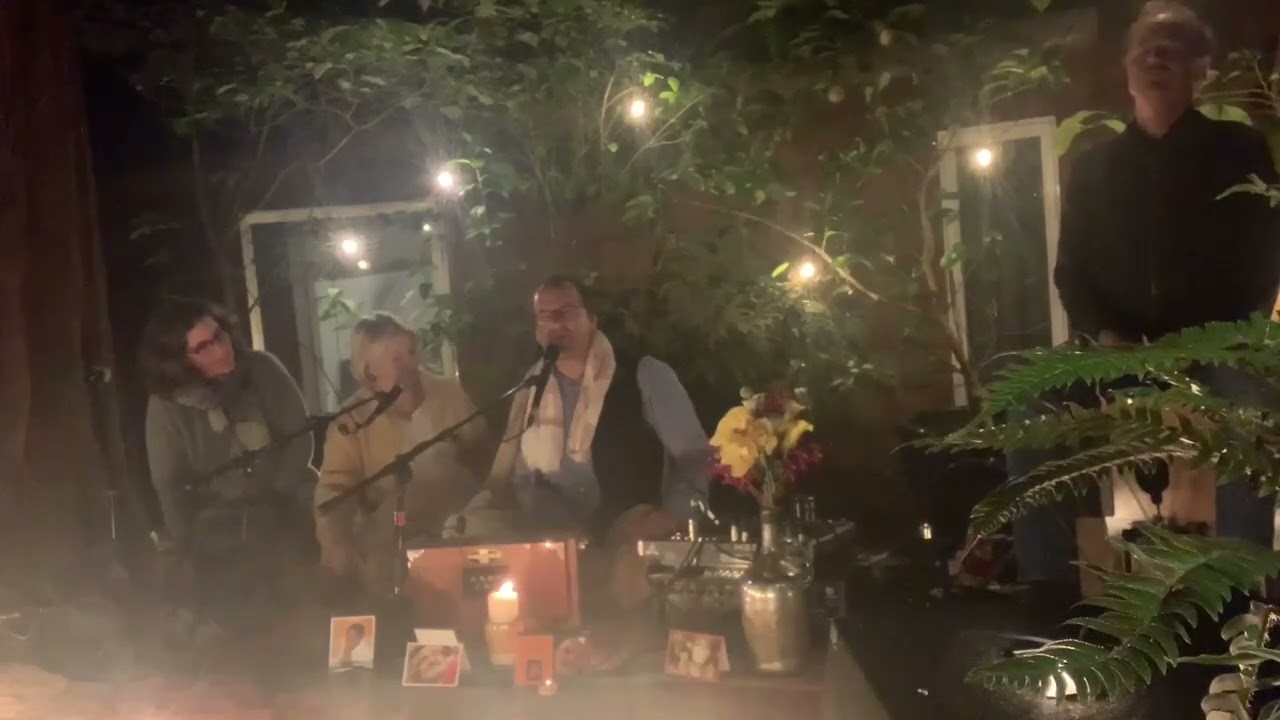
In Hindu and tantric spiritual traditions, the divine is not abstract. It has many faces, many forms, and many voices—and one of the most potent is feminine. The Devi Suktam, a Sanskrit hymn to the divine feminine or Shakti, represents one of the oldest invocational traditions in human spiritual practice. When that ancient form meets contemporary kirtan—the call-and-response devotional singing that has become a cornerstone of modern yoga and meditation communities—something alive happens. The recording Tantroktam Devi Suktam, released in 2011 as part of the album Ben Leinbach Presents Sangha, is one such meeting point, a gateway into a practice that has sustained spiritual seekers for millennia.

Lecture · 6 sections

What Is a Devi Suktam?

Suktam means "well-spoken" or "hymn" in Sanskrit, and a Devi Suktam is specifically a hymn of praise, invocation, and prostration to the divine feminine—whether named Durga, Lakshmi, Saraswati, or the formless Shakti herself. These are not songs of passive adoration. They are invocations of wisdom, protection, wealth, creative power, and the transformative energy that Tantric philosophy sees as the animating force of all existence. Unlike some religious traditions that position the divine in transcendent distance, the Suktam brings it near, makes it tangible, makes it a lived presence. When a singer chants a Devi Suktam, they are not merely reciting verses; they are participating in an act of recognition—acknowledging divine power as both external force and inner potential.

The tantric dimension adds another layer. Tantra, often misunderstood in Western contexts, is a disciplined spiritual technology focused on transformation through direct experience. It does not reject the body, emotion, or desire but rather consecrates them as pathways to the sacred. A tantric approach to the Devi Suktam treats the act of singing as a full-body, full-being invocation—breath aligned with mantra, awareness focused, intention sharp. This is why the practice has remained central to communities seeking not intellectual understanding alone but embodied spiritual awakening.

Kirtan as a Living Practice

Kirtan—call-and-response chanting in a group setting—is the vessel through which the Devi Suktam lives in contemporary practice. A kirtan leader sings a line or phrase; the sangha (community) responds in unison, then often in internal meditation. The repetition is not hypnotic in a passive sense; it is rhythmic entrainment, a synchronization of many nervous systems around a single intention. When dozens or hundreds of people sing together, something shifts in the room—a palpable lightness, an opening, a sense of individual boundaries dissolving into shared presence.

This is why the album Ben Leinbach Presents Sangha takes sangha—community, gathering—as its central concept. You cannot practice kirtan alone and have it be kirtan; it is by nature a collective act. The presence of others, their voices, their breath, their intention—these are not incidental. They are essential. When Tantroktam Devi Suktam invites listeners into the invocation of the divine feminine, it does so not as solitary meditation but as an act of gathering, whether in physical space or through the technology of recording.

The Harmonium and the Human Voice

The instrumentation of such a recording matters deeply. The harmonium, a small keyboard instrument with bellows, has become the anchor instrument of modern kirtan. Its sustained drone provides a bed of sound—a grounding frequency against which the melody rises. The human voice, singing in unison or in simple harmonies, then becomes the active vehicle, the expression. There is craft in this simplicity. The harmonium does not distract; it supports. The voice does not perform; it channels. In the best kirtan recordings, you hear both the reverence for the practice itself and the musicians' commitment to stepping aside so that something larger can come through.

When Ben Leinbach collaborated with Jaya Lakshmi on this recording, released through Virgin Music Group in July 2011, they were working within this tradition of understated reverence. The composition credits both musicians as writers, suggesting a creative partnership grounded in the spiritual material itself rather than ego or novelty-seeking. The result—a piece of sacred music that has drawn over 52,000 views on YouTube—speaks to a hunger in contemporary spiritual communities for authentic connection to these ancient practices.

Why Invoke the Divine Feminine Now?

In the twenty-first century, the choice to center the divine feminine carries particular weight. For centuries, spiritual authority in many traditions was claimed exclusively by male teachers and male interpretations of scripture. The resurgence of Devi invocation—through kirtan, through yoga classes, through personal practice—represents a rebalancing. It is not separatist or exclusionary; rather, it recognizes that generations of practitioners have been incomplete in their access to the full spectrum of divine expression. To invoke Shakti, to acknowledge the feminine principle as the dynamic, creative, transformative power at the heart of existence, is to invite wholeness.

The Devi Suktam also addresses something psychological and spiritual that the modern world has suppressed: the fierce, the protective, the boundary-setting aspects of power. The divine feminine as invoked in these hymns is not only nurturing—she is also Durga the warrior, Kali the destroyer of illusion, Saraswati the keeper of wisdom. She demands right action, clear seeing, and the courage to face what needs to be transformed. For individuals navigating a world of complexity and fragmentation, this multivalent power is a medicine.

The Recording as Gateway

A recording of kirtan is, by definition, a paradox. Kirtan is built on presence, on the unfolding moment, on the dynamic between leader and community. A recording freezes that moment, makes it repeatable, makes it solitary or small-group rather than communal. And yet, a good recording—one that captures the spirit of the practice—can serve as a gateway. It can introduce listeners to the sound and the prayer of invocation. It can prime the nervous system for the live experience. It can be a companion during personal practice, a reminder that you are not alone in turning toward the divine.

The choice to title the recording Tantroktam Devi Suktam—emphasizing both the tantric tradition and the suktam form—signals that this is not kirtan-lite or devotional music as secular wellness tool. This is an intentional invocation, grounded in lineage, addressed to a power both inner and outer. The fact that it exists within an album called Sangha, and that the album was released by a major label, speaks to how far these practices have traveled from underground communities into wider visibility.

Where to go from here

If you are new to Devi Suktam or kirtan practice generally, this recording is an accessible entry point. Listen with the intention of praying rather than analyzing. Let the repetition work on you. Notice what arises—whether it is emotion, stillness, or simply the visceral experience of your voice joining others across time and space. If you are drawn deeper, seek out live kirtan events in your community, where the full alchemical potential of group practice becomes available. Read translations of the Devi Mahatmya or other traditional texts that celebrate the divine feminine to understand the lineage of which this song is a part. Consider what it might mean for your own spiritual journey to acknowledge and invoke the power of Shakti—not as an external deity but as the animating intelligence within yourself. The invitation is always open.
Comments

Loading the conversation…

Ben Leinbach
ArtistBen Leinbach

Ben Leinbach is an award-winning producer, composer, recording engineer and multi-instrumentalist from San Anselmo, California, known for world music and for producing many of kirt…

Voir le profilSite web
Explorer les thèmes
KirtanDevi-suktamDivine-feminineDevotional-musicTantra

Des questions ?

Questions fréquemment posées

Devi Suktam is a Sanskrit hymn of invocation to the divine feminine or Shakti. It is important because it acknowledges divine power as feminine, creative, and transformative—a practice central to Hindu and tantric traditions that helps practitioners access wholeness and recognize the dynamic creative force underlying existence.
Kirtan is call-and-response devotional chanting done in community (sangha). Unlike solo singing or silent meditation, kirtan synchronizes many nervous systems around shared intention and repetition, creating a collective spiritual experience where individual boundaries can dissolve into shared presence.
While kirtan can technically be done alone, it is fundamentally a communal practice—the presence, voices, and intention of others are essential to the full experience. Community gathering is so central to kirtan that the album featuring this recording is titled 'Sangha' (Sanskrit for community).
The harmonium provides a sustained drone that grounds the practice and supports the human voice without distraction. Its simplicity and constancy allow the vocalist to channel the invocation clearly, keeping focus on the prayer rather than musical virtuosity.
Tantra is an ancient, scholarly spiritual technology within Hinduism that views transformation through direct experience rather than only intellectual understanding. Devi invocation appears across both mainstream and tantric Hindu practice, though tantric approaches emphasize the body, emotion, and lived spiritual experience.
In Hindu and tantric philosophy, Shakti represents the dynamic creative, transformative power underlying all existence. She embodies wisdom, protection, nurturing, and fierceness—not as separate personalities but as facets of one supreme power available for inner spiritual development.

Continuer la lecture

More from Ben

Voir tout
Sacred Music Production: How Presence Defines Excellence
Inspire

Sacred Music Production: How Presence Defines Excellence

Collaborator Adam Bauer on what makes sacred music producer Ben Leinbach exceptional: presence and human integrity matter more than technica…

1 min read
Yoga Soundtracks Volume 2: Pop Meets Bhakti in English
Inspire

Yoga Soundtracks Volume 2: Pop Meets Bhakti in English

Johanna Beekman and Ben Leinbach blend bhakti traditions with Western pop sensibility, proving yoga music doesn't need Sanskrit to deepen sp…

1 min read
Bhaja Mana Radha Govinda Kirtan: Meaning and Practice
Inspire

Bhaja Mana Radha Govinda Kirtan: Meaning and Practice

A seven-minute London kirtan of the maha-mantra Bhaja Mana Radha Govinda, unpacked: its meaning, its call-and-response form, and the New Yor…

1 min read
Minimal Vocalization as Spiritual Practice: Power in Simplicity
Inspire

Minimal Vocalization as Spiritual Practice: Power in Simplicity

A brief live vocal interlude demonstrates how devotional sound—stripped to its essence—can invoke presence and transformation through pure r…

1 min read

Continue d’explorer

Poursuis ton chemin

Plus de sagesse et de rassemblements dans tout l’annuaire BrightStar.

Plus d’articles

Parcours toute la bibliothèque d’enseignements, d’entretiens et de guides.

Retour à tous les articles →

Enseignants et artistes

Découvre les lignées, les musiciens et les guides du monde conscient.

Explorer les artistes →

Trouver un événement

Kirtan, retraites, bains sonores, breathwork, festivals — bientôt près de chez toi.

Parcourir les événements →