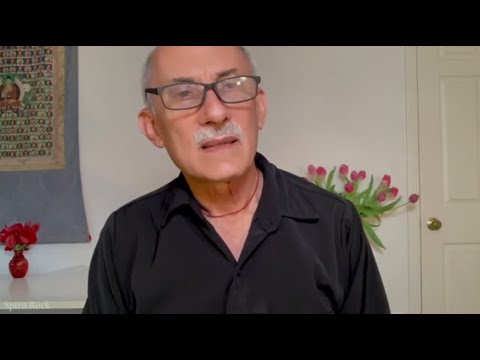
Jack Kornfield teaches that happiness and genuine love emerge not from clinging to permanence, but from understanding and accepting the fundamental impermanence of all phenomena. Drawing on his decades of Buddhist practice and the perspective Buddha gained at enlightenment—seeing "the arising and passing of vast stretches of time and beings doing the dance of our life"—Kornfield explains how we resist happiness through our denial of change, and how letting go into impermanence actually opens us to deeper connection, compassion, and freedom. The talk weaves together Buddhist meditation practice, contemporary psychology, and even cosmological perspective to show why impermanence is not something to fear but the ground of genuine well-being.
What Is Impermanence and Why Does It Matter?
Impermanence—the Buddhist concept of anicca—is not merely a philosophical idea but a direct observation about the nature of reality. All conditioned things arise, persist for a time, and pass away. This includes our bodies, thoughts, emotions, relationships, and even civilizations. Yet most human suffering stems from a fundamental resistance to this fact: we cling to what we love, push away what we dislike, and ignore what is neutral, all in the futile attempt to make things permanent.
Kornfield teaches that this resistance is learned early. We construct a sense of self that attempts to control outcomes and secure permanence—a project doomed to failure because impermanence is simply how reality operates. The person who can genuinely accept impermanence, however, discovers something paradoxical: freedom from the exhausting struggle to hold on. This acceptance doesn't lead to nihilism or despair, but to a deeper, more flexible engagement with life.
The Buddha's enlightenment experience provides a key reference point. As Kornfield describes it: "That's the perspective the Buddha had the night of enlightenment: looking at the arising and passing of vast stretches of time and beings doing the dance of our life." This wasn't morbid reflection but liberation—the recognition that the constant flux of existence is not a problem to solve but the very nature of what we are participating in.
How Does Impermanence Relate to Happiness?
One of the great paradoxes Kornfield explores is that humans typically pursue happiness by trying to secure permanence: the perfect relationship, the stable career, the healthy body, the right bank balance. Yet genuine happiness arises in those moments when we are not anxiously defending against change. When you are truly present—laughing with a friend, absorbed in meaningful work, sitting in meditation—you are not thinking about permanence or impermanence; you are alive to what is.
Kornfield's teaching suggests that happiness is not a destination to reach but a natural state that emerges when we stop resisting reality as it is. The constant mental activity required to deny or fight impermanence—constantly strategizing, worrying, controlling—is exhausting and ultimately futile. This exhaustion is a core component of dukkha, the Sanskrit term often translated as suffering but more accurately understood as unsatisfactoriness or stress.
Buddhist practice, particularly meditation, teaches the direct observation of impermanence. In sitting practice, meditators notice how each breath arises and passes, how sensations come and go, how thoughts appear and disappear. This is not abstract theory but lived experience. Over time, this practice rewires the nervous system and the mind's basic orientation: instead of bracing against change, practitioners learn to meet each moment with openness.
What Is Real Love According to Buddhist Teaching?
Kornfield distinguishes between love based on fantasy and grasping versus love rooted in clear seeing. Most romantic love in contemporary culture is mixed with projection: we fall in love with an image of who we want the other person to be, and suffering arises when reality doesn't match the fantasy. Real love, by contrast, is rooted in the capacity to see another being clearly—with their flaws, their fears, their impermanence—and to care for them anyway.
This teaching echoes the Buddhist concept of mudita (sympathetic joy) and karuna (compassion). True compassion is not sentimental; it includes the clear recognition that all beings, including those we love, will age, fall ill, and die. Rather than making love impossible, this recognition deepens it. When we stop demanding that another person be our source of permanent security or happiness, we can appreciate them as they are. The relationship becomes less about what we can extract from it for our own ego-security and more about genuine presence and care.
Kornfield's teaching implies that real love is inseparable from acceptance of impermanence—both in the other person and in ourselves. The attempt to freeze a relationship in a perfect moment, to prevent a partner from changing or growing, is a kind of violence born from fear. Genuine partnership involves witnessing each other's transformation with compassion and flexibility.
How Does Cosmic Perspective Deepen Understanding of Impermanence?
The reference to the Big Bang Theory in the title signals Kornfield's integration of cosmological perspective with Buddhist teaching. From the vantage point of cosmology, the entire universe is in motion: stars are born and die, galaxies collide and merge, and the cosmos itself is expanding. Our individual lives—even the span of human civilization—are infinitesimal in this vast temporal and spatial scale.
Rather than inducing despair, this cosmic perspective can be liberating. If your individual projects and anxieties are infinitesimal in the scope of billions of years and billions of galaxies, there is both humbling loss and genuine freedom in that recognition. The pressures we place on ourselves—to be perfect, to succeed, to be remembered—lose some of their grip. We are participants in something vast and uncontrollable, not its masters.
This aligns with what the Buddha taught: the recognition of our place in the larger web of dependent origination, where nothing arises independently. Kornfield's reference to "beings doing the dance of our life" suggests that we are expressions of larger patterns and processes, not isolated selves fighting against an indifferent universe. This perspective can actually increase compassion and connection, not decrease it.
What Is the Role of Meditation Practice in Accepting Impermanence?
Kornfield has spent decades training in Buddhist monasteries and teaching meditation internationally since 1974. His approach is grounded in direct practice. Meditation—particularly mindfulness and insight meditation—is the primary method for moving from intellectual understanding of impermanence to genuine realization.
In meditation, practitioners sit and observe their own mind and body with curiosity and non-judgment. They notice thoughts arising and passing, sensations emerging and dissolving, and the breath cycling continuously. They also notice the impulse to hold onto pleasant experiences and push away unpleasant ones. Over time, through repeated observation, the truth of impermanence becomes not just an idea but a felt understanding that transforms how one meets life.
This practice is not escapist. Kornfield emphasizes mindfulness as a practical tool for living more wisely and compassionately in the world. As one becomes less reactive to impermanence, less desperate to secure a permanent self or permanent conditions, one becomes more available for genuine relationships, more able to respond skillfully to difficulty, and more capable of authentic joy.
How Can We Practice Letting Go in Daily Life?
Kornfield's teaching is not purely monastic or reserved for long retreats. His co-founding work at the Insight Meditation Society in Massachusetts and Spirit Rock in California reflects a commitment to bringing these teachings into everyday life. Letting go into impermanence in daily practice might include:
- Noticing attachment in real time: During the day, observe moments when you are grasping (trying to extend a pleasant experience, clinging to someone's approval) or aversive (pushing away discomfort, resisting a task). Simply noticing without judgment begins to loosen the grip.
- Practicing small releases: Consciously let go of small things—put down your phone, let go of a grudge, accept that a plan changed. Each small release builds capacity for larger ones.
- Contemplating impermanence: Reflect on change you have witnessed: how you have changed, how others have changed, how your circumstances have shifted. This isn't morbid but grounding.
- Bringing attention to the present moment: Each moment is impermanent; when you truly inhabit the present moment, you are not fighting impermanence but riding it. Walking, eating, listening—these everyday activities can be gates to presence.
- Cultivating compassion for the shared human condition: Everyone is subject to aging, illness, and death. This recognition can soften the boundaries between self and other.
What Is the Connection Between Letting Go and True Freedom?
A central paradox in Kornfield's teaching is that by releasing our grip on the desire to make things permanent, we actually become freer. The constant mental effort required to deny reality—to pretend that this job will always be secure, this relationship will never change, this body will never age—is a kind of imprisonment.
When we let go into impermanence, we paradoxically gain flexibility and resilience. If you expect change and impermanence, you are less devastated when it arrives. If you recognize that nothing can be permanently controlled, you stop wasting energy on impossible projects. This frees attention and energy for what actually matters: genuine connection, meaningful contribution, and direct experience of being alive.
Freedom, in this framework, is not the freedom to have everything stay the same. It is the freedom to participate fully in a dynamic, changing reality without the exhausting resistance that most people carry. It is what the Buddha understood in his enlightenment: the recognition of the dance of life itself as the fundamental reality, and in that recognition, the end of suffering.
Where to Go from Here
Kornfield offers multiple pathways for deeper engagement with these teachings. His book The Art of Forgiveness, Lovingkindness, and Peace and other published works (translated into 20 languages and reaching over a million readers) provide written exploration of these themes. His website, JackKornfield.com, offers email teachings and courses covering topics directly related to this talk: "Mindfulness Meditation Fundamentals," "Opening the Heart of Forgiveness," and "Walking the Eightfold Path" are all practical entry points.
For those seeking community and ongoing practice, "The Year of Awakening: A Monthly Journey with Jack Kornfield" provides sustained engagement with these teachings alongside other practitioners. The Heart Wisdom Podcast, of which this talk is a part, offers regular teachings on related themes of meditation, love, compassion, and liberation.
The invitation is not to become a Buddhist or to adopt a foreign spiritual identity, but to begin noticing impermanence directly in your own life and to explore what happens when you meet it with curiosity rather than resistance. The happiness Kornfield points to is not exotic; it is available in each moment you stop fighting reality as it is.