What is Jazz?
Jazz is a musical genre and improvisational art form that originated in the African American communities of New Orleans in the late 19th and early 20th centuries. It is characterized by swing and blue notes, complex chords, call-and-response vocals, polyrhythms, and improvisation. Jazz represents a synthesis of African rhythmic traditions, European harmonic structures, and American vernacular music including blues, ragtime, and spirituals. Unlike most Western classical music, jazz emphasizes spontaneous creation—musicians compose in real time, responding to one another within flexible harmonic frameworks. The genre has evolved through distinct periods including Dixieland, swing, bebop, cool jazz, hard bop, free jazz, fusion, and contemporary forms, yet retains its core identity through the primacy of individual expression within collective interaction.
Origins & Lineage
Jazz emerged in New Orleans between approximately 1895 and 1917, though pinpointing an exact birth date remains contested among historians. The city’s unique cultural confluence—French, Spanish, Caribbean, and African American populations coexisting in a port environment—created conditions for unprecedented musical hybridization. Enslaved and freed African Americans preserved West African musical elements including polyrhythmic drumming, call-and-response patterns, and blue notes (microtonal inflections between major and minor thirds). These combined with European instruments (trumpet, clarinet, trombone, piano) and harmonic conventions, plus the syncopated piano style known as ragtime, popularized by Scott Joplin in the 1890s.
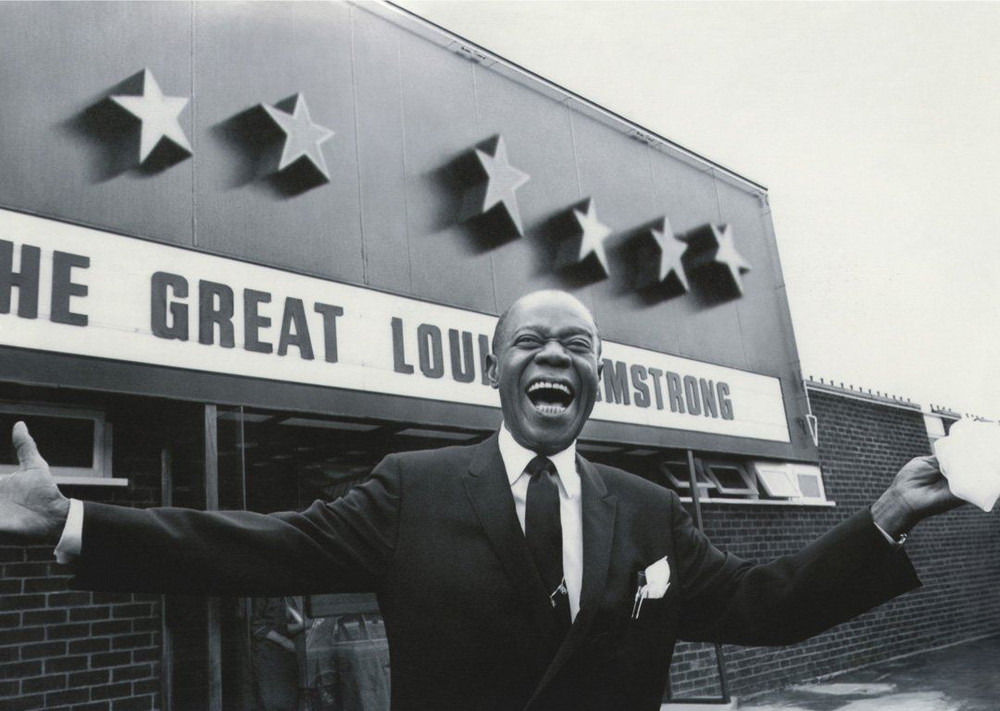
Buddy Bolden (1877–1931), a cornet player, is often cited as the first jazz musician, though no recordings exist. The Original Dixieland Jass Band, a white ensemble, made the first jazz recording in 1917 (“Livery Stable Blues”), though African American pioneers like King Oliver, Jelly Roll Morton, and Sidney Bechet were developing the idiom simultaneously. Louis Armstrong (1901–1971) revolutionized jazz in the 1920s by shifting emphasis from collective improvisation to virtuosic solo performance, establishing the template for jazz as a vehicle for individual expression. The genre spread north during the Great Migration, establishing centers in Chicago, Kansas City, and New York. Duke Ellington (1899–1974) elevated jazz to sophisticated compositional art in the 1930s–1940s. Charlie Parker and Dizzy Gillespie invented bebop in the mid-1940s, emphasizing complex harmonies and rapid tempos. Miles Davis catalyzed multiple innovations from cool jazz (“Birth of the Cool,” 1949) to modal jazz (“Kind of Blue,” 1959) to fusion (“Bitches Brew,” 1970). John Coltrane explored spiritual dimensions through modal and free improvisation in the 1960s. Free jazz, pioneered by Ornette Coleman and Cecil Taylor, abandoned fixed chord changes entirely.
How It’s Practiced
Jazz is practiced primarily through live performance and improvisation. Musicians learn a repertoire of “standards”—compositions by writers like George Gershwin, Cole Porter, Thelonious Monk, and Wayne Shorter—then improvise new melodies over the harmonic progressions. A typical performance follows a head-solos-head structure: the ensemble plays the written melody (head), individual players improvise solos while the rhythm section (piano, bass, drums) maintains harmonic and rhythmic foundation, then the group returns to the melody. Improvisation requires deep knowledge of scales, chord voicings, rhythmic vocabulary, and listening—players respond to one another’s phrases in real time, creating spontaneous counterpoint.
Jazz education typically involves transcribing solos from recordings (learning note-for-note what masters played), practicing scales and patterns in all twelve keys, studying jazz theory (chord-scale relationships, voice leading), and attending jam sessions where musicians of varying skill levels play standards together. The jam session functions as both laboratory and proving ground—a space to internalize vocabulary, test ideas, and absorb the tradition through direct transmission. Many practitioners describe a meditative or flow state during improvisation, where analytical thought recedes and intuitive response predominates. The music demands presence, deep listening, and surrender to the collective sound.
Jazz Today
Contemporary seekers encounter jazz through live performance in clubs, concert halls, and festivals; through canonical recordings (the “jazz canon” includes albums like “A Love Supreme,” “Kind of Blue,” “The Black Saint and the Sinner Lady”); through formal education at conservatories and universities (Berklee College of Music, Juilliard, New School); and through online instruction. Major festivals like the Newport Jazz Festival and Monterey Jazz Festival continue annual traditions. The Lincoln Center Jazz Orchestra, led by Wynton Marsalis, functions as a repertory ensemble preserving historical styles. Younger artists including Kamasi Washington, Esperanza Spalding, and Ambrose Akinmusire blend jazz with hip-hop, electronic music, and global traditions. Jazz remains a living tradition—not a museum piece—with active debate about what constitutes authentic practice versus innovation.
The spiritual dimensions of jazz, articulated explicitly by John Coltrane (whose 1965 album “A Love Supreme” is a four-part suite expressing gratitude to the divine), Alice Coltrane, Pharoah Sanders, and others, attract practitioners interested in music as contemplative practice. Some approach jazz listening as a form of meditation, focusing attention on the interplay between musicians and the emergence of spontaneous form.
Common Misconceptions
Jazz is not synonymous with “background music” or “smooth jazz,” a commercial radio format emphasizing pleasant textures over improvisation. It is not inherently relaxing—much jazz is rhythmically and harmonically challenging, designed to engage rather than soothe. Jazz is not frozen in the 1950s; it continues to evolve, though arguments about tradition versus innovation persist. Not all improvised music is jazz—the genre has specific harmonic, rhythmic, and formal conventions. Finally, jazz is not only an intellectual exercise; it is deeply rooted in African American social, spiritual, and political life, and reducing it to technical mastery alone misses its cultural context and expressive purpose.
How to Begin
New listeners should start with accessible, melodic recordings: Miles Davis’s “Kind of Blue” (1959), Dave Brubeck’s “Time Out” (1959), or John Coltrane’s “Blue Train” (1957). Read Ted Gioia’s “The History of Jazz” for historical context or Wynton Marsalis’s “Moving to Higher Ground” for philosophical perspective. Attend live performances—experiencing jazz in person reveals dimensions absent from recordings. Aspiring musicians should find a teacher versed in the tradition, learn basic standards (“Autumn Leaves,” “Blue Bossa,” “All the Things You Are”), and attend jam sessions. The Smithsonian Institution and Ken Burns’s documentary “Jazz” (2001) provide comprehensive educational resources. Most importantly: listen actively, repeatedly, to the masters—Louis Armstrong, Duke Ellington, Charlie Parker, Thelonious Monk, Miles Davis, John Coltrane—allowing their vocabulary to shape your ear and understanding.