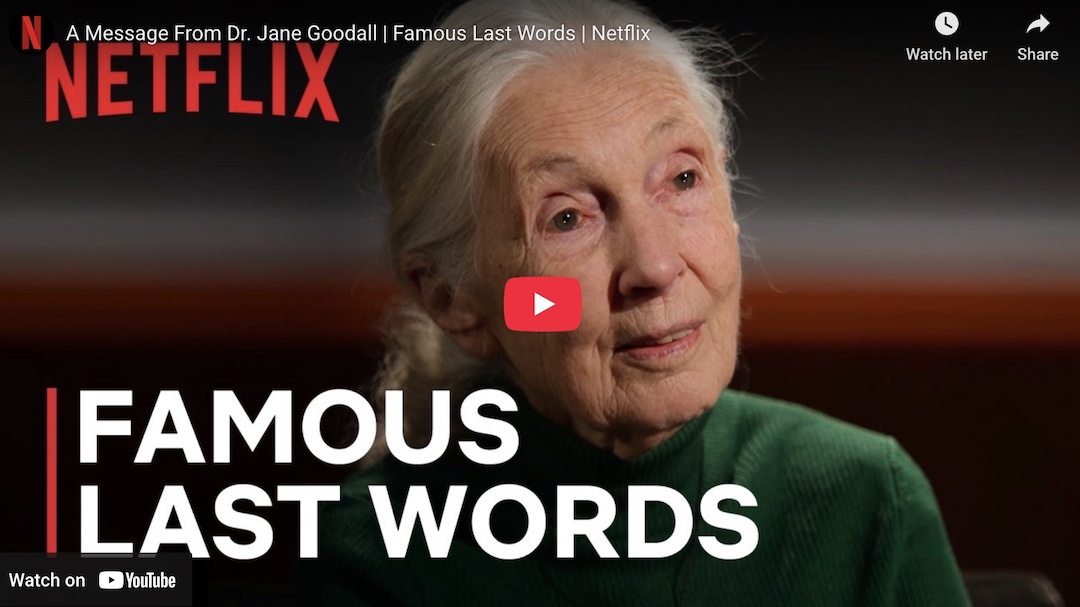
Awakening to Urgency: The Call of Our Times
Jane Goodall's assertion that "climate change is real. The time to act is now" serves as a clarion call, urging us to confront the undeniable reality of our environmental crisis. This statement encapsulates both the gravity of the situation and the immediacy required in our response. The stakes are high; our planet's health, the well-being of countless species, and the future of humanity hinge on our actions today. To ignore this call is to risk not only our ecological systems but also the very fabric of life as we know it.
In a world increasingly marked by climate-related disasters, Goodall's words resonate with a profound urgency. They compel us to recognize that the time for passive observation has long passed; we must engage actively with the challenges before us. This is not merely an environmental issue but a moral one, demanding our attention and action. As we stand at this critical juncture, we are invited to reflect on our relationship with the Earth and to consider how our choices can contribute to a more sustainable future.
The image / the metaphor
The imagery in Goodall's quote is stark and unambiguous. By stating that climate change "is real," she emphasizes the tangible nature of the crisis, urging us to acknowledge the scientific evidence and lived experiences that illustrate its impact. The phrase "the time to act is now" serves as a powerful imperative, invoking a sense of immediacy that cannot be ignored. It paints a picture of a world in peril, where inaction leads to irreversible consequences, and where our collective responsibility is to respond with urgency.
Diving deeper into the metaphor, we can see that Goodall's words reflect a broader existential truth: the interconnectedness of all life. The urgency she expresses is not merely about climate statistics; it is about the relationships we hold with one another and with the natural world. In this sense, her call to action is a call to awaken our awareness, to recognize that our choices ripple through the web of existence, affecting not just ourselves but future generations. It is a reminder that we are stewards of the Earth, tasked with the sacred duty of caring for the planet and all its inhabitants.
In the speaker's tradition
Jane Goodall's work is deeply rooted in the tradition of contemplative ecology, which emphasizes a holistic understanding of our relationship with the environment. This perspective aligns with concepts such as dharma, which speaks to our duty to act in harmony with the natural world, and prajna, the wisdom that arises from deep awareness and understanding. Goodall embodies these principles through her lifelong commitment to conservation and her advocacy for ethical treatment of all beings, reminding us that our actions must reflect a profound respect for the interconnectedness of life.
In her book, "The Book of Hope," Goodall draws upon her experiences and insights to illustrate the importance of hope in the face of adversity. This resonates with the Buddhist concept of sunyata, or emptiness, which teaches us that our perceptions shape our reality. By cultivating a sense of hope and agency, we can transcend despair and take meaningful action. Goodall's message is not just about recognizing the challenges we face but also about embracing the potential for transformation through conscious, compassionate action.
Living the teaching
Consider a modern scenario where Goodall's teaching lands with particular resonance: the rise of community-led environmental initiatives. Across the globe, individuals are coming together to address climate change at the grassroots level, whether through local clean-up efforts, tree-planting campaigns, or advocacy for sustainable practices. These actions embody the urgency Goodall speaks of, as communities recognize that collective efforts can lead to significant change. By participating in such initiatives, individuals not only contribute to environmental restoration but also foster a sense of belonging and shared purpose.
On a more personal level, Goodall's call to action can be applied in our daily relationships and interactions. For instance, in moments of conflict or misunderstanding, we can choose to act with empathy and understanding, recognizing that our responses have far-reaching implications. By embodying the principles of compassion and awareness in our daily lives, we align ourselves with the urgency of Goodall's message. Each small act of kindness or consideration can ripple outward, contributing to a more harmonious existence both within ourselves and in our communities.
A reflection
As we contemplate Goodall's poignant reminder that "the time to act is now," we are invited to reflect on our own lives and choices. What actions can we take today that align with our values and contribute to a more sustainable future? In this moment of reflection, let us consider how we can embody the urgency of this call, not only in our environmental practices but also in our relationships and interactions with others. How can we cultivate a sense of interconnectedness that inspires us to act with intention and compassion?