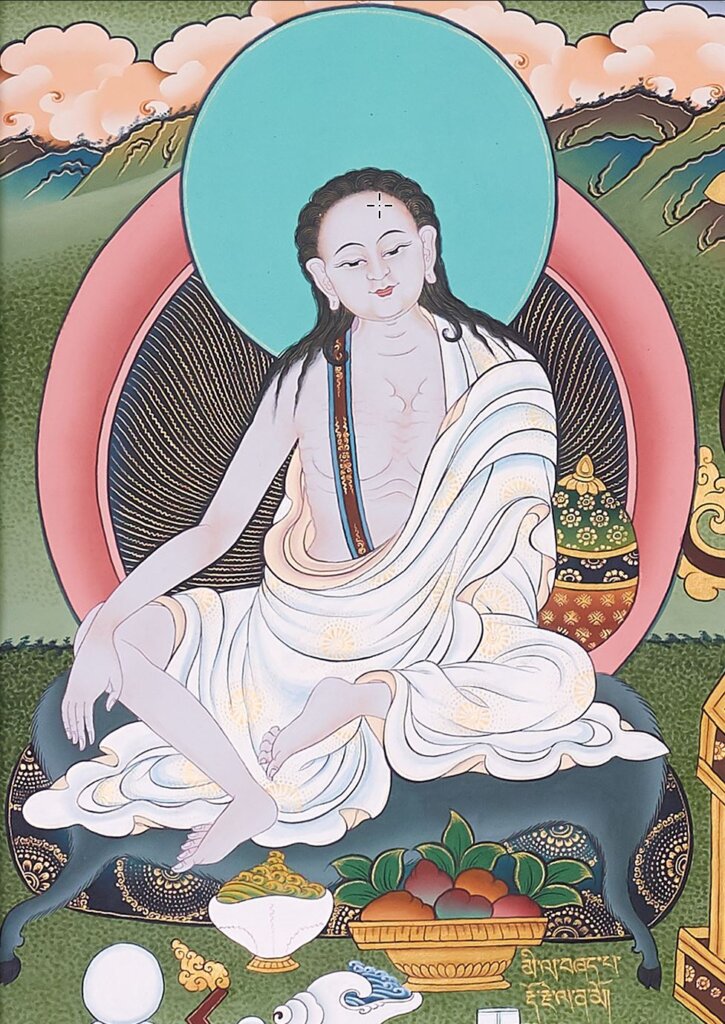
Milarepa's profound assertion, "With strong devotion, even a moment yields the buddha-fruit," invites us to consider the transformative power of unwavering commitment. In this succinct phrase, he encapsulates the essence of spiritual practice, suggesting that even the briefest encounter with genuine devotion can lead to profound awakening. This notion is not merely an encouragement to practice; it is a call to recognize the latent potential within each moment, urging us to cultivate a deeper relationship with our spiritual aspirations.
As we delve into this quote, we find ourselves at the intersection of time and intention. The idea that a single moment, when infused with strong devotion, can yield the "buddha-fruit" challenges our conventional understanding of spiritual progress. It compels us to reflect on the nature of devotion itself—how it can serve as a catalyst for transformation, and how our engagement with the present can unlock the door to enlightenment. This exploration is not just theoretical; it has real implications for how we live our lives and approach our spiritual journeys.
The image / the metaphor
At first glance, the imagery in Milarepa's quote is strikingly vivid. The phrase "buddha-fruit" evokes a sense of ripeness and fulfillment, suggesting that enlightenment is not a distant goal but a tangible outcome of sincere practice. The verb "yields" implies a natural process of growth, as if devotion is the soil in which the seeds of awakening can flourish. This metaphor invites us to consider the nurturing qualities of devotion, emphasizing that it is not merely an act of will but a deep, organic relationship with our spiritual path.
Diving deeper into the metaphor, we can see that the "moment" represents the present, the here and now, which is often overlooked in our quest for spiritual attainment. In Buddhist philosophy, the present moment is where life unfolds, and it is in this space that we can cultivate awareness and connection. Milarepa's words remind us that even a fleeting moment, when approached with intensity and sincerity, can bear the weight of profound insight and realization. This perspective encourages us to embrace each moment as an opportunity for awakening, rather than a mere stepping stone on a longer journey.
In the speaker's tradition
Milarepa, a revered figure in Tibetan Buddhism, embodies the principles of devotion and transformation. His life story is a testament to the power of unwavering commitment to the dharma, the teachings that guide us toward enlightenment. In this context, devotion is not simply an emotional state; it is an active engagement with the teachings, a form of bhakti that transcends mere belief. This aligns with the concept of kenosis, or self-emptying, where one surrenders the ego to embrace a deeper connection with the divine and the teachings of the Buddha.
To further illuminate this idea, we can reference the "Songs of Milarepa," where he often speaks of the importance of direct experience and the cultivation of prajna, or wisdom. His teachings emphasize that true understanding arises not from intellectual grasping but from the heartfelt engagement with the present moment. This resonates with the Buddhist notion of sunyata, or emptiness, which teaches that our attachments and distractions obscure our true nature. By embracing devotion, we can pierce through this illusion and touch the essence of our being, allowing the "buddha-fruit" to manifest in our lives.
Living the teaching
Consider a modern scenario where this teaching might resonate: a busy professional feeling overwhelmed by the demands of daily life. In the midst of deadlines and responsibilities, one might feel disconnected from their spiritual aspirations. However, by dedicating even a brief moment each day to mindfulness or prayer, infused with strong devotion, this individual can begin to experience a shift. That moment of presence, when approached with sincerity, can yield insights and a sense of peace that transforms their entire day, illustrating Milarepa's wisdom in action.
In a different context, think about a relationship that has grown strained over time. By approaching interactions with strong devotion—listening deeply, expressing gratitude, and being fully present—one can cultivate a renewed sense of connection. This practice of devotion, even in small gestures, can yield the "buddha-fruit" of understanding and compassion, transforming the relationship into a space of mutual growth and support. Milarepa's teaching encourages us to recognize that devotion is not confined to grand gestures; it is found in the everyday moments that shape our lives and relationships.
A reflection
As we contemplate Milarepa's profound insight, we are invited to ask ourselves: How can I cultivate strong devotion in my daily life, even in the smallest of moments? This question encourages us to reflect on our intentions and the ways we engage with our spiritual practices. By examining our relationship with devotion, we can uncover the potential for transformation that lies within each fleeting moment, allowing us to experience the richness of our spiritual journey.
