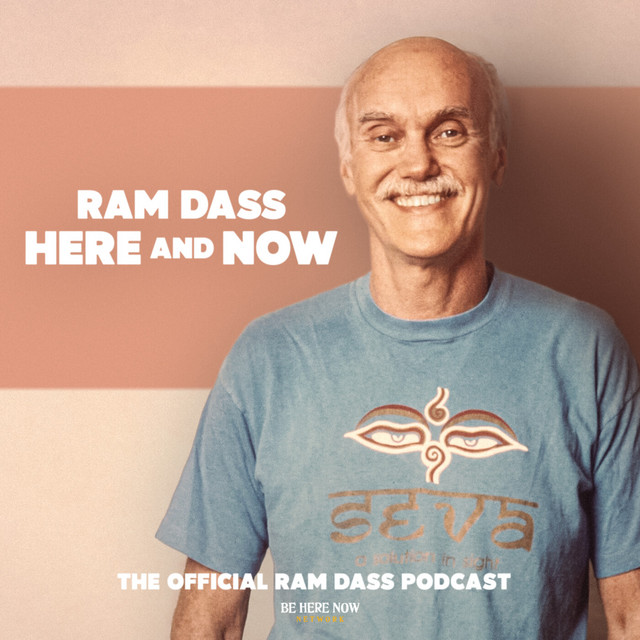
Ram Dass addresses the American Psychological Association with practical wisdom on integrating different planes of reality—including altered states of consciousness and meditative experience—into psychological understanding and therapeutic work. Rather than treating spiritual or non-ordinary states as aberrations, he invites psychologists to recognize them as legitimate dimensions of human experience that can inform healing and self-understanding when properly integrated into clinical frameworks.
Ram Dass speaks directly to an audience of psychologists operating within a Western medical model that has traditionally pathologized non-ordinary states of consciousness. His central argument is that modern psychology, by training practitioners to remain within a single consensus reality, misses crucial opportunities to understand and work with the full spectrum of human experience. Altered states—whether induced through meditation, psychedelics, or other contemplative practices—are not glitches in the system but windows into how consciousness itself operates.
For psychologists trained in diagnostic manuals, this represents a fundamental reorientation. Rather than asking "What pathology does this altered state indicate?" the invitation is to ask "What is this state teaching us about the nature of mind and reality?" This shift opens clinical work to dimensions that have been explored for millennia in contemplative traditions but marginalized in modern psychology.
Ram Dass uses the concept of "planes of reality" to describe the layered nature of human consciousness. The ordinary waking state that most people inhabit is one plane. But consciousness also operates across meditative states, dream states, and the subtle realms that both Buddhist psychology and other spiritual traditions map extensively. Integration doesn't mean abandoning ordinary consciousness or becoming a permanent mystic; it means developing the capacity to access multiple planes and bring their wisdom back into daily functioning.
For a therapist or psychologist, this integration is not theoretical—it has immediate clinical relevance. A person stuck in a particular emotional or psychological pattern is often trapped in a single plane of perception. They cannot see their situation from a wider vantage point. Meditation and other practices that shift consciousness can offer access to perspectives that rational analysis alone cannot reach. Ram Dass suggests that psychologists who have cultivated their own practice in these domains become more effective clinicians because they understand the architecture of consciousness from direct experience, not just intellectual study.
The mention of psychedelic therapy in the broader speech context is significant. Ram Dass was a pioneer in bringing insights from psychedelic research into both spiritual and psychological frameworks. Psychedelics, like meditation, are tools that facilitate access to altered states. Rather than treating these as recreational or pathological, Ram Dass invites psychologists to study them as potential therapeutic agents—which is increasingly validated by contemporary research showing promise in treating PTSD, depression, and end-of-life anxiety.
However, the wisdom here goes beyond pharmacology. What matters is not just the chemical compound but what one does with the state it produces. Without integration—without bringing those insights into structured, grounded work—altered states can become mere escapism. Ram Dass speaks to an audience trained in integration: psychologists who understand how to help clients process and stabilize the shifts in consciousness that such experiences catalyze. His message implies that psychological literacy in handling non-ordinary states is as important as the states themselves.
Ram Dass's unique contribution has always been to speak as someone fluent in multiple languages: psychology, Buddhist dharma, Hindu philosophy, and Western science. He is not arguing that Buddhism should replace psychology or vice versa. Rather, he sees them as complementary maps. Buddhist psychology, refined through centuries of meditators mapping consciousness, offers precise phenomenology of mind-states that Western psychology is only beginning to develop sophisticated language for.
For a psychologist, this means recognizing that meditation is not a relaxation technique grafted onto therapy—it is a systematic method for understanding the nature of mind itself. When Ram Dass speaks of "planes of reality," he is drawing on Buddhist cosmology and phenomenology, but translating it into terms relevant to a modern clinician. A psychologist who understands meditation not as stress-reduction but as consciousness-exploration becomes capable of recognizing and working with depths of experience that symptom-focused models cannot reach.
One practical implication of Ram Dass's message: if the therapist has done their own integration work—their own meditation practice, their own exploration of altered states within safe containers—they bring a different quality of presence to the room. They are not theorizing about enlightenment or spiritual experience; they have tasted it. This does not make them "more enlightened" than their clients, but it does mean they can recognize the contours of such experience and help others navigate it without pathologizing or dismissing it.
This is especially important for clients emerging from psychedelic therapy, profound meditative experiences, or spontaneous mystical states. If a therapist operates from a framework that allows only consensus reality, they may inadvertently reinforce the client's sense that their experience was weird, dangerous, or indicative of pathology. A therapist with Ram Dass's perspective can instead help the client integrate the experience, ground it in ordinary life, and extract its wisdom—which often includes shifts in values, reduced fear of death, increased compassion, or clearer sense of purpose.
Ram Dass is not asking psychologists to abandon their clinical rigor or diagnostic training. He is asking them to expand their map. A therapist who understands "planes of reality" as a legitimate framework becomes more diagnostically sophisticated, not less. They can distinguish between pathological dissociation and genuine meditative insight. They can recognize spiritual emergency—a genuine opening that looks like crisis—and support it rather than suppress it with medication or containment alone.
This requires ongoing practice and humility. Ram Dass himself spent decades integrating his own experiences—his Harvard research with LSD, his transformative encounter with his guru in India, his return to the West as a teacher. The wisdom he offers is hard-won, not abstract. For psychologists, this translates into an invitation: begin (or deepen) your own meditation practice. Explore your own consciousness systematically. This becomes the foundation from which you can work with others' transformations.
The timing of this speech to the American Psychological Association reflects a broader shift. Contemporary psychology is increasingly acknowledging what was once the fringe: that human consciousness is far larger than the diagnostic manual suggests, that altered states have therapeutic potential, and that spiritual traditions have mapped consciousness with sophistication that Western psychology is still developing language for. PTSD and complex trauma, depression and existential despair—these often respond not just to symptom management but to fundamental shifts in how a person relates to their consciousness and reality.
Ram Dass's message is that psychologists are positioned to integrate these insights with rigor and care. They need not become gurus or abandonment clinical ethics. But they do need to evolve beyond a model that sees all non-ordinary states as disorders to be corrected, and begin seeing them as dimensions of the human experience that, properly understood and worked with, can deepen healing and wholeness.
For psychologists interested in this work, several concrete paths emerge from Ram Dass's wisdom. First, deepen your own meditation practice—not as stress management but as systematic consciousness exploration. Second, study Buddhist psychology and phenomenology not as exotic philosophy but as clinically relevant maps of mind. Third, engage with the emerging research on psychedelic-assisted therapy, understanding both its promise and its requirements for safe integration. Fourth, reflect on your own altered state experiences (whether through meditation, psychedelics, dream, or spontaneous opening) and how they have shaped your understanding of consciousness. Finally, bring this expanded understanding into your clinical work with honesty and care, meeting clients where they are while remaining open to the possibility that their experience of non-ordinary states may be pointing toward genuine insight rather than pathology.
The bridge Ram Dass offers is not between conflicting systems but between different ways of knowing. Modern psychology and ancient contemplative traditions are not enemies; they are partners in the ongoing human effort to understand consciousness and alleviate suffering. Psychologists who integrate this understanding become more effective healers and more grounded explorers of the human mind.