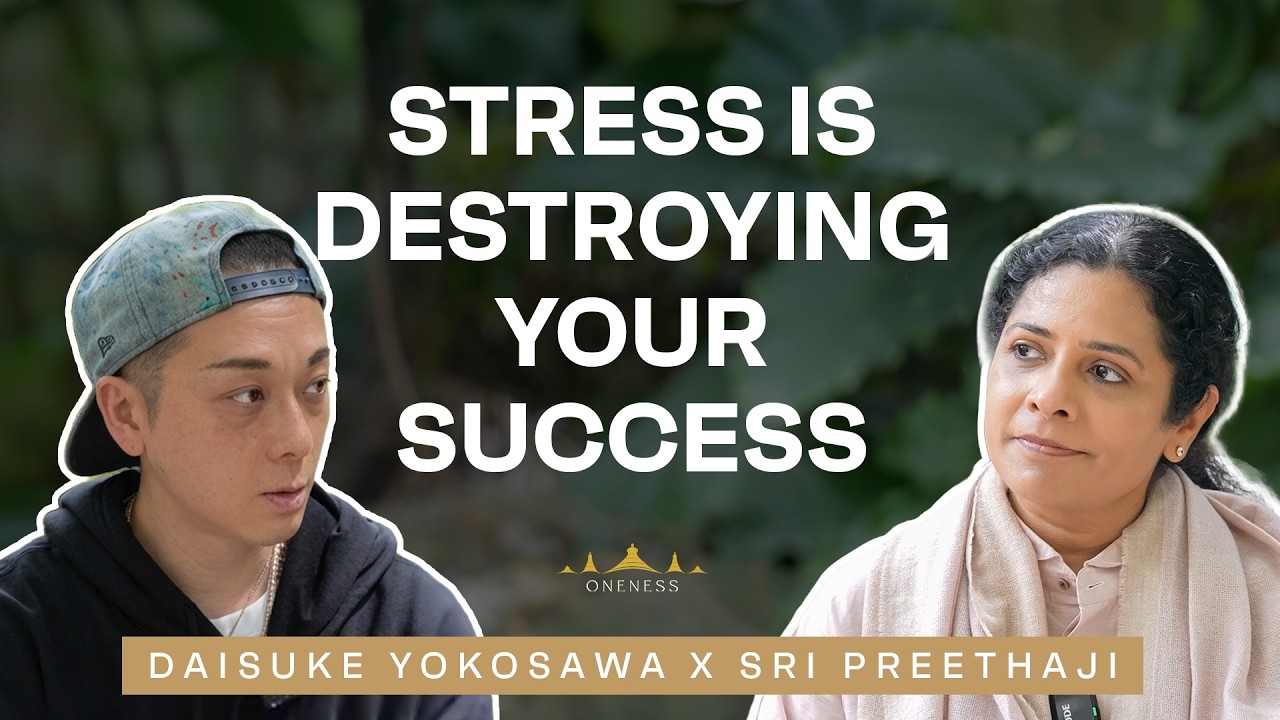
Sri Preethaji and Sri Krishnaji teach that spiritual progress for any seeker begins with a fundamental shift: taking full responsibility for your inner state rather than attributing your emotional and mental conditions to external circumstances. This responsibility is not about guilt or self-blame, but about recognizing that you are the primary creator of your experience, and that this recognition is where genuine transformation starts.
Why Does Inner State Matter More Than Circumstances?
Most seekers approach spiritual practice with the assumption that progress means changing their external reality—getting better relationships, more success, different life conditions. However, Sri Preethaji and Sri Krishnaji point to a more fundamental truth: your inner state—the quality of your thoughts, emotions, and presence—is the actual foundation of your spiritual journey.
This is not a denial that external circumstances affect us. Rather, it is an understanding that the relationship you have with those circumstances, the meaning you assign to them, and the emotional responses you generate in relation to them are entirely within your domain of responsibility. Two people can face identical situations and have vastly different inner experiences based on their consciousness and the ownership they take.
What Does Taking Responsibility for Your Inner State Actually Mean?
Taking responsibility for your inner state means recognizing that you are not a victim of your thoughts or emotions, but rather their creator and steward. When you experience anger, sadness, anxiety, or any other emotional state, the conventional response is to trace it back to an external cause: "I'm angry because of what they did," or "I'm anxious because of my circumstances." While these external factors may be present, they are not the ultimate source of your inner state.
True responsibility begins when you ask: "What within me is generating this response? What beliefs do I hold? What patterns of thinking am I enacting? What quality of presence am I bringing to this moment?" This shift from external attribution to internal inquiry is where genuine power emerges. You cannot control what others do or what the world presents to you, but you can absolutely control the inner consciousness with which you meet those circumstances.
How Does This Responsibility Mark the Beginning of Progress?
Sri Preethaji and Sri Krishnaji emphasize that this responsibility is not an ending point but a beginning point. Many seekers spend years in spiritual practice, meditation, and study, yet they continue to experience reactivity, emotional turbulence, and a sense that external circumstances determine their peace. Progress stalls when responsibility remains externalized.
The moment you claim responsibility for your inner state—truly claim it, not as a concept but as lived understanding—something fundamental shifts. You stop waiting for the world to change so you can feel better. You stop attributing your lack of peace to the inadequacy of your circumstances. Instead, you begin the actual work of transformation: refining your consciousness, examining your patterns, and consciously choosing your responses rather than being driven by automatic reactions.
This is progress because it places the source of change where it actually is—within you. External circumstances may still be challenging, relationships may still require navigation, and life may still present difficulties. But your capacity to be stable, clear, and present within those circumstances becomes your responsibility and your possibility.
What Obstacles Prevent Seekers from Taking This Responsibility?
Several patterns keep seekers from this essential step. The first is the very understandable human tendency to explain our experience through external attribution. It feels true because external events are real and do impact us. The second is a subtle spiritual bypassing where seekers adopt language about responsibility ("I create my reality") without actually experiencing the shift in ownership. Speaking the concept and embodying it are not the same.
Another obstacle is the fear that taking responsibility means admitting fault or shame. Many confuse responsibility with blame. Responsibility actually liberates you from shame because blame implies you did something wrong that needs punishment. Responsibility simply means you are the active agent in how you meet and process your experience. You may not have created the circumstances, but you are creating your response to them.
Finally, there is the resistance to the maturation this requires. Taking responsibility for your inner state means you can no longer use external circumstances as an excuse for not being present, kind, or conscious. You cannot say "I would be peaceful if only..." and expect progress. The bar moves to: regardless of what is happening, what inner state am I cultivating? This is more challenging but infinitely more rewarding.
How Can a Seeker Begin to Practice This Responsibility Today?
The practice begins with honest observation. When you notice yourself in an emotional state—reactivity, frustration, despair, fear—pause and ask: "What am I telling myself about this situation? What meaning am I assigning? What am I believing about myself, others, or the future that is generating this emotion?" This simple inquiry shifts you from being unconsciously driven to becoming conscious of your participation.
The second step is to recognize that having generated a particular inner state, you can also generate a different one. This is not about forcing positivity or spiritual bypassing. It is about recognizing that emotions and thoughts arise from causes you have agency over: your attention, your interpretation, your willingness to see differently. If your inner state came from somewhere within you, you have the power to shift it.
A practical framework is to distinguish between what you cannot control (other people's behavior, weather, unexpected events) and what you can control (your attention, your interpretation, your choices about where to direct your consciousness, your willingness to be present). The seeker's progress lies entirely in mastering the latter domain.
What Becomes Possible When You Own Your Inner State?
When responsibility becomes embodied—not just intellectually accepted but lived—several capacities emerge. First is freedom from blame. You no longer need others to change for you to feel better, and you no longer need to blame them for your current inner state. This radically transforms relationships because they are no longer vehicles for your healing but opportunities for genuine connection.
Second is the emergence of real power. As long as your peace depends on circumstances, you are fundamentally powerless because circumstances are always shifting. But when your peace depends on your consciousness, you have access to something stable and reliable. This does not mean bad things won't happen or hurt won't arise. It means you are not destroyed by them because they are not determining your inner state.
Third is the capacity for genuine compassion. When you stop blaming the world or others for your suffering, you can see clearly that others are also trapped in the cycle of externalized blame. You see their unconsciousness not as something that makes them bad but as something that causes them to suffer. This naturally generates compassion.
Finally, responsibility opens the door to real spiritual practice. Meditation, inquiry, and other practices become effective because you are no longer divided against yourself—half of you trying to practice while the other half insists the world needs to change first. You can now direct your full attention and intention toward the actual transformation of consciousness.
Where to go from here
The invitation is to notice, in real time, how you are currently explaining your inner states. Are they caused by external circumstances, or are you recognizing your role in creating them? This is not a judgment but a clear-eyed observation. From that observation, you can begin to experiment with small shifts in responsibility: taking one emotion today and asking yourself what you are believing that is generating it, and whether that belief is actually serving you. As this becomes a lived practice rather than an idea, progress as a seeker naturally accelerates because you are finally working with the actual variables you can influence.