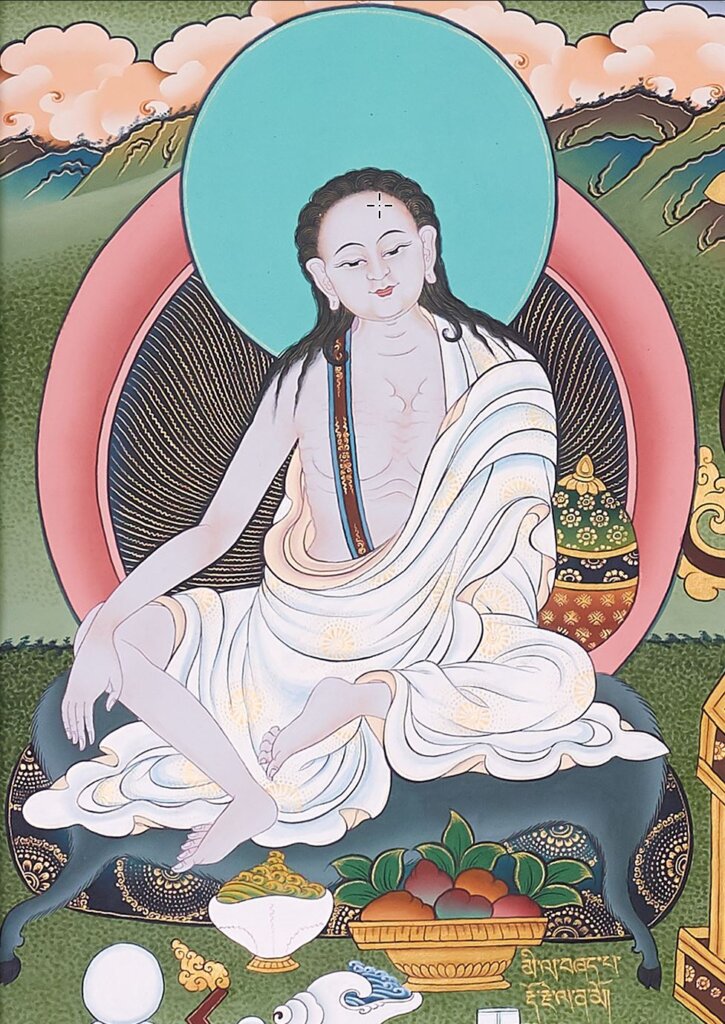
“Sit with it, and it reveals its lesson.” This profound statement by Milarepa invites us into a space of contemplation and presence, urging us to engage deeply with our experiences, especially those that are painful or challenging. In a world that often demands immediate action and resolution, Milarepa’s wisdom reminds us of the transformative power of stillness and reflection. By simply sitting with our thoughts and feelings, we open ourselves to the lessons they carry, allowing them to unfold in their own time.
In this age of distraction, where the noise of life can drown out our inner voice, Milarepa’s call to sit with our experiences becomes even more significant. It challenges us to resist the impulse to flee from discomfort and instead to embrace it as a teacher. This act of sitting—of being fully present with our emotions and thoughts—can lead to profound insights and a deeper understanding of ourselves and our place in the world. The journey toward wisdom often requires us to confront our pain, and in that confrontation, we may discover the very lessons we need to grow.
The image / the metaphor
The imagery in Milarepa's quote evokes a sense of stillness and patience. The verb "sit" suggests a deliberate choice to pause, to ground oneself in the present moment. This act of sitting is not passive; it is an active engagement with our inner landscape. When we sit with our experiences, we create a space where insights can emerge organically, much like a seed that requires time and nurturing to blossom into a flower. The phrase “reveals its lesson” implies that wisdom is not always immediately apparent; it often requires time and contemplation to surface.
Diving deeper into the metaphor, we can see that sitting with our experiences is akin to a form of meditation. Just as a still pond reflects the sky above, our minds can reflect the truths hidden within our experiences when we allow ourselves the space to be still. This metaphor extends to the idea of presence; by sitting with our feelings, we cultivate a mindful awareness that can illuminate the darker corners of our psyche. In this light, pain transforms from an adversary into a guide, leading us toward greater understanding and compassion.
In the speaker's tradition
Milarepa, a revered figure in Tibetan Buddhism, embodies the principles of dharma and the transformative power of suffering. His life story is a testament to the idea that through embracing our pain and challenges, we can attain enlightenment. The concept of kenosis, or self-emptying, resonates here; by sitting with our experiences, we allow ourselves to let go of preconceived notions and attachments, making space for deeper truths to emerge. This practice aligns with the Buddhist notion of sunyata, or emptiness, which teaches that our experiences are not fixed but fluid, capable of revealing new insights when we approach them with an open heart.
In the context of Milarepa's teachings, we can draw parallels to the Tibetan text "The Tibetan Book of the Dead," which emphasizes the importance of facing one's fears and attachments in the process of dying and rebirth. Just as the text encourages individuals to confront their experiences during the bardo state, Milarepa’s quote invites us to engage with our present experiences, suggesting that the lessons we learn can guide us toward spiritual awakening. Both teachings underscore the necessity of presence and the transformative potential of embracing our inner landscape.
Living the teaching
Consider a modern scenario where this teaching can be applied: imagine a person grappling with the loss of a loved one. In the immediate aftermath, the instinct may be to distract oneself with work or social engagements, avoiding the pain of grief. However, if one chooses to sit with that grief—allowing the emotions to surface without judgment—insights may arise about love, connection, and the impermanence of life. This process of sitting with grief can lead to a deeper understanding of the relationship shared with the deceased and the lessons that continue to resonate in one’s life.
Another application of Milarepa’s wisdom can be found in interpersonal relationships. When conflicts arise, the temptation is often to react impulsively, to defend oneself or to withdraw. Instead, if we take a moment to sit with our feelings—whether it be anger, hurt, or confusion—we create an opportunity for clarity. By reflecting on our emotions and the underlying causes of our reactions, we can approach the situation with greater empathy and understanding, ultimately fostering healthier communication and connection. This practice of presence not only enriches our relationships but also deepens our self-awareness.
A reflection
As we contemplate Milarepa's invitation to “sit with it,” we are called to consider how often we rush through our experiences, seeking quick resolutions rather than allowing the lessons to unfold. What might we discover if we paused to sit with our discomfort, our joy, or our confusion? In this moment of reflection, I invite you to ask yourself: What lesson is waiting for me in the experience I am currently avoiding? This question can serve as a gentle nudge toward embracing the fullness of our experiences, inviting us to learn from the depths of our being.
