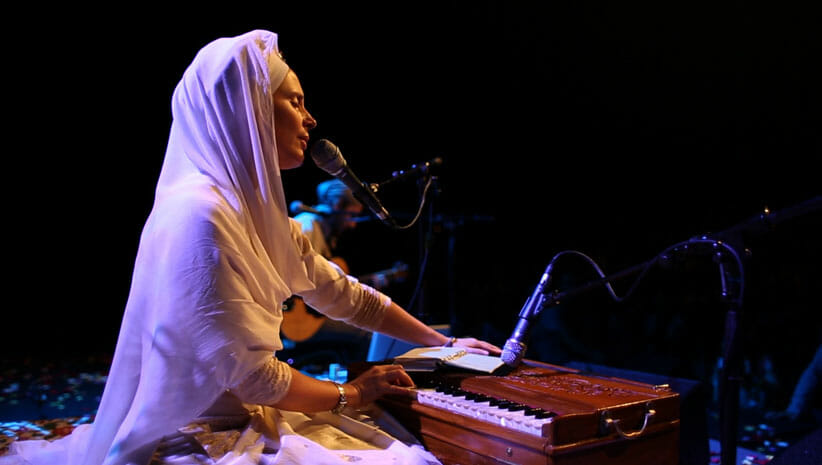
In the poignant words of Snatam Kaur, "Children remember the Naam easier than adults." This statement invites us to reflect on the innate capacity of children to connect with the divine essence, or Naam, in a way that often eludes adults. The stakes of this observation are profound; it challenges us to consider how our adult experiences, preconceptions, and complexities can cloud our ability to access the simplicity and purity of spiritual truth. In a world that often prioritizes intellect over intuition, Kaur's insight serves as a gentle reminder of the wisdom that lies in childlike openness.
As we delve deeper into this quote, we recognize that it speaks not only to the spiritual journey but also to the nature of our relationship with the divine. Children, in their innocence, embody a natural receptivity that allows them to engage with the Naam without the filters of doubt or skepticism that often accompany adulthood. This ease of remembrance suggests a profound connection to a state of being that is unencumbered by the complexities of life. In this light, Kaur's words beckon us to reclaim that childlike spirit within ourselves, urging us to explore how we might cultivate a more profound connection to the divine essence that permeates our existence.
The image / the metaphor
At the heart of Kaur's quote lies a vivid imagery that contrasts the simplicity of childhood with the often convoluted nature of adult thought. The term "remember" evokes a sense of familiarity and recognition, suggesting that the Naam is not something foreign or distant but rather an integral part of our being. The choice of the word "easier" implies a natural alignment with the divine that children possess, as if they are born with an innate understanding of their connection to the universe. This imagery invites us to envision children as vessels of pure consciousness, untainted by the layers of societal conditioning that adults accumulate over time.
Diving deeper into the metaphor, we can see that the ease with which children remember the Naam reflects a broader spiritual truth: that the divine is accessible to all who approach it with an open heart. The act of remembering suggests a return to a state of grace, where the complexities of life fade away, and the essence of existence shines through. This metaphor serves as a call to action for adults, encouraging us to strip away the distractions and return to the simplicity of being, much like a child who instinctively knows how to connect with the sacred.
In the speaker's tradition
Snatam Kaur's insights are deeply rooted in the Sikh tradition, which emphasizes the importance of Naam as a central tenet of spiritual practice. In Sikhism, Naam refers to the divine name or essence of God, and its remembrance is considered a path to spiritual liberation. This concept aligns with the idea of bhakti, or devotion, where the heart's sincerity and purity allow for a direct connection to the divine. The childlike ability to remember the Naam can be seen as a manifestation of bhakti, where the heart is open and receptive, unburdened by the complexities of the mind.
Moreover, the Sikh scripture, the Guru Granth Sahib, often speaks to the importance of humility and surrender in the spiritual journey. The notion of kenosis, or self-emptying, resonates with Kaur's observation, as it invites individuals to let go of their ego and preconceived notions in order to embrace the divine presence. In this context, children serve as exemplars of this humility, reminding us that the path to spiritual awakening is not about intellectual mastery but rather about cultivating a heart that is willing to receive and remember the Naam.
Living the teaching
In our modern lives, the teaching encapsulated in Kaur's quote can manifest in various ways. Consider a parent or caregiver who, amidst the chaos of daily responsibilities, takes a moment to engage in a simple, joyful activity with a child—perhaps singing a song or playing a game. In these moments, the adult may find themselves swept away by the child's unfiltered joy and spontaneity, allowing them to momentarily forget their worries and reconnect with the essence of life. This experience serves as a reminder that the divine is often found in the simplest of interactions, where the heart can resonate with the Naam without the interference of adult concerns.
Another application of this teaching can be found in our relationships, particularly during moments of conflict or misunderstanding. When faced with challenges, we can choose to approach the situation with the openness and curiosity of a child, seeking to understand rather than to defend. By embodying this childlike spirit, we create space for healing and connection, allowing the Naam to flow through our interactions. In daily practices, such as meditation or prayer, we can also strive to cultivate this openness, inviting the simplicity of remembrance into our spiritual routines and allowing ourselves to be guided by the purity of our intentions.
A reflection
As we contemplate the wisdom of Snatam Kaur's words, we are invited to ask ourselves: How can I cultivate a childlike openness in my own spiritual practice? This question encourages us to reflect on the barriers we may have erected in our pursuit of the divine and to consider how we might dismantle them in order to embrace the simplicity and joy that comes from remembering the Naam. In this inquiry, we can find a path toward deeper connection, not only with the divine but also with ourselves and those around us.