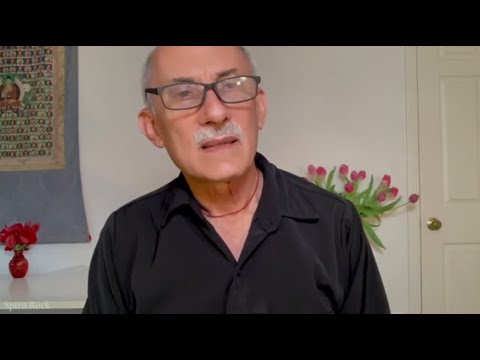
Jack Kornfield offers a holiday-season dharma talk centered on intention-setting, compassion practices, and becoming a source of light and wisdom for others. Through a heartwarming Christmas story, guided "Just Like Me" meditation, blessing-cord ceremony, and angelic chanting, Kornfield teaches how to recognize the beauty in those around us, set the compass of the heart for the new year, and respond to suffering in the world with extraordinary grace and service.
Why Does Intention Matter at the Turning of the Seasons?
Kornfield begins by anchoring the practice in a simple but profound observation: the return of light at winter solstice has long symbolized spiritual renewal across cultures. The turning of the seasons offers a natural moment for reflection and recommitment. Rather than viewing New Year resolutions as arbitrary goals, Kornfield reframes intention-setting as an act of aligning the "compass of your heart" with what matters most. This isn't about willpower or self-improvement schemes, but about consciously choosing the direction of your life and relationships in the months ahead. The seasonal shift provides a container—a psychological and spiritual opening—where such choices feel more alive and meaningful.
What Does the Heartwarming Christmas Story Teach About Joy?
Kornfield shares a dharma story suited to the holiday context that illustrates a counterintuitive truth: the boundless joy that arises from making others happy. Rather than pursuing happiness as a personal possession, the story reveals how genuine contentment emerges through generosity, attention to others, and the recognition of shared humanity. The narrative arc allows the mind to settle and absorb the teaching through emotion and imagery rather than abstract instruction. This approach honors the contemplative power of storytelling in spiritual teaching—the story doesn't just convey information; it shifts the listener's perspective toward what Buddhist practitioners call "sympathetic joy" (mudita), the capacity to celebrate the wellbeing of others as if it were your own.
How Does the "Just Like Me" Meditation Transform Your Perception?
Kornfield guides participants through a two-person loving-kindness practice called "Just Like Me," a technique that dismantles the illusion of separation between self and other. The practice works by systematically recognizing that others, like yourself, wish to be happy, seek to avoid suffering, have experienced loss and pain, and deserve compassion. By repeating simple phrases—silently directing them toward another person, yourself, and eventually all beings—the meditation rewires habitual patterns of judgment and defensiveness. The "Just Like Me" framework specifically counteracts the tendency to see others as fundamentally different, threatening, or less deserving of care. When practiced consistently, this meditation doesn't just feel warm; it alters neurology and behavior, making acts of kindness more natural and spontaneous.
What Role Does Recognizing Beauty Play in Changing the World?
One of Kornfield's core teachings in this talk is that transforming the world begins with transforming how we see. He emphasizes that "seeing the beauty of those around us" is not escapism or spiritual bypassing of real suffering; rather, it is the foundation for authentic compassion and effective action. When you recognize the inherent worthiness and beauty in others—even in those you might dismiss or fear—you naturally become less likely to harm them and more inclined to serve their wellbeing. This perception shift is the ground from which wise action grows. Kornfield notes that human beings have a profound "capacity to respond in extraordinary ways" to the world's suffering and beauty, a capacity that emerges from cultivating this deeper vision of others.
What Is a Blessing-Cord Ceremony and How Does It Work?
The blessing-cord ceremony is an intention-setting ritual with roots in multiple spiritual traditions. Kornfield describes doing this practice 40 years prior with the renowned Tibetan teacher Lama Chögyam Trungpa Rinpoche. When someone asked Trungpa what the blessing cords protect practitioners from, his reply was characteristically direct: "Why yourself, of course." This teaches that the primary protection most human beings need is from the self—from habitual reactivity, fear, and unconscious patterns. The ceremony involves creating or receiving a cord while setting a conscious intention or vow for the season ahead. It serves as a tangible anchor for your commitment, a physical object that reminds you of the direction you have chosen. Rather than relying on memory alone, the cord becomes a ceremonial reminder of your deepest values and aspirations.
How Should You Create a New Year Vow That Actually Shapes Your Life?
Kornfield teaches that a genuine vow differs from a casual resolution. A vow is a deliberate commitment made with full awareness of both its difficulty and its importance. The process involves not just deciding what you want to do, but deeply considering why that action matters and how it aligns with your values. In the context of this talk, the vow is explicitly framed in service: becoming "a lamp in the darkness for those in need." This moves the focus away from personal achievement toward contribution and presence. When you set a vow in ceremony, with intention, and with an understanding of your own suffering and capacity, it carries weight. The practice is not about perfection but about repeatedly returning to that compass direction, day after day, even when you stumble or forget.
What Does It Mean to Be a Lamp in the Darkness?
The central metaphor of the talk is drawn from Rumi and other wisdom traditions: being a lamp in darkness. This is not about becoming enlightened or perfect, nor is it reserved for spiritual masters. Every human being, Kornfield teaches, can embody this role by bringing steadiness, compassion, and wise presence into situations of confusion, fear, or pain. A lamp does not need to be bright or elaborate; it simply must hold its flame. Similarly, you become a lamp not through grand gestures but through consistent presence, kind attention, and willingness to sit with others in their suffering while offering what wisdom and care you have. This teaching acknowledges both the profound limitations and the extraordinary potential of ordinary human presence.
What Is the Role of "Namoh" Chanting and Angelic Song?
Kornfield incorporates sacred chanting of the mantra "Namoh" (often understood as a Sanskrit term honoring the divine or the teacher) into the ceremony. The practice of chanting serves multiple functions: it settles the nervous system into a slower, more coherent rhythm; it creates a shared field of intention when done in group; and it bridges the verbal, intellectual mind with the body and the emotional heart. The angelic, celestial quality Kornfield brings to the chanting invokes a sense of the sacred and transcendent, acknowledging dimensions of experience beyond the everyday. Chanting is not meant to transport you away from life but to reconnect you with what is deepest and most true, so that you return to your ordinary responsibilities with renewed clarity and compassion.
How Does Suffering Fit Into This Vision of Light and Intention?
Kornfield does not ignore or minimize suffering, either personal or collective. Instead, he acknowledges that human beings incarnate "with your measure of suffering and the beauty you have" and that this very combination—the knowledge of pain alongside the capacity for joy—is what allows for authentic compassion and extraordinary response. The practice is not about denying darkness but about consciously choosing how to respond to it. He illustrates this with a simple image: "You sit and you sweep the garden." This humble practice—attending to what is immediately in front of you with care and presence—is itself a response to a broken world. The intention to become a lamp does not require that you fix everything or rid the world of darkness; it requires that you show up and contribute your steady presence and care.
Where to Go From Here
If this teaching resonates, consider creating your own intention for the new year or turning season, not as a distant goal but as a direction for your heart. Practice the "Just Like Me" meditation with someone you find difficult, noting what shifts in your perception. If you have access to string or cord, create your own simple blessing-cord ceremony, setting a vow to become a lamp in some corner of your world—in your family, workplace, community, or in service to those in pain. Return to this intention regularly, especially when you feel disconnected or discouraged. Kornfield's broader body of work, including his year-long program "The Year of Awakening," offers ongoing guidance for deepening these practices throughout the seasons. The teaching is ultimately simple: you already have what you need to respond with wisdom and compassion. What remains is to consciously choose, again and again, to show up as a source of light.